

The short answer
A smart home is only as smart as the systems built into it. Lights, curtains and cameras are the visible part. Fresh-air ventilation, the central vacuum, the EV charger and the fire protection in the garage are the systems that run the house in the background, and most of them can report to, or be scheduled by, the home automation system the owner has already chosen. They have to be planned at design stage, because the pipes, ducts and cables go in at first fix.
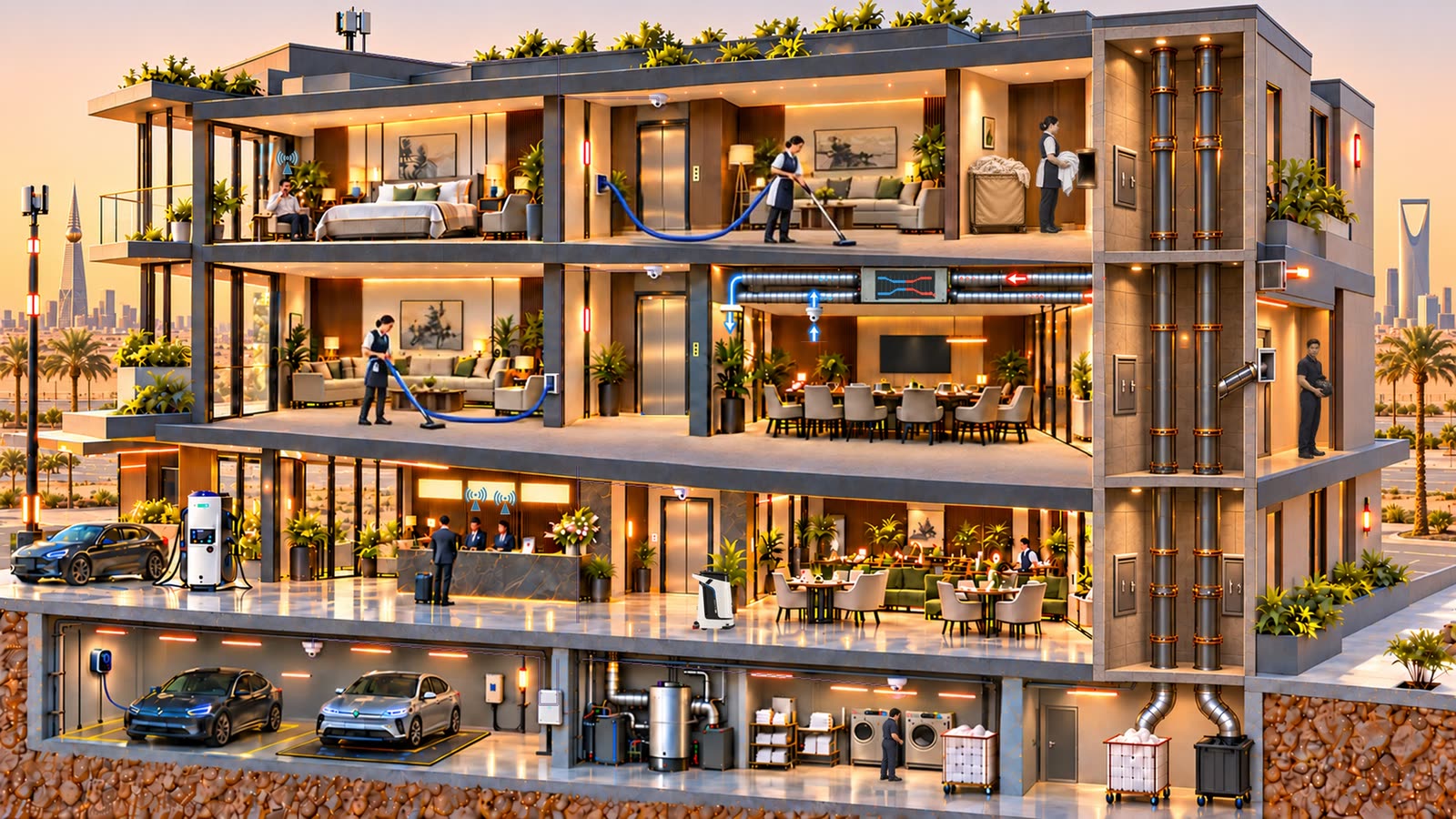
People search for this as smart home, smart house, home automation, smart building or smart systems. This guide covers the central systems Centra supplies and how each one fits into that picture.
1
Fresh-air ventilation: the system that most wants to be automated
A recovery ventilation unit brings filtered fresh air into a sealed villa and takes stale, humid air out. It is the system that gains most from automation: boost on a humidity or CO₂ reading, drop to a trickle when a floor is empty, and follow a schedule that matches how the house is actually lived in.
- Temperature and humidity sensors built in on the WINDY energy recovery range, the usual choice for a villa.
- Modbus compatibility, so a unit can be a device on the building's automation or BMS rather than an island with its own wall controller.
- App control with an optional WiFi module.
Models, filters and diffusers are on the heat and energy recovery ventilation page.
2
Central vacuum: built into the house, not carried around it
A central vacuum system puts one motor unit in the garage or service room and inlets in the walls. Plugging the hose into an inlet starts the motor automatically, with no switch and no plug socket, and the dust is exhausted outside rather than back into the room.
On the Vac Digital models a digital panel reports the state of the machine: power level, filter condition, an hour counter, a bin-full indicator and a service-due indicator. What home automation adds is visibility, so a fault or a full canister shows on the same dashboard as everything else. Whether a given unit reports into a particular automation platform is confirmed per project.
The laundry vacuum system works the same way: post the laundry into a wall port and it travels to the laundry room by suction.
3
Smart vacuum: robot or central?
When people search for a smart vacuum, most mean a robot vacuum for the home. A central vacuum is a different thing: it is built into the walls of a villa and is planned with the house. For large commercial floors, such as offices, hotels, malls and hospitals, Centra supplies ECOVACS commercial cleaning robots, which run their routes on a schedule, return to their charging station on their own, and can ride the lift between floors with the optional elevator IoT system.
4
EV charging that follows the house, not the other way round
- myWallbox app and portal: scheduling, remote lock and unlock, user management and consumption statistics.
- Eco-Smart: charging from the house's surplus solar, or a chosen mix of solar and grid.
- Power Boost: the charger reads the live electrical load and takes only what is spare, so a garage can be electrified without upgrading the supply.
Chargers and specifications are on the EV chargers page. For a basement garage, EV fire protection connects to the building alarm or control panel, and on larger buildings to the fire alarm panel and the BMS.
5
Connectivity and safety
Every smart device and every app in the house needs a signal. Concrete, low-emissivity glass and basements block it. Indoor coverage with Cel-Fi brings a usable mobile signal inside, and the system is monitored remotely so a fault is seen before an occupant reports it.
For elderly family members living independently, a 4G safety watch adds fall alerts, SOS and two-way calling that reaches a son or daughter directly, with live location in the app.
6
Plan it before the walls close
Every system above is built in at first fix, with the electrical and plumbing rough-in. Decided after the walls close, the cabling and the device positions are the expensive part, not the logic. Bring the automation contractor or system integrator, the consultant and us to the same drawings, and agree which platform and protocol the project has standardised on and who owns the integration.
System integrators are our main channel: see how we work with integrators.
Questions
What smart home owners ask
Which central systems can connect to a smart home system?
Fresh-air ventilation is the main one: the WINDY units are Modbus compatible, with built-in temperature and humidity sensors and an optional WiFi module for app control. EV chargers are managed through the myWallbox app and portal. Central vacuum Digital models report their state on a panel, and EV fire protection connects to the alarm or control panel.
Do you install the home automation system itself?
No. We supply the central systems and make them answer to the platform the client or the system integrator has already chosen. The protocol and who owns the integration are agreed at design stage.
Is a central vacuum a smart vacuum?
Not in the robot sense. A central vacuum is built into the house: it starts by itself when the hose is plugged in, and the Digital models report filter condition, hours and service due on a panel. For large commercial floors we supply ECOVACS cleaning robots.
Can I control the fresh-air ventilation from my phone?
Yes, with the optional WiFi module. On a project with home automation, the unit can instead be controlled by the automation system through Modbus.
When should smart home systems be planned?
At design stage. Pipes, ducts and cables go in at first fix, before the walls are closed and the screeds poured. Adding them to a finished villa is possible for some systems but costs more and limits the choices.
Related
Where to go next
- Air Technologies: central vacuum, laundry vacuum and fresh-air ventilation in a smart home
- EV Infrastructure: chargers and fire protection as one package
- HRV or ERV for a villa in Riyadh?
Planning a smart home or building?
Send the drawings and tell us which automation platform you are using.