

Air to clean
Central vacuum systems for villas and buildings in Saudi Arabia
The motor and the dirt canister sit in one fixed place — a garage, service room or basement — connected to inlet points around the building through tubing run inside the walls.
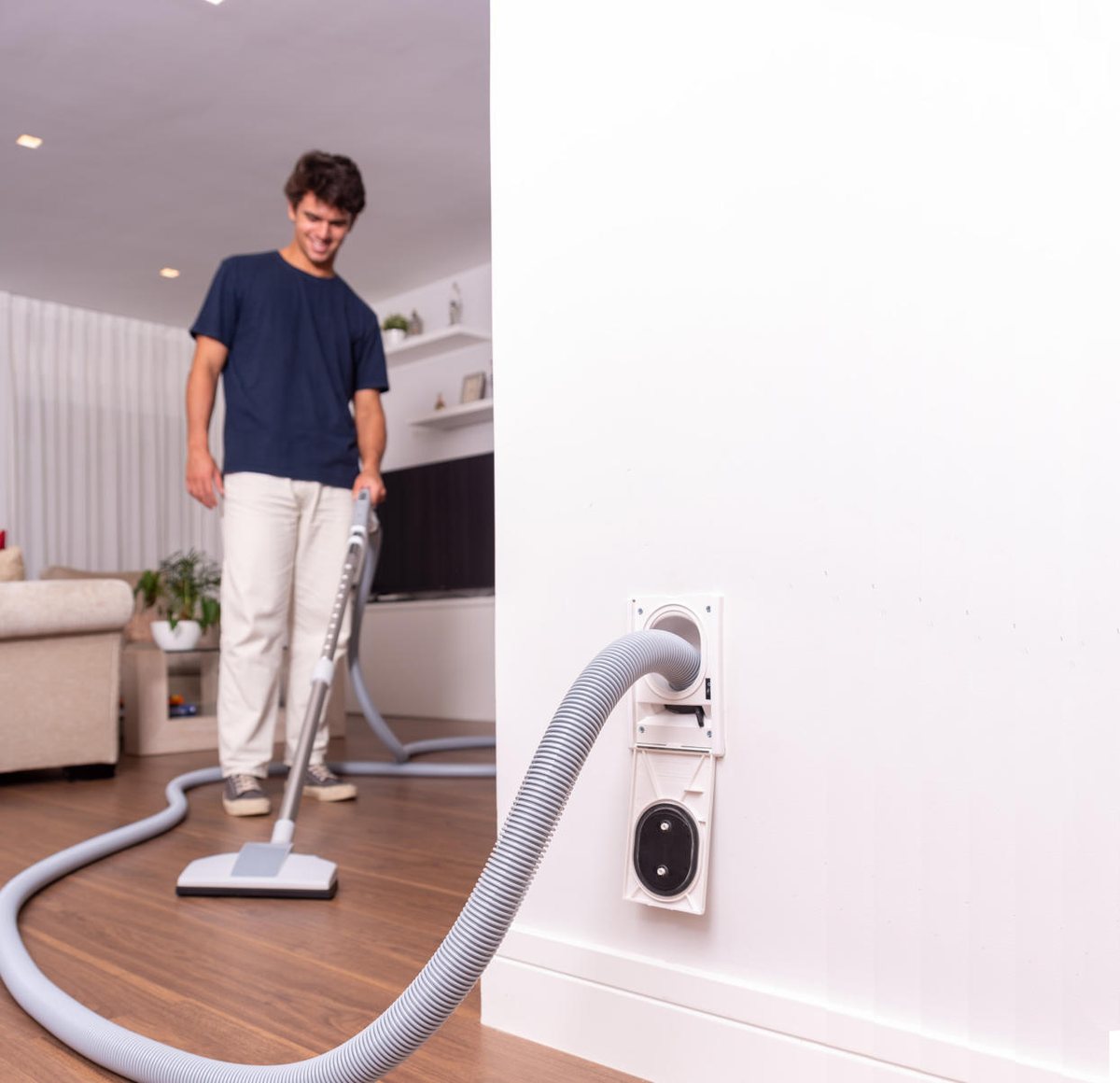
You carry a hose and a cleaning head, not a machine. At each inlet point the hose connects to tubing inside the wall, which runs back to a single unit where the motor and the dirt canister live. Nothing heavy goes up the stairs, and because the unit exhausts to outside, the fine dust that a portable vacuum pushes back into the room leaves the building altogether.
It is also called a built-in vacuum, a ducted vacuum or a whole-house vacuum system. The principle is the same: pipes in the walls, one power unit, and no dust returned to the room.
In the building
What it looks like once it is in
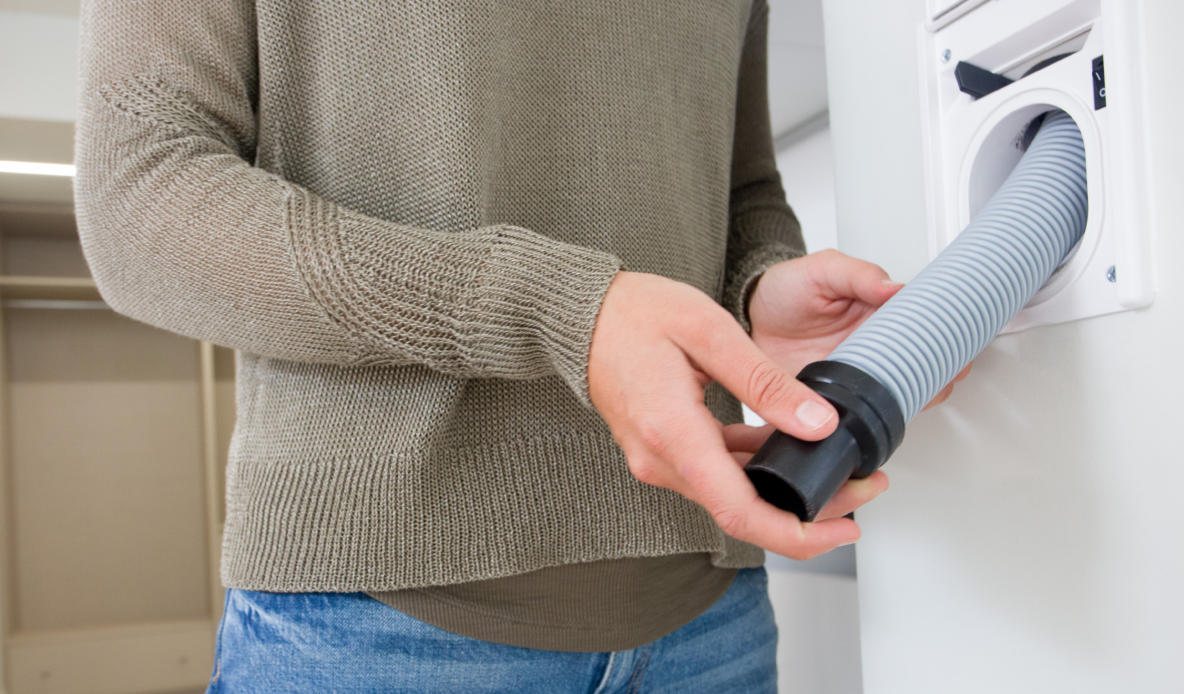
The visible part of a central vacuum system is an inlet plate and a hose. Everything that makes noise, holds dust or needs emptying is somewhere else.
How it works
Four things happen
Tubing at first fix
Run inside walls and ceiling voids from each inlet position back to the unit, with the electrical and plumbing rough-in.
The unit goes out of the way
Wall-mounted in a garage, store or service room, away from living space — which is why the noise is not in the room being cleaned.
The hose starts it
Plugging the hose into an inlet starts the motor automatically. No switch, no plug socket.
The dust leaves
Debris collects in the canister at the unit. Filtered air is exhausted outside the building.
Emptying the canister is a job a few times a year at one location, rather than a bag change on every floor.
The range
Which unit, and why
SACH has manufactured central vacuum equipment in Spain since 1992. The domestic range splits by how much the building asks of the unit, not by how expensive the house is.
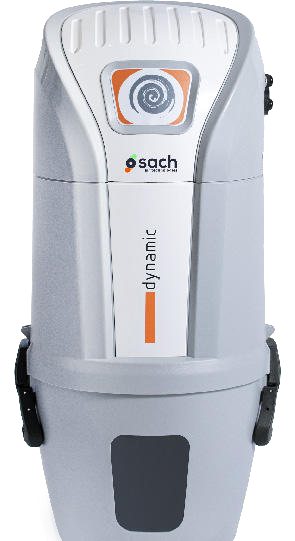
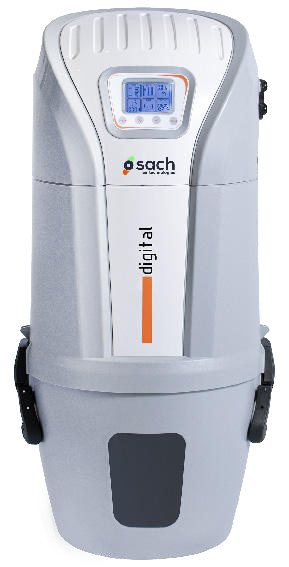
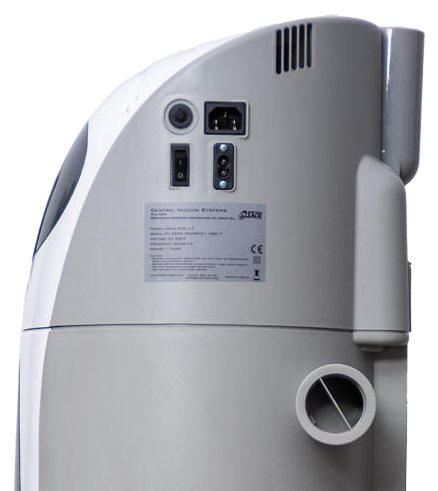
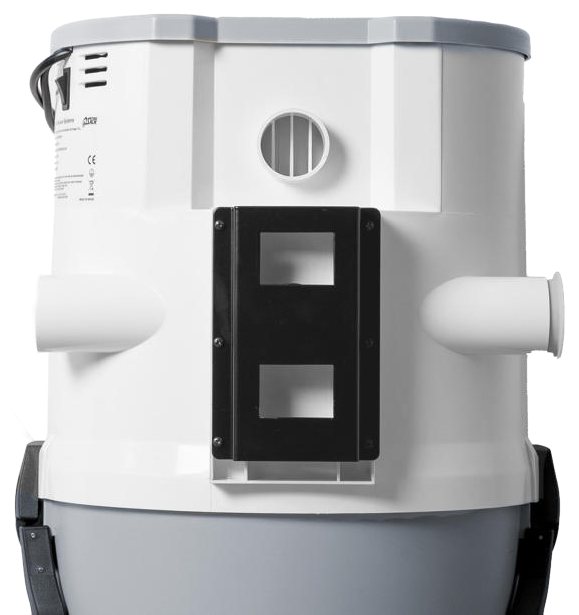
| Unit | Suits |
|---|---|
| VAC³ | Large villas and multi-storey homes. 1.5 or 1.7 kW, with a choice of three filtration systems |
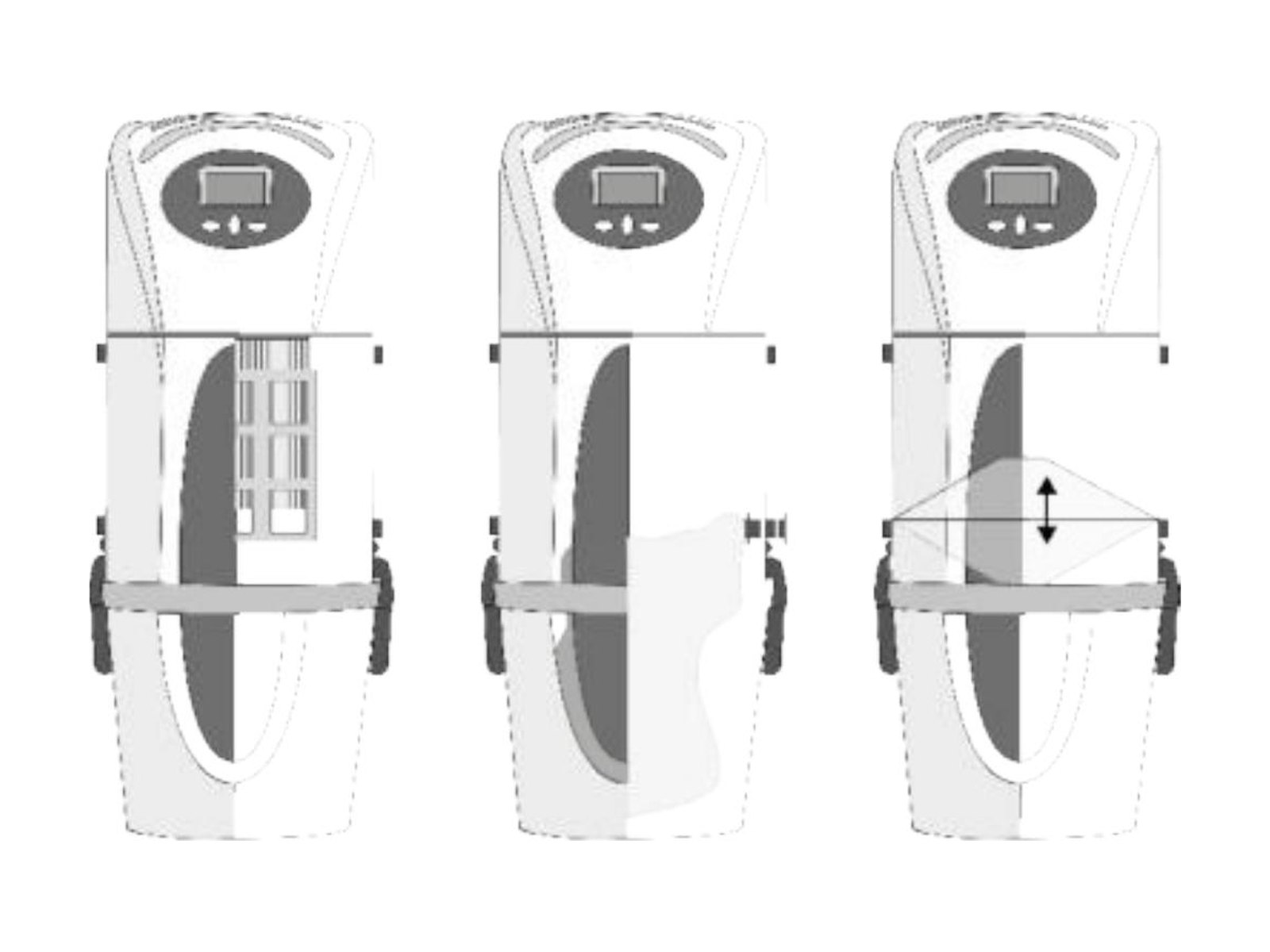
| Vac Digital | Standard to large villas. 1.6, 1.8 or 2.4 kW, with a digital panel reporting filter condition and service intervals |
| Vac Dynamic | Standard villas. The same three motor sizes without the digital panel |
| Integra Vac | Villas with no service room — the unit is built into a kitchen cabinet |
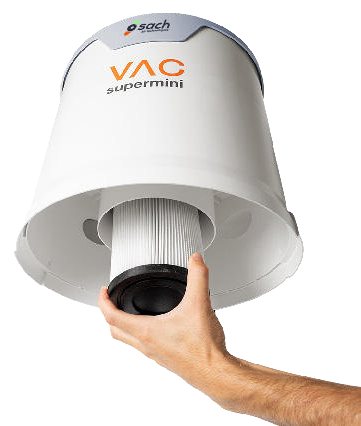
| VAC Mini | Apartments and small homes, up to about 350 m² |
| Super Mini | Smallest installations and single-floor apartments, up to about 200 m² |
Each unit is matched to an inlet count and a maximum tubing length at specification stage. Send the floor plans and we will size it.
What the digital panel actually tells you — power level, filter condition, thermal and electrical protection status, an hour counter, a bin-full indicator and a service-due indicator. It matters less in a villa than in a building where somebody other than the owner is responsible for maintenance, because it turns “is it due?” into something readable off the machine.
- VAC Mini — motor power
- 1,500 W
- Super Mini — motor power
- 1,500 W
- Suction power (Mini / Super Mini)
- 620 / 550 airwatts
- Water lift (Mini / Super Mini)
- 3,200 / 3,000 mm H₂O
- Airflow (Mini / Super Mini)
- 200 / 190 m³/h
- Filtration
- Cyclonic cone + HEPA
- Bin capacity (Mini / Super Mini)
- 28 / 20 L
- Noise level
- < 60 dB
- Home size guide (Mini / Super Mini)
- < 350 / < 200 m²
- Inlet points (Mini / Super Mini)
- 6–7 / 4–5
Figures are the manufacturer's published values for the compact range. The larger Dynamic, Digital and VAC³ units are selected against the inlet count and the length of the longest tubing run — send the drawings and we will do the selection rather than guess from floor area.
Filtration
Three ways to catch the dust, and the reason to care
Filtration is the difference between a system that keeps its suction and one that quietly loses it. The choice is made at specification stage because it changes the unit, not an accessory.
| Option | What it does | Suits |
|---|---|---|
| Pro-Tecta + HEPA | A fine plastic mesh holds the dust on the surface of the filter instead of letting it bind into the pleats, so the filter cleans quickly and does so less often. HEPA behind it for the fine fraction. | Most villas. The default. |
| Self-cleaning filter | The unit clears its own filter by controlling the airflow through it, so suction does not drift down between services. | Buildings where nobody will remember to clean a filter. |
| Dust bag | The debris is captured in a bag that is lifted out and thrown away, with no exposure to the contents. | Clinics, laboratories, and anyone who does not want to tip a canister. |
All three are available on the VAC³ range. Which one you pick is mostly a question about who will be maintaining the system in three years' time.
The objection, solved
Hide-a-Hose — the hose lives inside the pipe
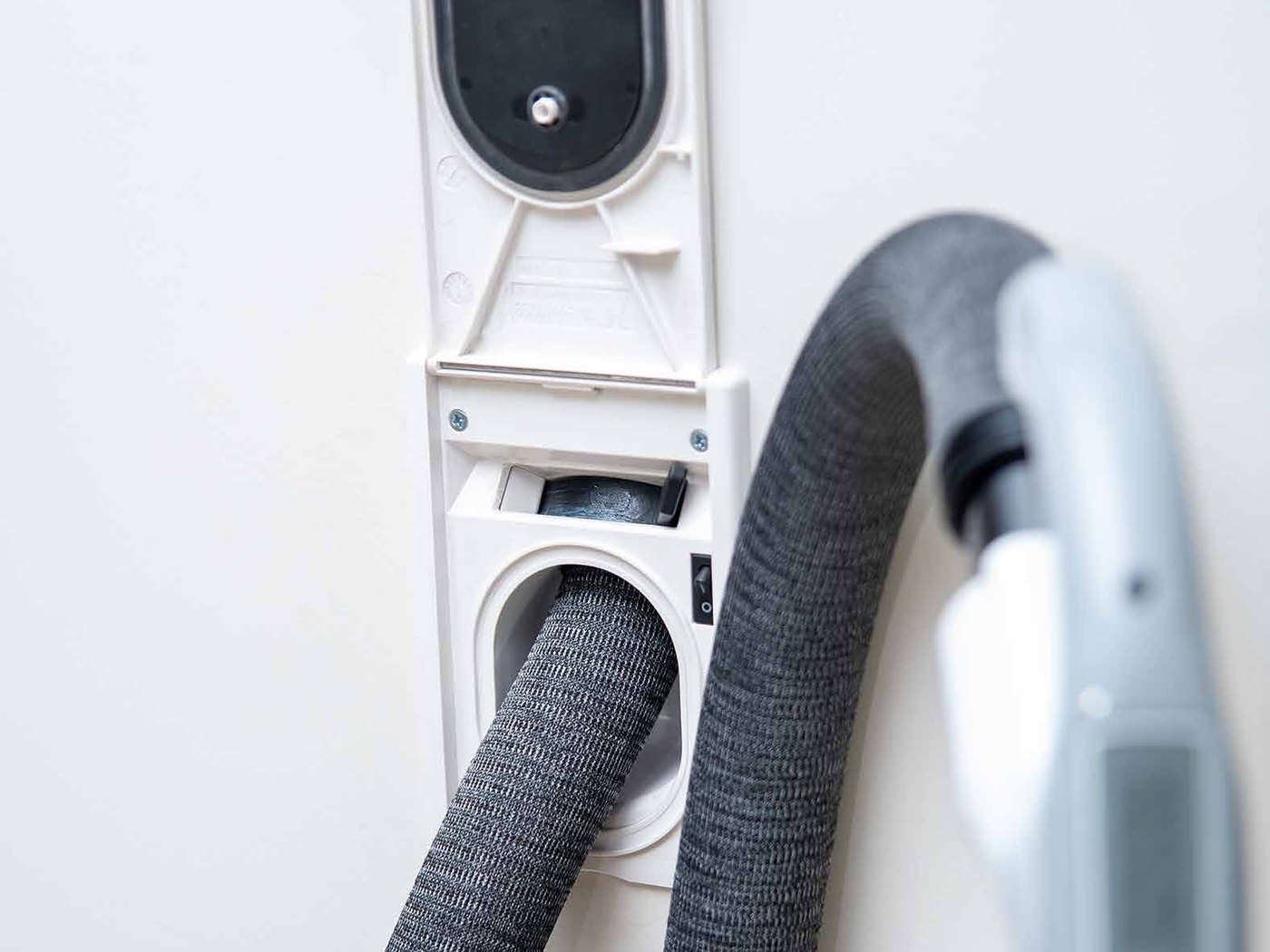
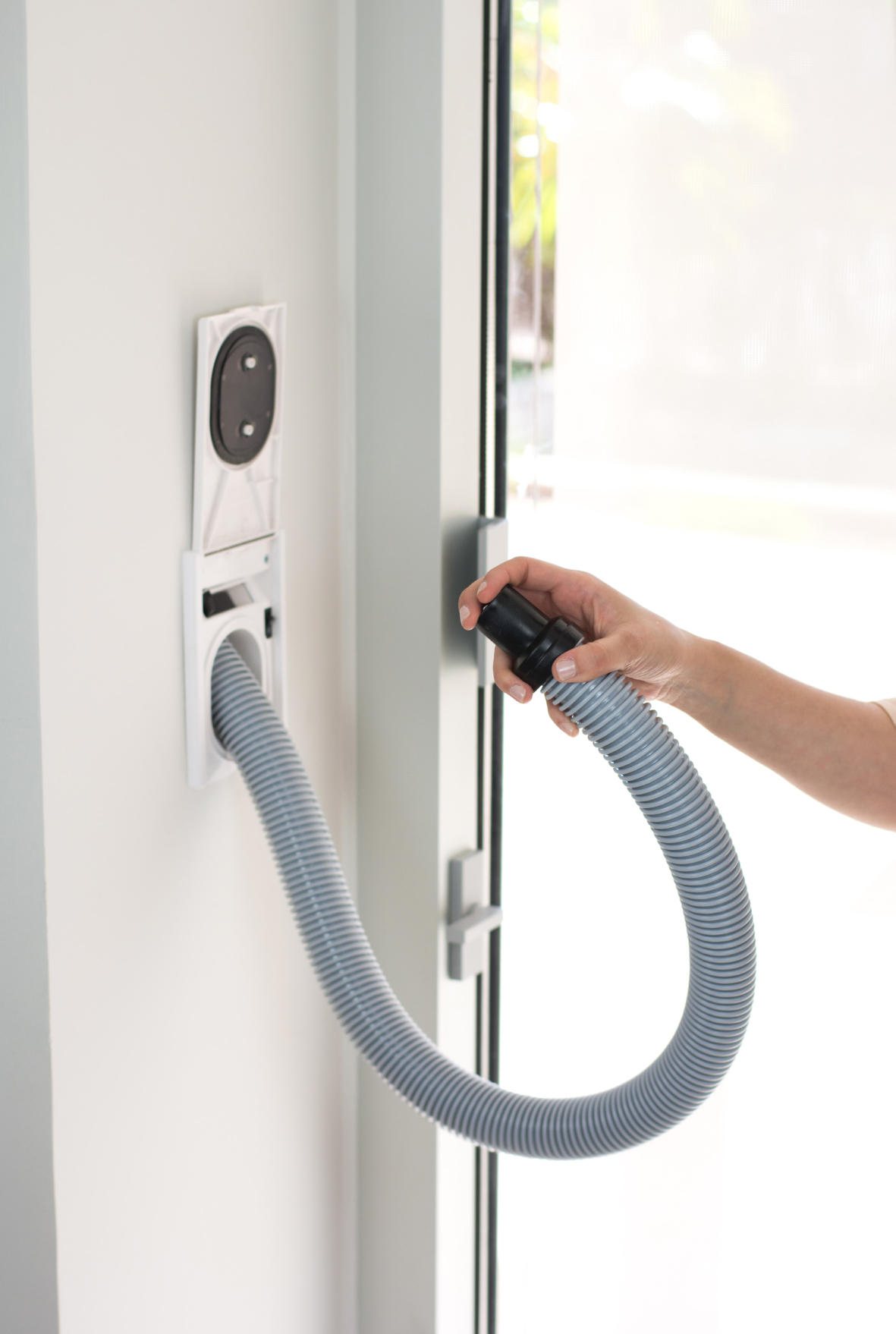
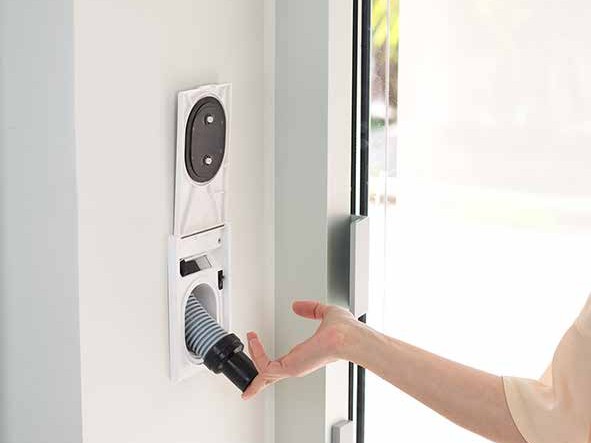
The usual objection to central vacuum is the hose: nine metres of it to carry, uncoil and find a cupboard for. Hide-a-Hose removes that. The hose is stored inside the tubing itself. You pull out the length you need, clean, and the system draws it back into the wall. What remains in the room is an inlet plate the size of a light switch.
For a finished house where storage is already allocated, and for a client who will be living with the system rather than specifying it, this is usually the deciding feature.
Inlet plates are available in several finishes so they can be matched to the switch and socket plates already specified for the room rather than fighting them.
Industrial
Workshops, factories and large facilities
A different problem from a villa, and a different machine. Where a production area generates dust, chips or waste continuously, a central extraction system removes it at source rather than cleaning up after it.
- EVOBLOCK — motor groups for continuous-duty central extraction across a facility, with multiple operators able to work at the same time.
- EVODUST — separation and filtration units for heavier industrial dust, keeping the material out of the motor group and making disposal a managed process.
| EVOBLOCK 2.2 kW | EVOBLOCK 3.0 kW | EVOBLOCK 5.5 kW | |
|---|---|---|---|
| Simultaneous operators | 1 | 2 | 3 |
| Supply | 220 V | 380 V | 380 V |
| Control | Mechanical | Electronic | Electronic |
| Inverter | — | Yes | Yes |
| Max. vacuum | 2,000 mm H₂O | 3,100 mm H₂O | 3,100 mm H₂O |
| Max. air capacity | 320 m³/h | 380 m³/h | 560 m³/h |
| Filter surface | 1.3 m² | 1.3 m² | 2.4 m² |
| Dust container | 100 L | 100 L | 70 L |
| Max. inlet valves | 60 | 70 | 90 |
| Furthest valve | 80 m | 90 m | 100 m |
| Noise level | < 70 dB | < 70 dB | < 70 dB |
Manufacturer's published figures. Soft-start on all three; the dust container is on castors and releases with a lever, which is the part that decides whether anyone actually empties it. Other motor sizes are available on request.
EVODUST separators sit between the collection point and the motor group, taking the dust and debris out of the airstream before it reaches the motor. Two sizes, each available with cartridge self-cleaning. Paired with EVO motor groups they cover the range from a workshop to a production facility, including arrangements where a second motor group stands by so that cleaning does not stop when one is serviced.
Who this is for
Manufacturing and assembly plants, joinery and stone workshops, vehicle workshops, laboratories, warehouses, and any facility where housekeeping is currently a labour cost.
Hotels and furnished apartments are the clearest case of all. One unit in a mechanical room or service area, inlets on every floor, and housekeeping working several of them at the same time. No trolley vacuum to drag between rooms, no motor noise in a corridor at seven in the morning, and no machine for a guest to see. The number of simultaneous users is what sizes the unit, so tell us how many housekeepers are on a floor before anything else.
Both are specified against the number of simultaneous users, the material being collected and the distance to the furthest connection point. This is engineering work, not product selection: we need the layout, the process and the material before recommending anything.
What we need before recommending anything
The layout, the process, the material being collected, the number of simultaneous users and the distance to the furthest connection point. An industrial extraction system specified from a brochure is a system that gets replaced.
We will also ask whether the material is combustible, abrasive or conductive, because each of those changes the hose, the separator and the earthing arrangement.
Everything else
Inlets, tools and installation materials
- Inlet points in several finishes to match switch plates and sockets
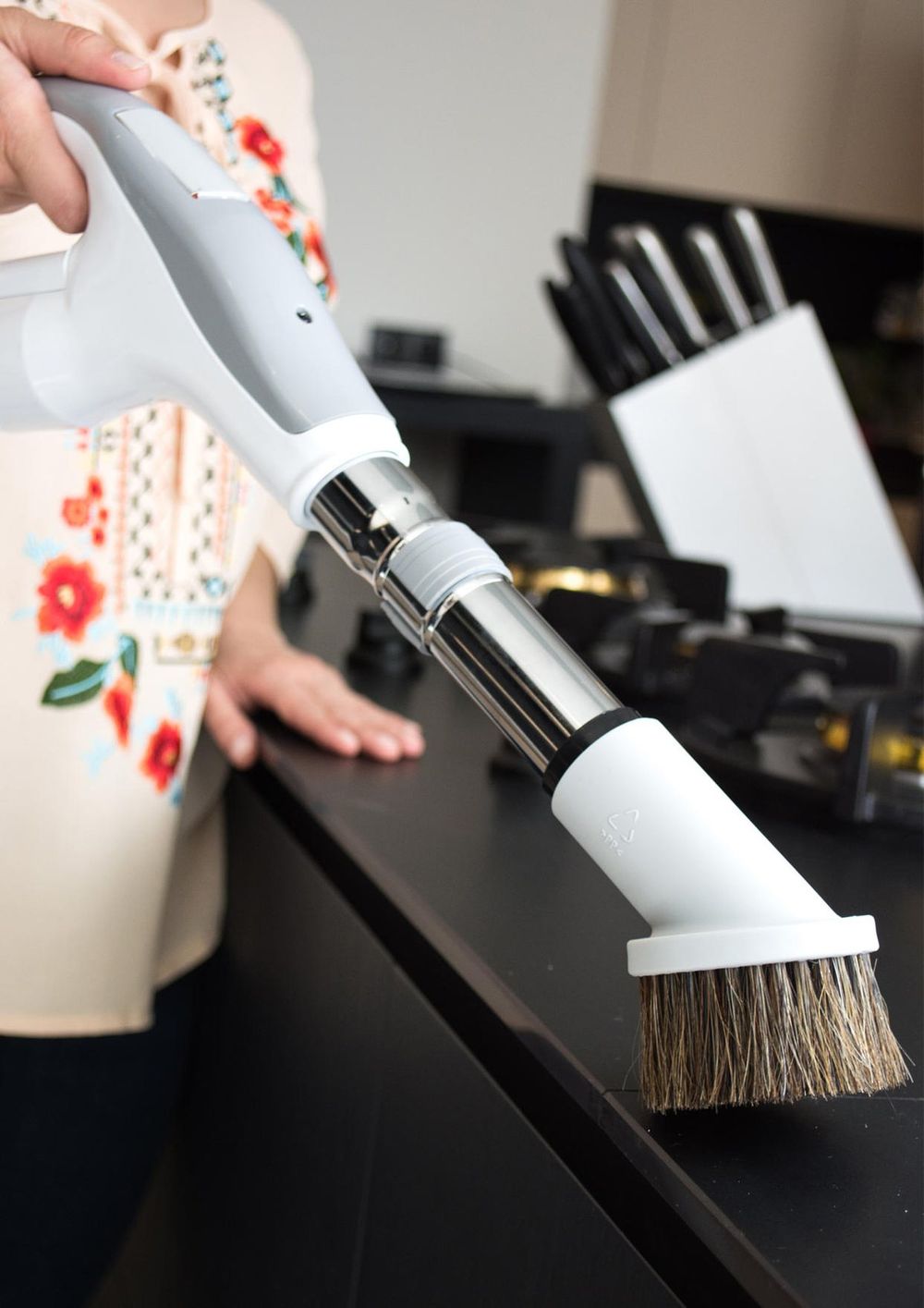
- Cleaning tool sets — floor, carpet, upholstery, crevice and brush heads, with on/off at the grip
- Installation materials — tubing, bends, sweep elbows, wye branches, couplers, brackets and signal wire
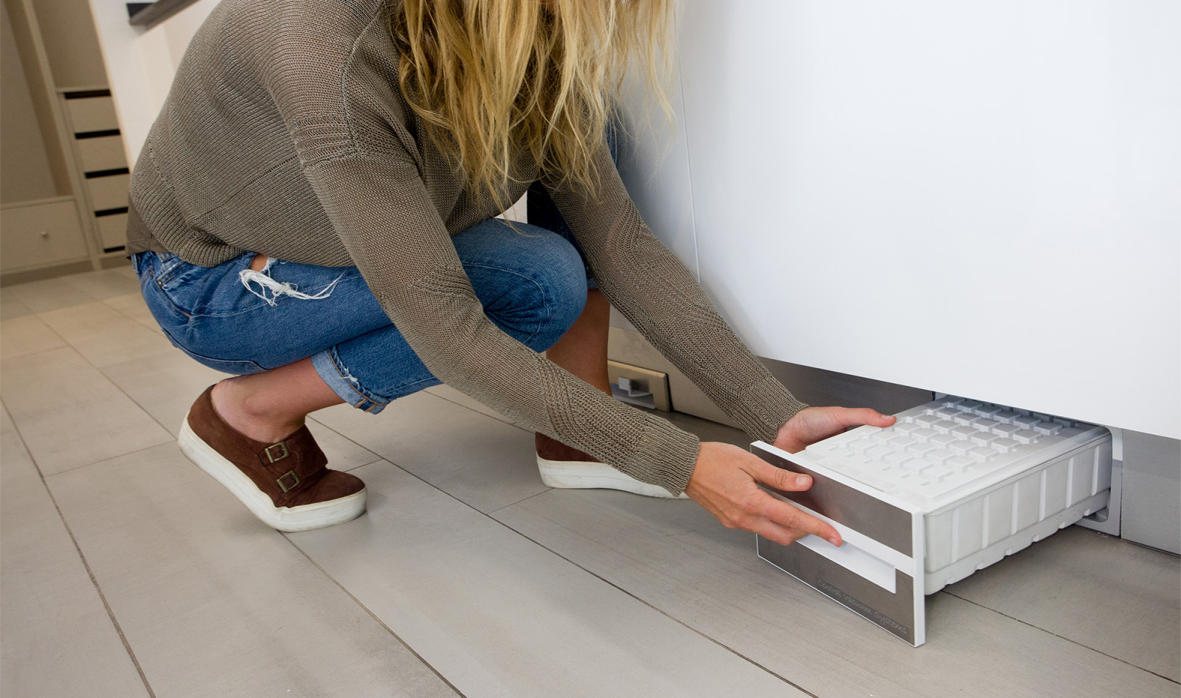
- Accessories — garage and workshop kits, car cleaning sets, and automatic dustpan inlets fitted at skirting level for sweeping directly into the system
Maintenance and spares
Canister emptying is the only routine task, and the interval depends on use rather than a calendar. Filters are washable or replaceable depending on the unit, motors are serviceable, and parts are held in the Kingdom. The maintenance schedule for a specific installation is issued with the handover documents.
Questions
What buyers actually ask
How does a central vacuum system work?
Tubing inside the walls connects inlet points in each area back to one unit in a garage or service room. You carry only a hose and a cleaning head. Plugging the hose into an inlet starts the motor, and the dust collects in a canister at the unit rather than in the room.
How many inlets does a villa need?
Enough that the hose reaches every corner of every room without being dragged through a doorway. For a typical villa that usually means one inlet per floor per wing, placed in a hallway rather than inside a room, but the number comes from the floor plan and the hose length rather than from a rule. We mark inlet positions on the drawings as part of the specification.
Can it be installed in an existing building?
Yes, though the route matters more than the building's age. Tubing can usually be run through service risers, ceiling voids, an unused shaft, or externally in a concealed run before re-entering at each floor. In a fully finished villa with no available route, Hide-a-Hose with a reduced number of inlets is often the practical answer. A site visit settles it.
At what stage of construction does the piping go in?
At first fix, with the electrical and plumbing rough-in, before walls are closed and screeds are poured. Earlier than that, we need the inlet positions marked on the layouts — which means the conversation belongs at design stage rather than on site.
How is it different from a portable vacuum cleaner?
Three things. There is no machine to carry. The suction comes from a larger motor than anything portable, because it does not have to be lifted. And the exhaust leaves the building, so the fine dust a portable unit returns to the room is gone instead of redistributed.
What maintenance does it need?
Emptying the canister at the unit, every few months in a normal household. Filter cleaning or replacement at the published interval. No bags to buy per floor and no annual service contract required for a domestic system.
Can one system serve a whole building rather than one villa?
Yes. For apartment buildings the usual arrangement is one unit per apartment, or a larger central unit with capacity for several simultaneous users where the management model suits it. Which is better depends on who pays for maintenance, so it is a commercial decision as much as a technical one.
Send us your floor plans
We will mark the inlet positions, size the unit and issue a submittal package.