

Division 04
EV Infrastructure for buildings and sites in Saudi Arabia
Everything the car park needs once the cars plug in — the power, and the protection.
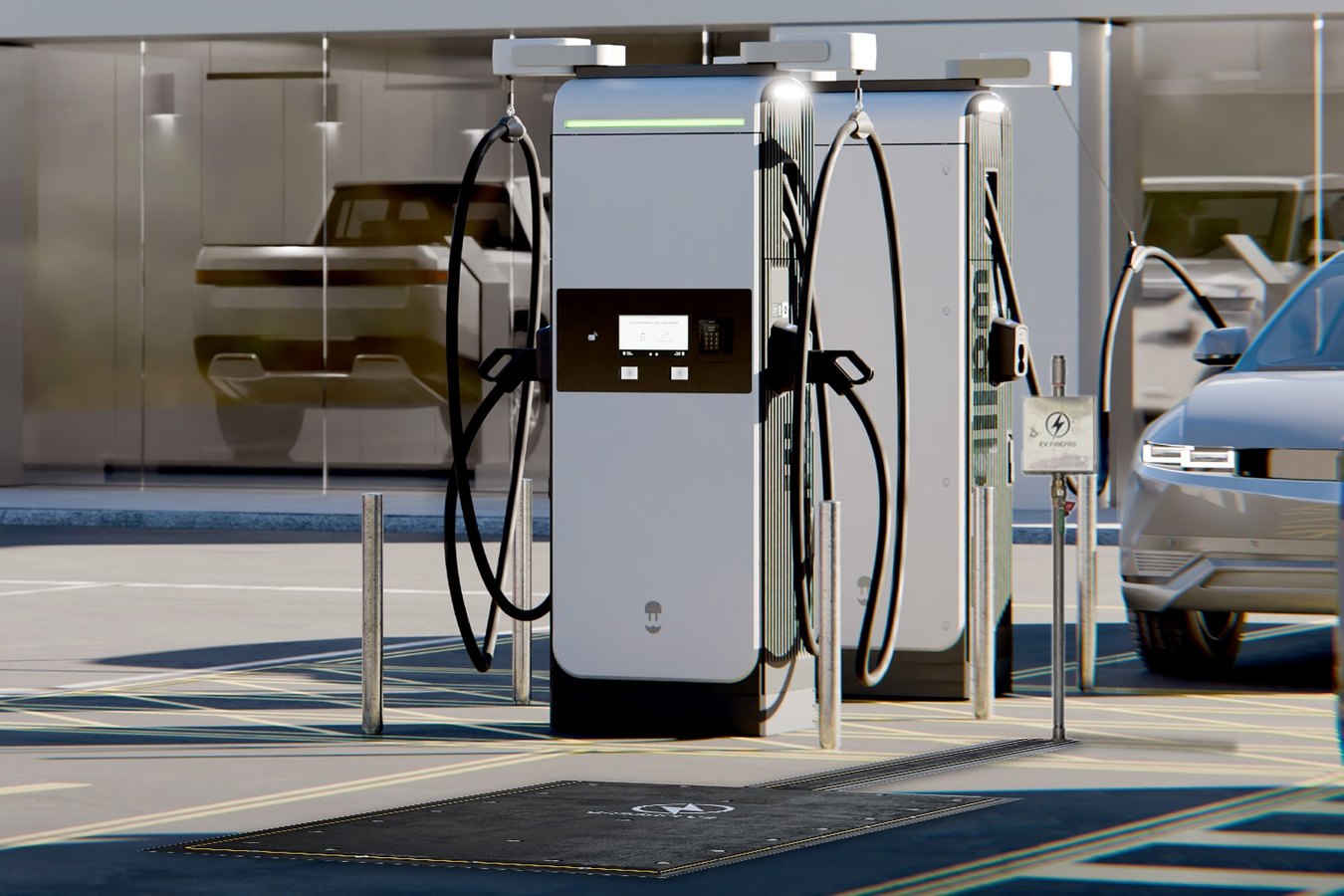
Putting chargers in a car park raises a second question immediately, and it is usually asked by the fire consultant rather than the client: what happens when one of these vehicles catches fire in an enclosed basement. The two questions belong in the same drawing set, because the answer to one changes the other.
Our position
Wallbox and EV FirePro in Saudi Arabia, through CENTRA

Spain

CENTRA is an authorised distributor of Wallbox EV chargers across the Kingdom of Saudi Arabia. We size the installation to the building’s electrical capacity, specify the chargers, supervise installation and commissioning, and support the system after handover.
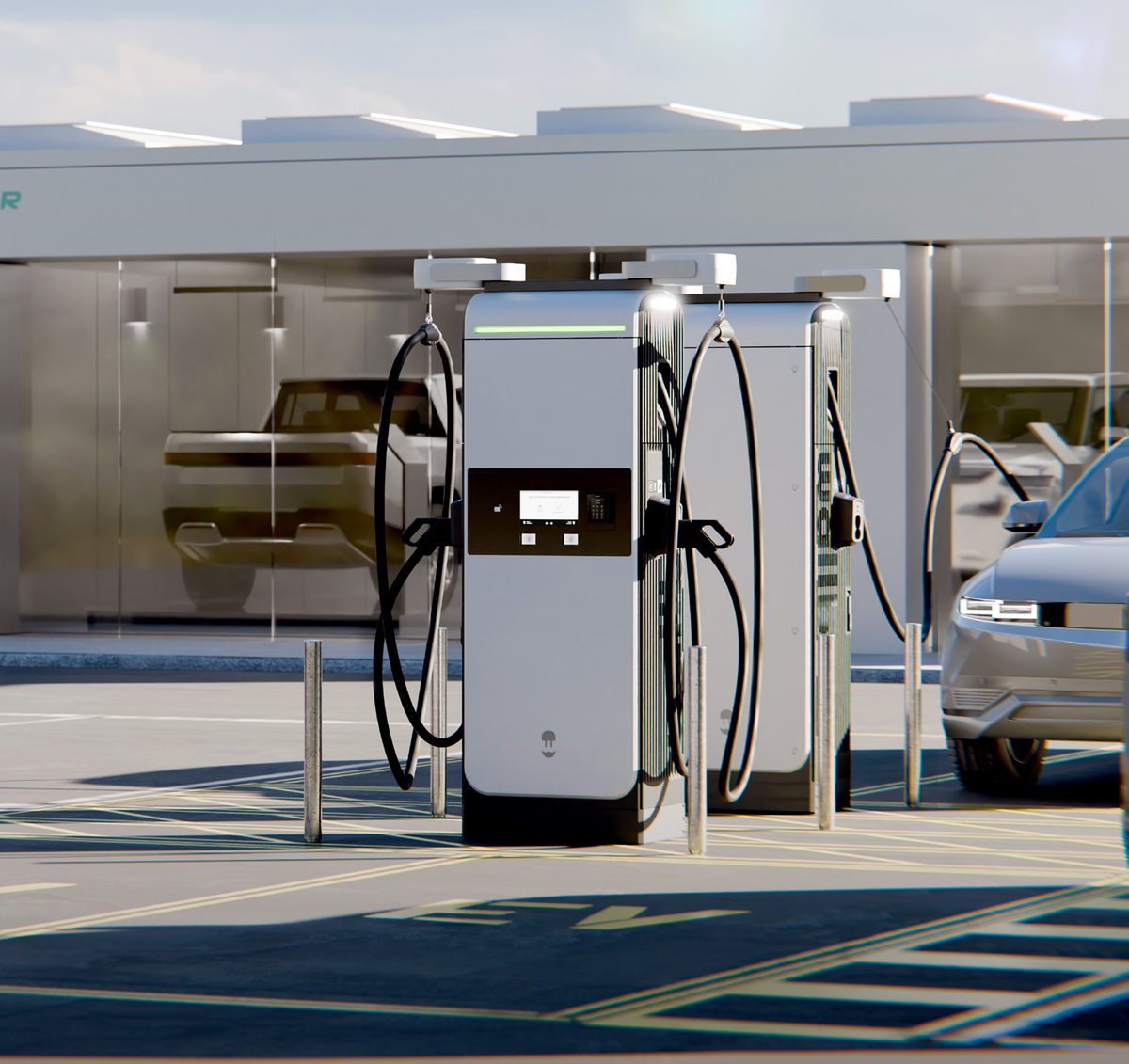
Wallbox is a Spanish manufacturer of EV charging equipment, from the Pulsar Pro AC charger for car parks where cars stay for hours, to the Supernova DC fast chargers for forecourts, retail and public sites.
Australia

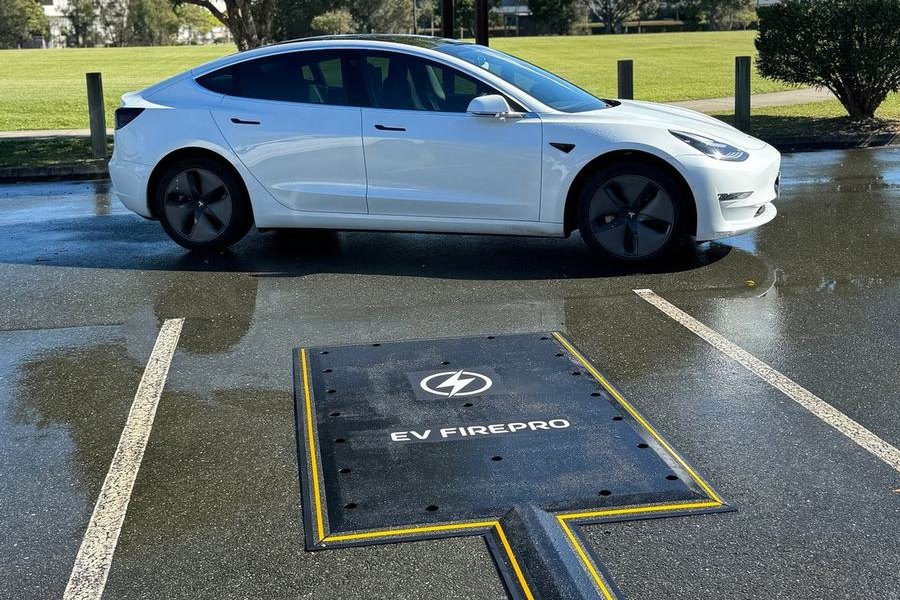
CENTRA is the exclusive agent for EV FirePro in the Kingdom of Saudi Arabia. We specify the system for the car park, coordinate it with the fire consultant and the hydraulic and electrical designers, supervise installation and commissioning, and support it after handover.
EV FirePro is made by EV Fire Protection, an Australian company that describes itself as leading the world in EV fire suppression. The system was developed with fire brigades and engineers, specifically for lithium-ion battery fires in enclosed car parks.
EV Chargers
From one bay in a villa garage to a public forecourt — with the load management that means the building does not need a new supply.
Read more →
EV Fire Protection
A lithium battery fire is fought from underneath the car, not above it. Under-vehicle cooling and lateral containment, bay by bay.
Read more →
Together
One parking bay, two systems
The charger goes on the wall or a column; the fire suppression plate goes in the floor of the same bay. They appear on the same drawing, go to the same consultant, and are best decided at the same meeting.
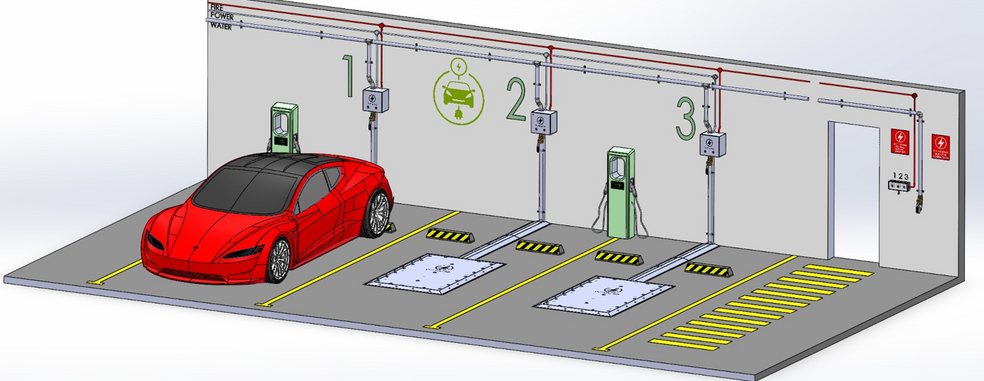
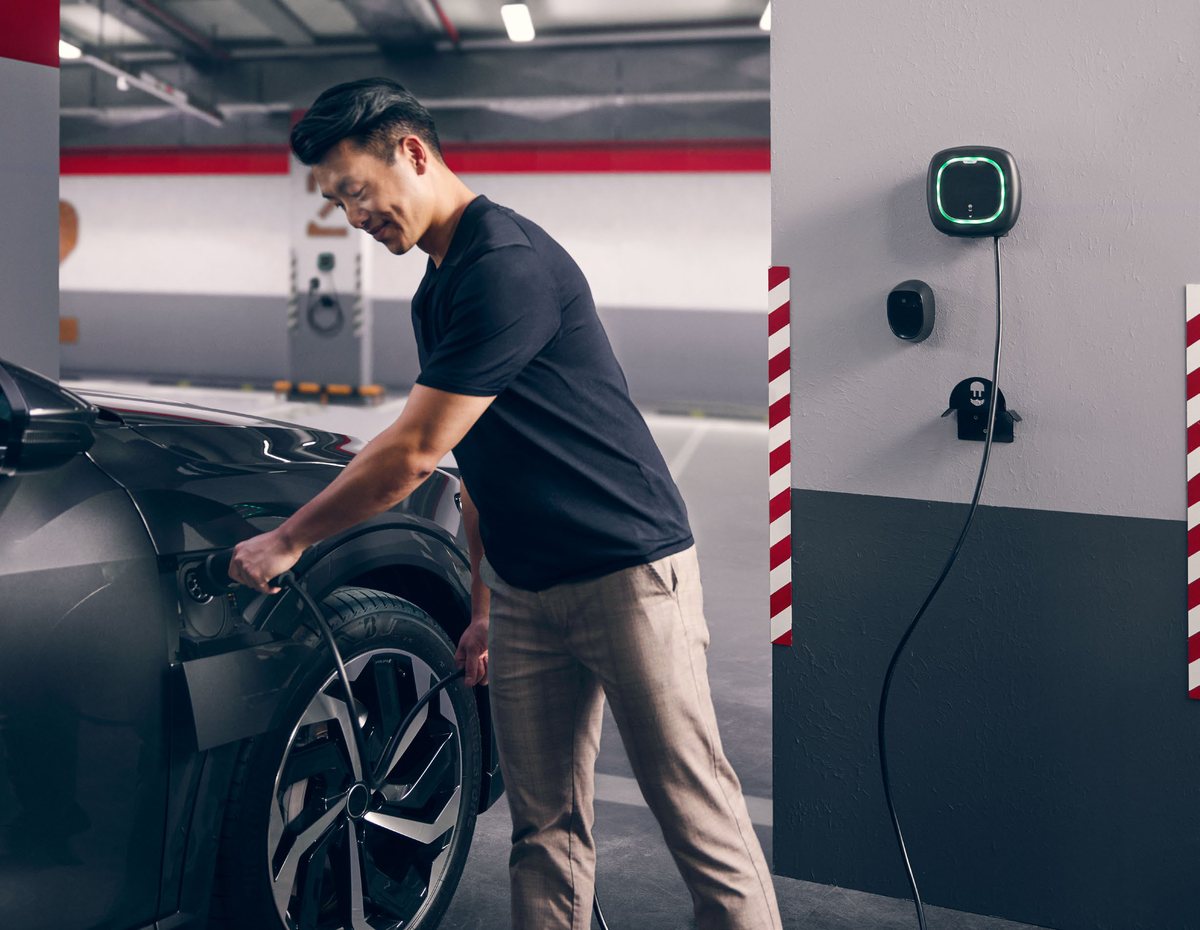
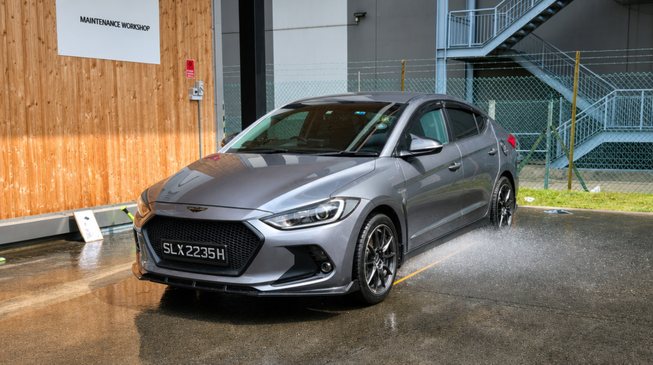
- One electrical calculation, one water calculation. The chargers need electrical capacity; the plates need water flow and pressure. Both come from the same car park layout and are settled in the same design stage.
- One fire strategy. The fire consultant reviews the chargers and the suppression together, which is how the question “what happens if one of these cars catches fire?” gets an answer instead of a delay.
- One supplier, one programme. Chargers and suppression delivered, installed and commissioned on the same programme, with one point of contact afterwards.
- Where projects usually start. With the charging bays, extending to the rest of the car park as the number of electric cars grows.
The blockers
The two questions that stall every project
“We don’t have the incoming supply for ten bays.”
Usually you do. Dynamic power sharing distributes the capacity the building already has across the chargers in real time, so the cars charge at whatever rate is spare rather than the building needing a new supply. This turns most refusals into projects.
“What does the fire consultant say?”
A car park sprinkler system is designed to wet a fire from above. A battery pack is underneath a vehicle, shielded by the car's own body, and it generates its own oxygen as it fails — so water from above reaches the car, not the battery.
What the fire protection system does, and does not, claim
The objective is not to extinguish the battery fire. It is targeted under-vehicle cooling and lateral water spray to contain flame spread, protect the structure, and reduce the need for close-range firefighter intervention.
We write it that way because a fire that stays in one bay, in a structure that survives it, is a manageable incident — and because a claim that fails under examination costs more than it wins.
Send us your car park layout
Bay count, incoming supply capacity and your fire strategy. You get a load calculation and a protection layout back.