

Charging
EV charging stations for homes, businesses and public sites in Saudi Arabia
From one bay in a villa garage to a public forecourt — with the load management that means the building does not need a new supply.
This is the first objection on every project with more than two bays, and it is worth answering before anything else: you probably do not need to upgrade the incoming supply.
Most people search for this as an EV charger, a home EV charger or an EV charging station. The charger is the visible part; the electrical supply and the parking layout decide what can be installed.
Load management
You probably do not need a new supply
- Power Boost measures the building's real-time consumption and charges the car at the fastest rate the remaining capacity allows. When the building is busy the car charges slower; when it quietens down the car speeds up. No upgrade to the electrical infrastructure.
- Dynamic Power Sharing does the same across up to 100 chargers, distributing whatever capacity is available between the cars actually plugged in rather than reserving a full load for every bay.
- Eco-Smart charges from surplus solar — 100% solar, or a solar and grid mix — so a building with a PV array uses it rather than exporting it.
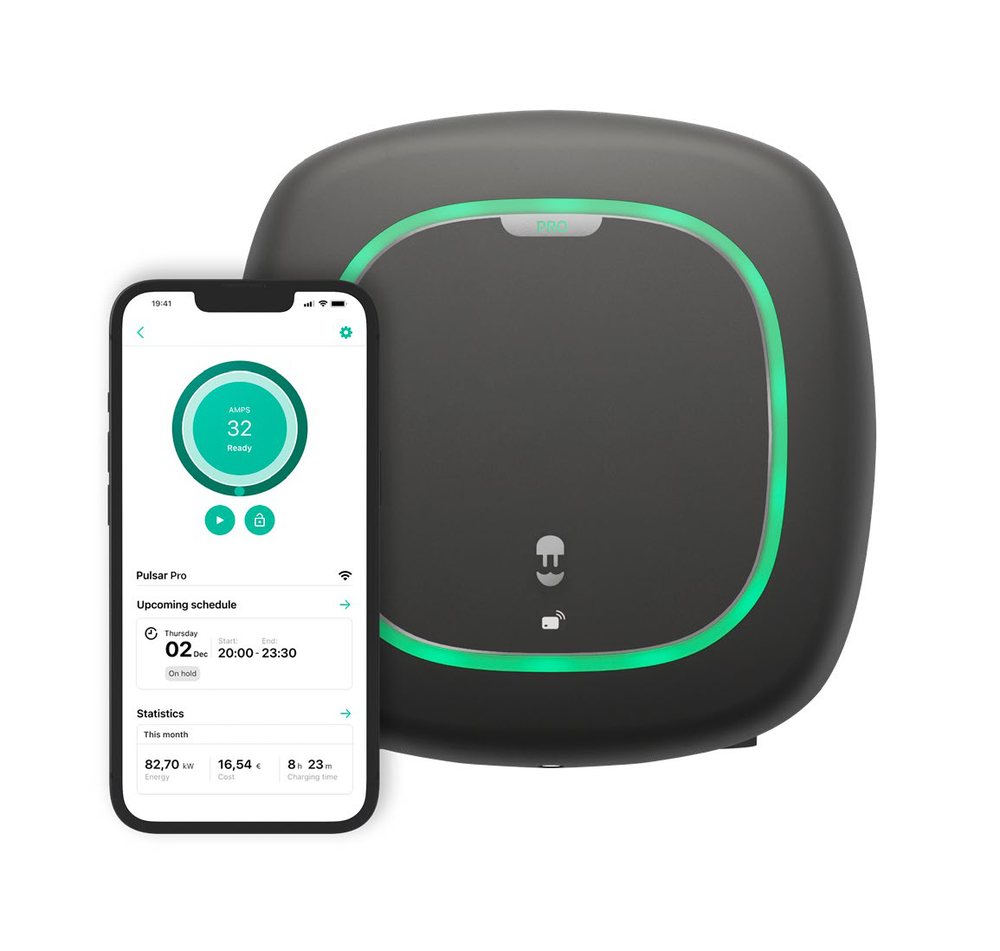
- myWallbox, the app and portal, carries the rest: scheduling, remote lock and unlock, user management and consumption statistics.
The practical consequence: a car park that “cannot take ten chargers” on a load calculation can usually take them on a sharing calculation. Send us the incoming supply capacity and the bay count and we will tell you which.
The hardware
Three chargers, three different buildings
Charging equipment is chosen by who is plugging in and for how long, not by kilowatts. A resident parked overnight and a driver stopping for twenty minutes are two different projects.
Home
AC wall chargers for villas
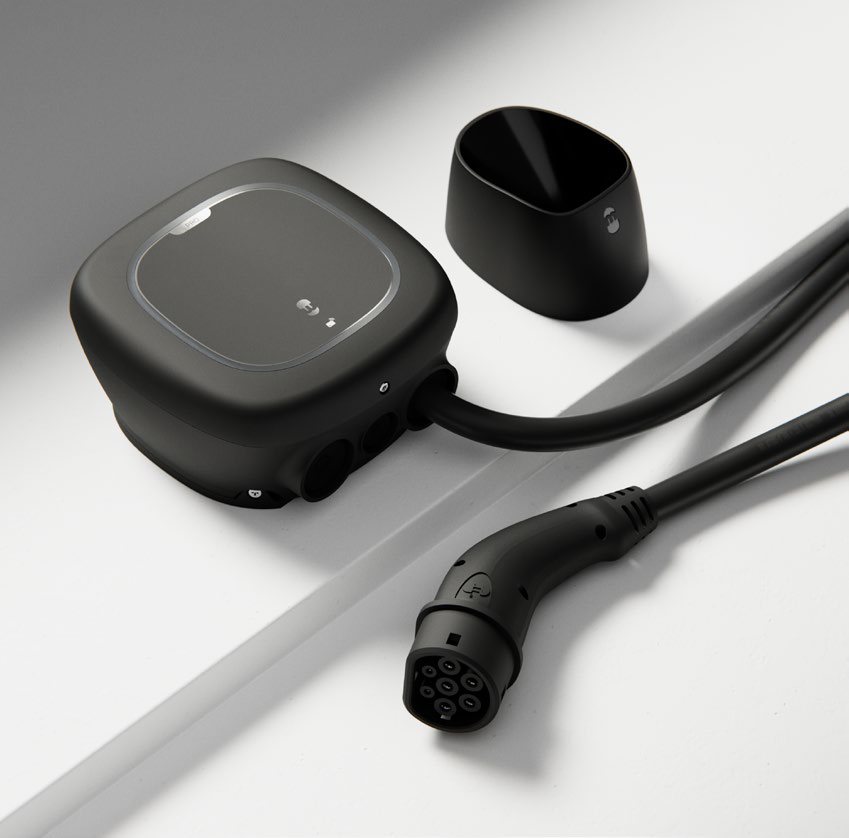
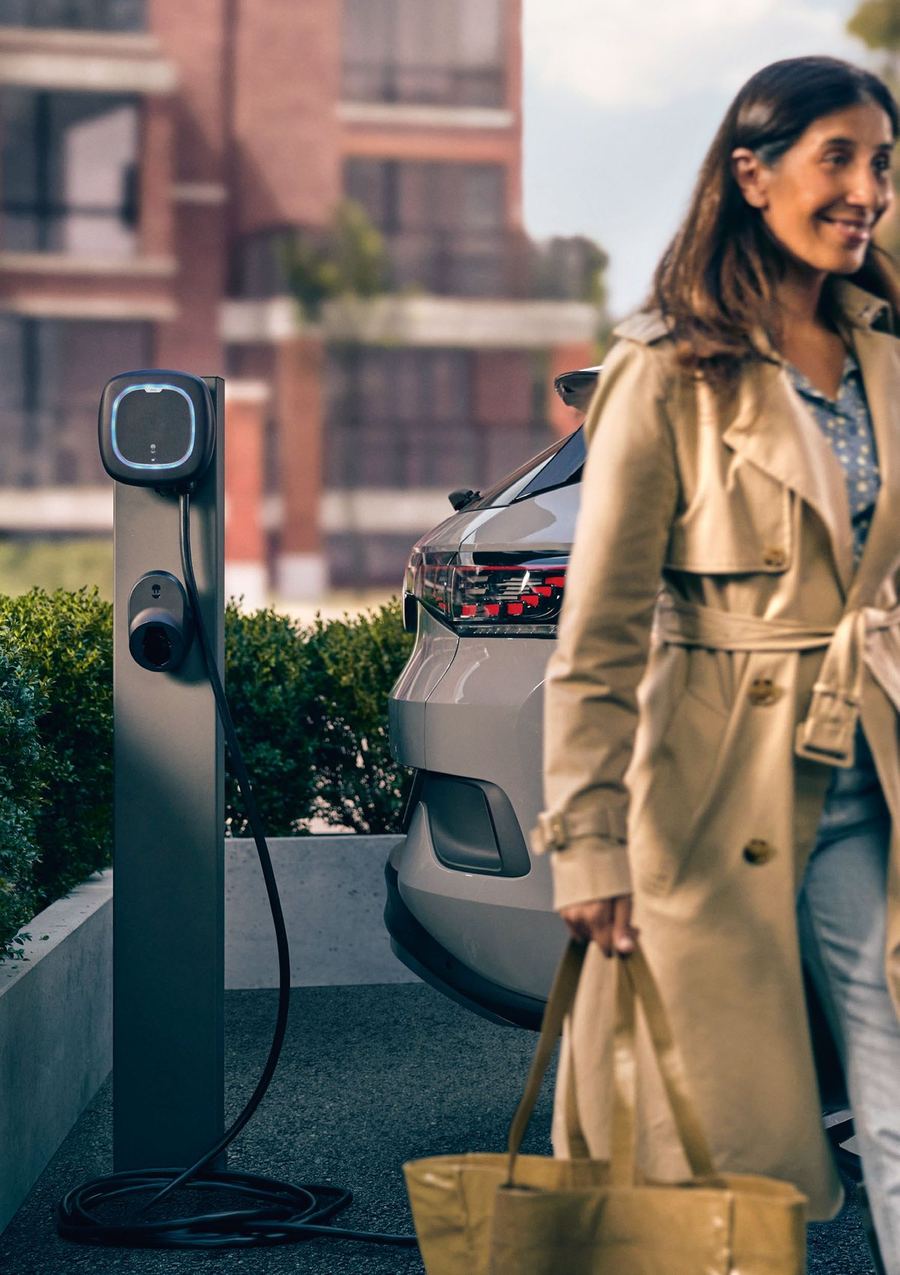
AC wall chargers for villas and private garages, with solar integration and home energy management so the charge follows the cheapest hour of the day rather than starting the moment the car is plugged in.
AC charging
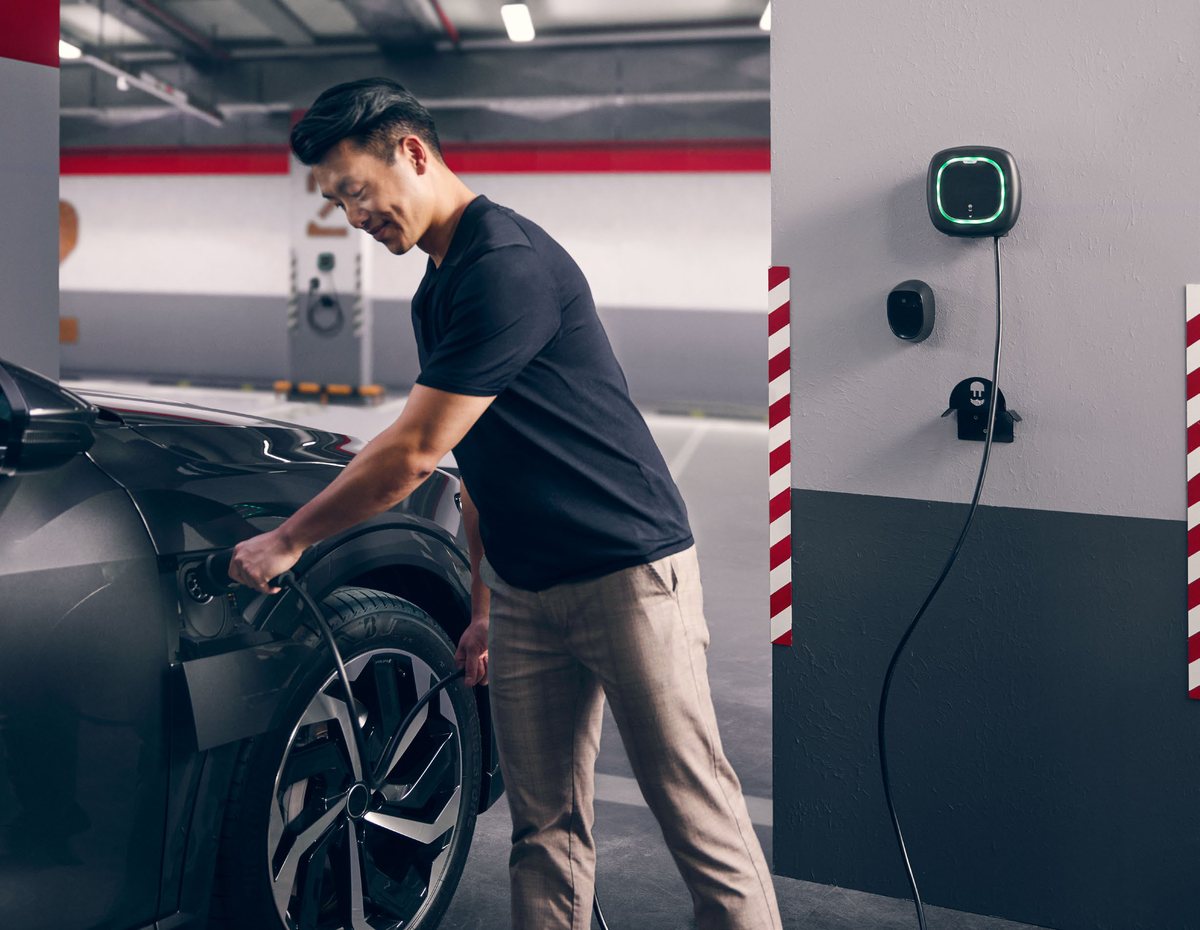
Pulsar Pro, for parking that lasts hours
A compact tethered unit built for shared use — which is a different problem from a private garage, because it has to work for people who do not own it.
- Power
- 7.4 / 11 / 22 kW
- Connector
- Type 2, 32 A, single or three phase
- Charging mode
- Mode 3 (IEC 61851-1)
- Cable length
- 5 m or 7 m, tethered
- Dimensions
- 198 × 201 × 99 mm
- Weight
- 1.3 kg (excluding cable)
- Operating temperature
- −30 °C to +50 °C
- Connectivity
- 4G, Wi-Fi, Bluetooth
- User identification
- RFID and app; NFC hardware-ready
- Back-office interface
- OCPP, partner API and SDK
- Status indication
- Halo RGB light, app and portal
- Access control
- Scheduling, lock / unlock / auto-lock, user management
- Protection
- IP55 / IK10
- Billing
- Pay-per-charge and pay-per-month, built into the platform
- Security
- Tamper detection, secure boot, secure updates and storage, encrypted communications
Manufacturer's published specification. Operating range to +50 °C is the figure to check against an uncovered car park in Riyadh in July — which is why we will ask about shade and orientation before confirming a layout.
Pulsar Pro is the answer to “who pays for the electricity”. That question stalls more residential and workplace charging projects than cost does: the building has one meter, the cars belong to individuals, and nobody wants to run a reimbursement spreadsheet. Authentication by RFID or app identifies the user, and the platform bills per charge or per month.
- Power Boost — the charger reads the building's live electrical load and takes only what is spare, so a car park can be electrified without upgrading the incoming supply. In a retrofit this is usually the difference between a feasible project and an impossible one.
- Dynamic Power Sharing — one supply distributed intelligently across a group of chargers, scaling to large installations without a proportional increase in cable and switchgear.
- Eco-Smart — charging from a building's surplus solar generation, or a chosen mix of solar and grid.
- Billing and user management — pay-per-charge or pay-per-month through the platform, which is what makes a residential installation workable when the electricity bill is shared.
The question that actually decides the project
How much spare capacity does the building's incoming supply have? Everything else — how many chargers, at what power, in which bays — follows from that one number. If you do not have it, the electrical consultant or the facility manager does, and it is worth getting before anyone draws a layout.
DC fast charging
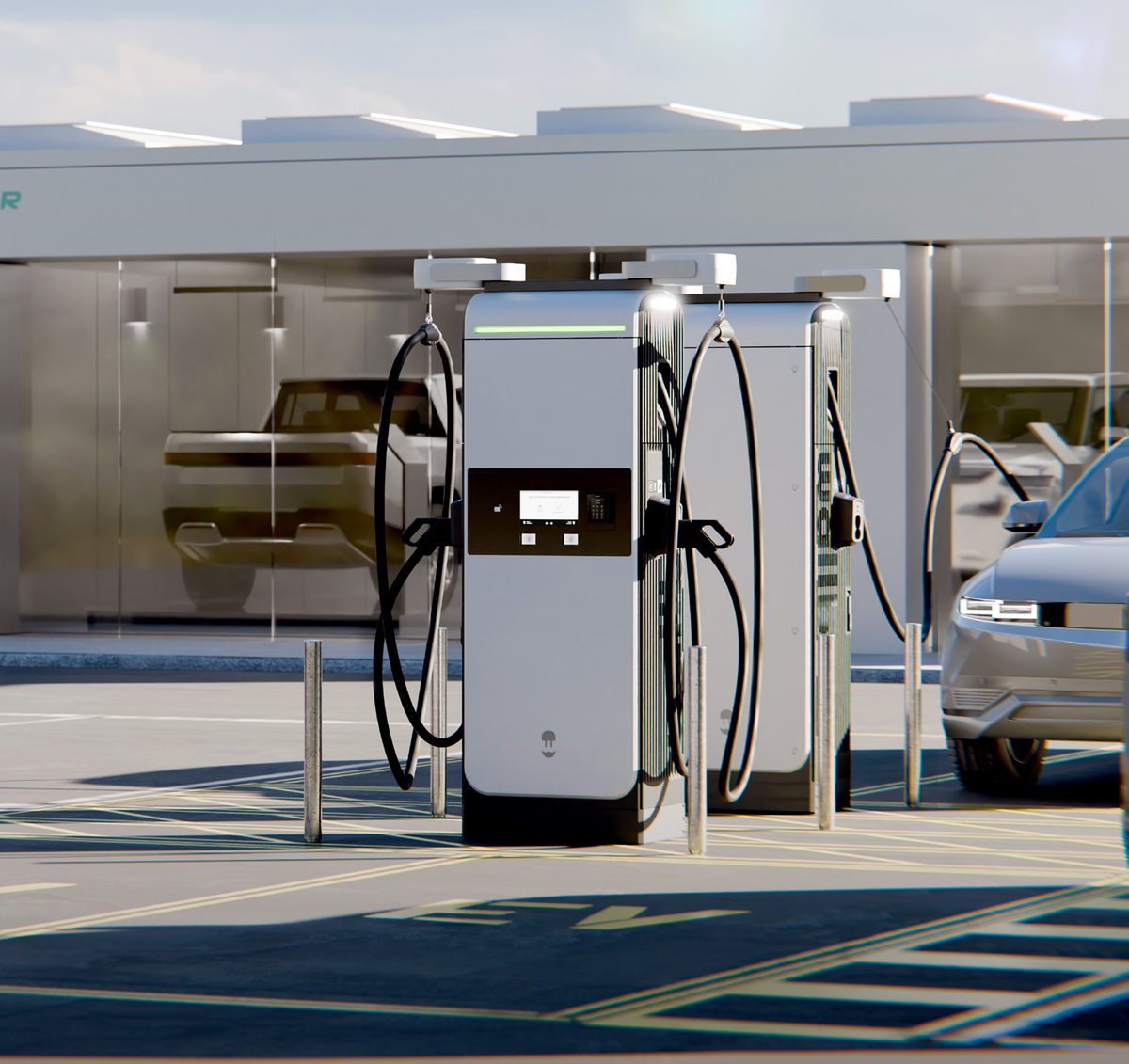
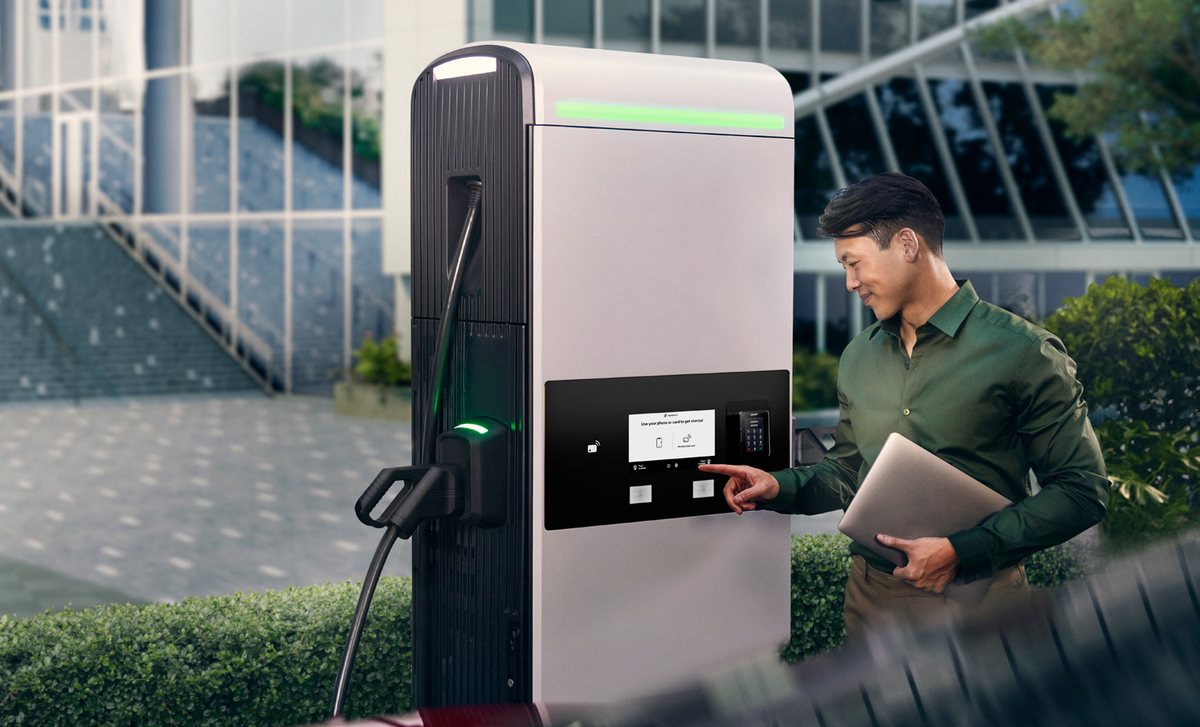
Supernova 150 and 220
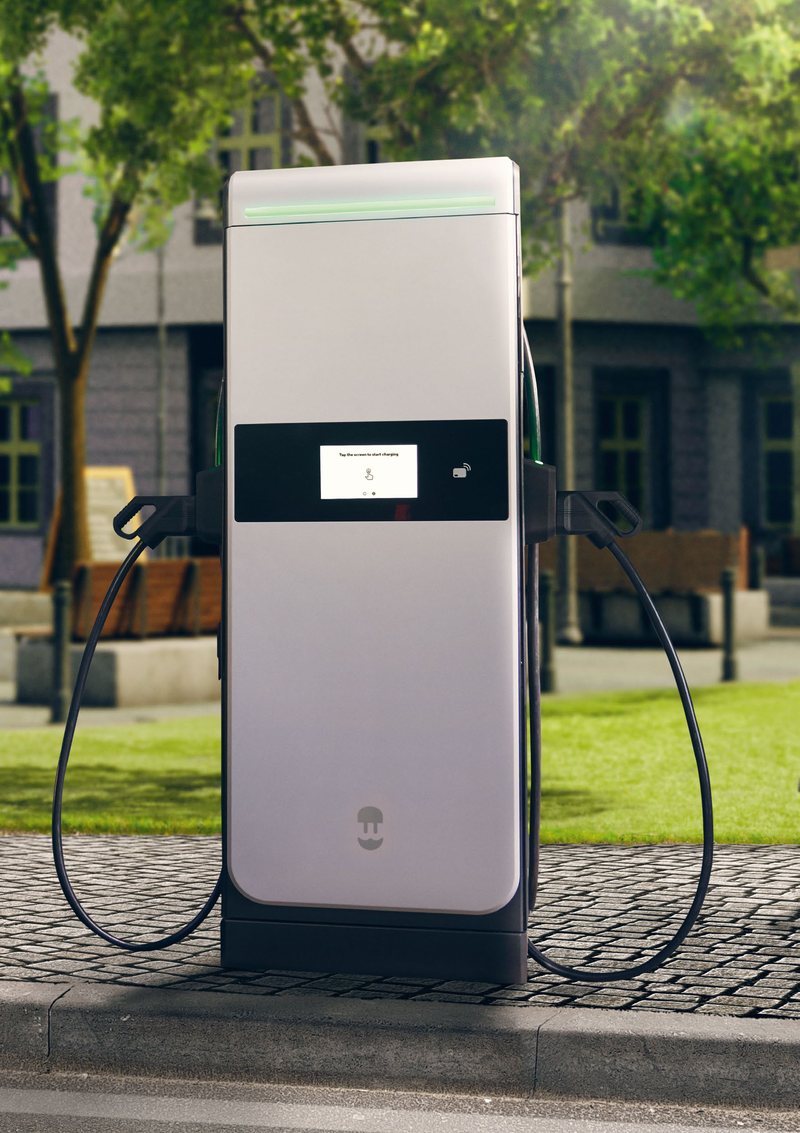
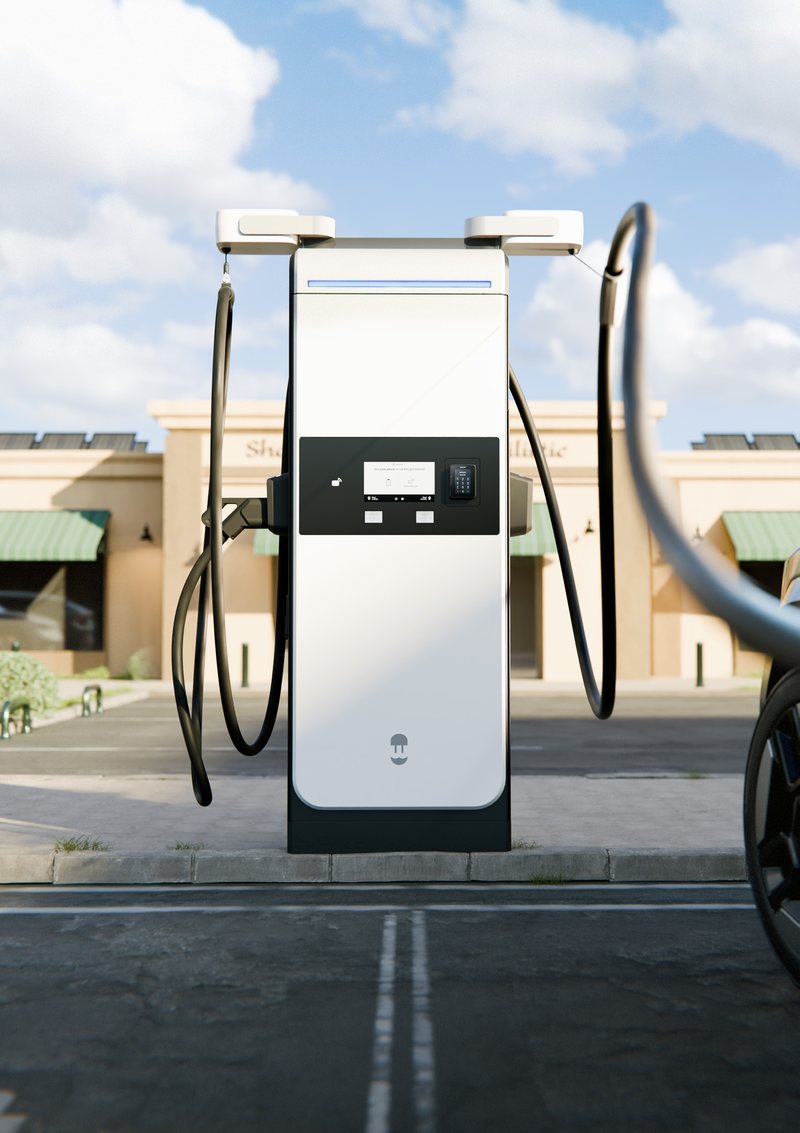
For sites where the business model depends on how quickly a bay turns over: retail, highway stops, fleet depots and public charging operators.
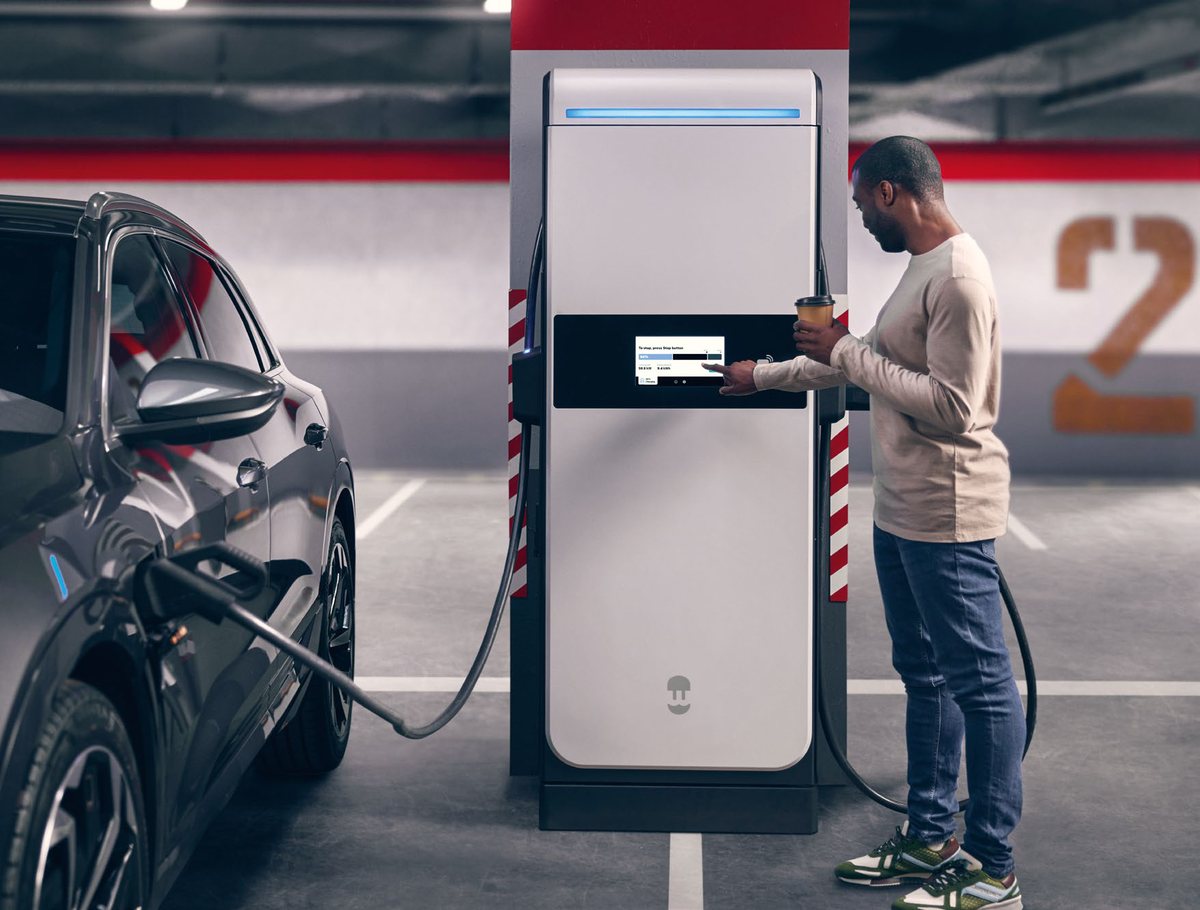

| Supernova 150 | Supernova 220 | |
|---|---|---|
| Output power | 150 kW | 220 kW |
| DC connectors | CCS2 + CCS2, or CCS2 + CHAdeMO | CCS2 + CCS2 |
| Cable length | 3 m or 5 m | 5 m |
| Output voltage | 150–1,000 V | 150–1,000 V |
| Supply input | 400 V ± 10 %, 50–60 Hz | 400 V ± 10 %, 50–60 Hz |
| Nominal efficiency | 95 % | 95 % |
| Environmental rating | IP54, IK10 | IP54, IK10 |
| Operating temperature | −30 °C to +50 °C | −30 °C to +50 °C |
| Operational noise | < 65 dBA | < 65 dBA |
| Dimensions | 2,000 × 868 × 453 mm | 2,000 × 868 × 453 mm |
| Weight | 400 kg | 400 kg |
| User interface | 10″ anti-vandal colour touch display, sunlight-readable | 10″ anti-vandal colour touch display, sunlight-readable |
| Back-office | OCPP 1.6J | OCPP 1.6J |
Manufacturer's published specification. The 50–60 Hz supply range covers the Saudi grid without a frequency conversion conversation; the 400 V input is the figure to put in front of the electrical consultant early.
Supernova 220, in particular
| Output | 220 kW |
| Architecture | Six modules, 95% efficient |
| Split Charge | 110 kW per outlet when a second car plugs in |
| Serviceability | Modules weigh 16 kg and are handled by one person |
| Installation | Installs with a forklift rather than a crane |
| Support | Remote diagnosis and troubleshooting, customisable service packages |
Supernova 150 where 150 kW suits the site.
Two of those lines matter more than the headline figure. Split Charge means a site with limited power still serves two cars rather than making one wait — which is what determines throughput on a forecourt, not peak kW. And a 16 kg module handled by one person is the difference between a fault fixed in an afternoon and one that waits for a crane and a road closure.
- Modular power conversion. Power is produced by several modules in parallel, so a single module failure degrades the charger instead of stopping it. Each module is light enough for one person to handle, and reachable from the side of the unit.
- Power allocated to demand. When a car asks for less than the full rating, the charger reduces the number of modules working and cycles the rest off — fewer running hours on each module, and a longer service life across the unit.
- Two cars at once. Available power is split dynamically between the two outlets, which is what raises utilisation on a site with a small number of bays.
- Remote diagnosis. Faults are investigated from the back office before anyone is dispatched, which matters a great deal when the site is four hours from the nearest engineer.
What we will not tell you
We will not quote a charging time. It depends on the vehicle, its battery temperature, its state of charge and its own charging curve, and a supplier who gives you a single number for it is quoting the best case.
What we will give you is the output specification, the supply requirement and the utilisation arithmetic for your bay count — which is what the business case actually needs.
For this climate
Outdoor installation in Saudi Arabia
The manufacturer's published specification
Pulsar Pro is rated IP55 / IK10, with an operating temperature range of −30 °C to +50 °C.
Centra's installation guidance
For outdoor installations in Saudi Arabia we specify a shaded or canopied position. Direct sun on an exposed wall through a Riyadh summer raises enclosure temperature well above ambient, and shade protects both charging performance and the life of the unit.
Those are two separate statements and we keep them separate. The first is what the manufacturer certifies; the second is what we have concluded about installing it here. Any supplier who hands you a European datasheet without the second half has not thought about the site.
Questions
What buyers actually ask
How much power does the building actually need for ten bays?
Far less than ten times the charger rating, which is the calculation that produces the refusal. With dynamic power sharing the installation draws whatever is spare and divides it between the cars plugged in at that moment — and in a residential or workplace car park, most bays are occupied by cars that are already full. Send us the incoming supply capacity, the bay count and the building's load profile, and we will give you the real figure.
AC or DC — which belongs in this building?
AC where cars dwell for hours: homes, workplaces, hotels, residential car parks. The car is parked anyway, so charging speed is irrelevant and AC is a fraction of the cost and the electrical work. DC where the driver is waiting: forecourts, retail, transport hubs, and fleet depots with tight turnaround. Putting DC into a residential basement is the commonest and most expensive specification error in this category.
Who pays for the electricity in a shared car park, and how is it billed?
Each user authenticates by RFID card or through the app, and the platform bills per charge or per month. The building owner sets the tariff and sees the consumption per user. This is a configuration decision at commissioning, not a later addition, so settle who is being billed — residents, staff, visitors, tenants — before the system is set up.
What does the electrical room need before any charger is ordered?
Available capacity at the board, a route for the cabling to the bays, protection devices to the charger specification, and a position for the load-management current transformer on the incoming supply. The item most often missed is that last one — power sharing measures the building's consumption, so it needs a measuring point at the right place on the incoming side.
Can more bays be added later without redoing the infrastructure?
Yes, if the first installation is designed for it — containment and cable capacity sized for the eventual bay count rather than the initial one, and power sharing configured from the start. Adding chargers later to an installation designed only for today means a second round of civil works, which costs more than the chargers. Tell us the five-year bay count, not the opening-day one.
Can it charge from solar?
Yes. Eco-Smart charges from surplus solar, either entirely from solar or from a solar and grid mix, so a building with PV uses its own generation for the car rather than exporting it.
Will it work through a Riyadh summer, and does it need shade?
The manufacturer rates Pulsar Pro to +50 °C. Our installation guidance for Saudi Arabia is a shaded or canopied position for any outdoor unit, because direct sun on an exposed wall raises enclosure temperature well above ambient and shade protects both performance and unit life. We will not quote you a derating figure the manufacturer has not published.
Send us your bay count and supply capacity
We will run the load calculation and tell you what the building can actually take.