

Air to breathe
Heat & Energy Recovery Ventilation for buildings in Saudi Arabia
Fresh filtered air into every room, stale air out of every bathroom and kitchen, and most of your cooling kept inside the building.
Your air conditioning is not bringing in air
A split unit or a central AC takes the air already in the house, cools it, and blows it back. It does not bring in new air. Every hour the doors and windows stay shut, the same air goes round again — and everything in it goes round with it.
What accumulates is not exotic: carbon dioxide from breathing, fumes from cooking, humidity from washing and showering, dust that gets past the filters, and the chemicals that come off new furniture, paint, carpets and cleaning products.
Figures published by SACH.
And opening a window is not the answer here
Forty-five degrees, dust, and street noise. In Riyadh the window is not a ventilation strategy for most of the year. That single sentence is the reason this product exists in this market: everywhere else, ventilation is a choice between fresh air and comfort. Here it is a choice between fresh air and the cooling bill, and a recovery system removes the choice.
Choosing for a villa? Read the guide: HRV or ERV for a villa in Riyadh.
It is also called a fresh air system, mechanical ventilation with heat recovery (MVHR) or an energy recovery ventilator.
How it works
What the system does instead
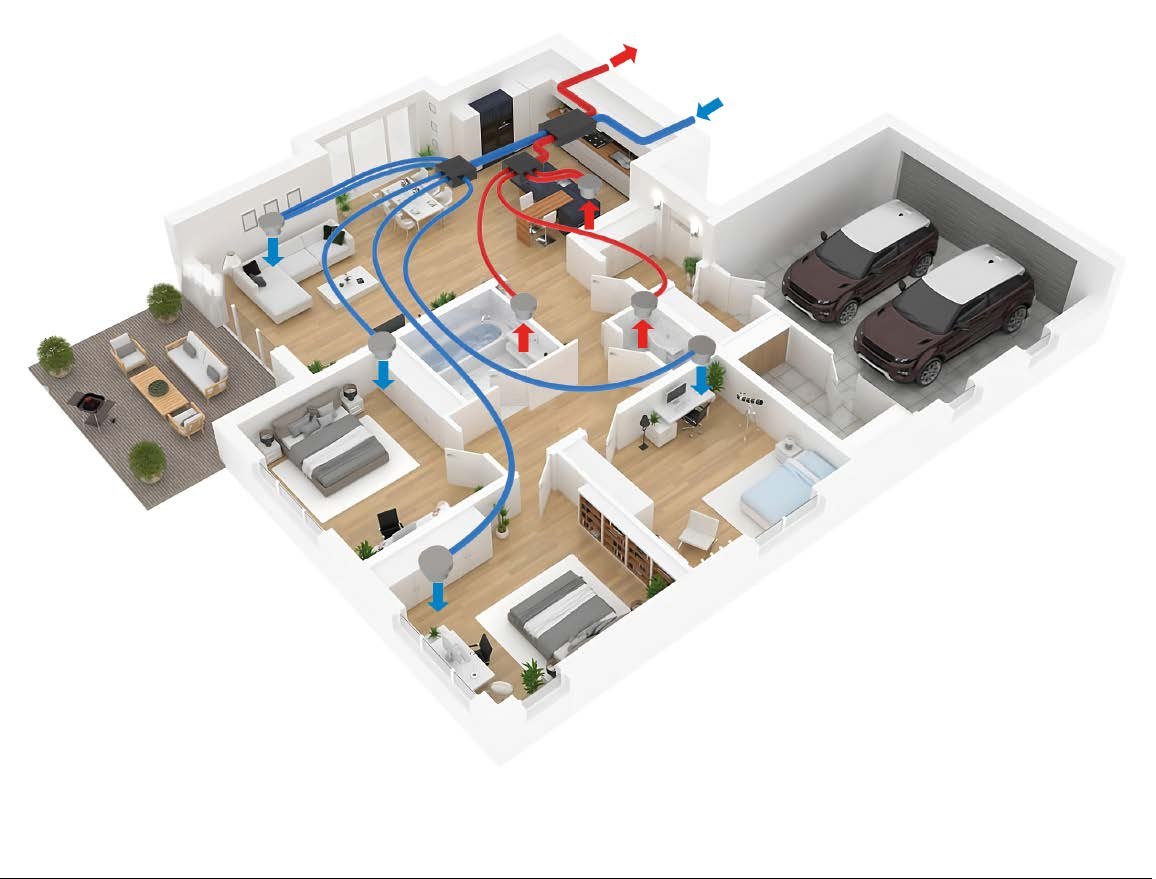
Stale, humid air is extracted continuously from the kitchen, bathrooms, toilets and laundry. Filtered fresh air is supplied to the bedrooms, majlis, living and dining rooms. On the way, the two streams pass on either side of a heat exchanger — they never mix — and the coolness in the outgoing air is transferred into the incoming air before it reaches the room.
Recovery efficiency runs from 85% to 95% depending on the unit, with the highest figures on the Sense and Space ranges. What arrives in the bedroom is outside air that has already been cooled by the air leaving the bathroom.
The specification decision
HRV or ERV — and why the answer is different in the Gulf
- HRV — a sensible exchanger. Transfers heat only. Designed for climates where the outside air is cold and dry, and the only thing worth recovering is temperature.
- ERV — an enthalpic exchanger. Transfers heat and moisture. Pulling in outside air in the Gulf means pulling in its humidity, and removing that humidity is a large part of what a cooling system spends its energy on. An enthalpic exchanger hands much of that moisture back out with the exhaust air, before it reaches the room and before the AC has to deal with it.
For most projects in Saudi Arabia, the ERV is the correct selection
The HRV ranges below are for projects that specifically call for a sensible exchanger.
ERV
WINDY — energy recovery ventilation
The enthalpic range, and the one to specify by default in this climate.
| Model | Max airflow | Max heat recovery | Max power | Noise | Suits |
|---|---|---|---|---|---|
| WINDY 250 | 250 m³/h | 86% | 62 W | 28 dB | Apartments, small villas |
| WINDY 350 | 350 m³/h | 89% | 140 W | 32 dB | Standard villas |
| WINDY 500 | 500 m³/h | 87% | 165 W | 34 dB | Large villas |
| WINDY 650 | 650 m³/h | 86% | 252 W | 35 dB | Large villas, small offices |
| WINDY 800 | 800 m³/h | 85% | 335 W | 35 dB | Offices, clinics |
| WINDY 1000 | 1,000 m³/h | 90% | 420 W | 37 dB | Offices, retail |
| WINDY 1500 | 1,500 m³/h | 85% | 670 W | 39 dB | Commercial floors |
| WINDY 2000 | 2,000 m³/h | 90% | 850 W | 40 dB | Commercial buildings |
Recovery figures are maximum values measured by the manufacturer under test conditions; in-service performance depends on airflow balance, duct losses and the temperature difference across the unit.
Across the range: DC motors, automatic by-pass, temperature and humidity sensors, G4 filtration, Modbus compatibility, digital display included, ceiling or horizontal wall installation, energy class A. A WiFi module is available for app control — it is asked about on almost every enquiry, so it is worth saying plainly: yes, and it is an option rather than standard.
HRV
Sense, Compact and Dominion
For projects that specifically call for a sensible exchanger.
| Model | Max airflow | Max heat recovery | Filters | Sensors | Notes |
|---|---|---|---|---|---|
| Compact 200 | 200 m³/h | 85% | G4 | T°, RH | Simplest unit, manual by-pass, 20 kg |
| Sense 200 | 200 m³/h | 95% | F7 | T°, RH, VOC, CO₂ | The flagship. Automatic by-pass, Modbus, 26 dB |
| Sense 300 | 300 m³/h | 95% | F7 | T°, RH, VOC, CO₂ | As Sense 200, larger airflow |
| Sense 350V | 300 m³/h | 90% | F7 | T°, RH, CO₂ optional | Wall-mounted vertical, energy class A+ |
| Dominion 560 | 560 m³/h | 90% | — | — | 240 W, energy class A+, vertical wall installation |
| Dominion 700 | 700 m³/h | 88% | — | — | 330 W, as Dominion 560 |
Existing buildings
Retrofit — for buildings already finished without ventilation
Almost every building in Riyadh was completed without a ventilation system. A page that serves only new construction serves almost nobody.
Breeze 60 — no ducting at all
A single-room unit that sits in the wall. The face is 220 × 220 mm; the body passes 250–500 mm through the wall. It moves 60 m³/h through a ceramic exchanger at up to 90% recovery, draws between 1.2 and 6.3 W, starts at 28 dB, weighs 1 kg, and comes with a remote control.
One unit per room, installed in an afternoon, with no ducting, no ceiling void and no plant space. It suits a finished villa, an apartment, a consulting room in a clinic, or a small office.
Space 500 and 700 — for schools and offices already built
| Model | Max airflow | Max heat recovery | Filters | Notes |
|---|---|---|---|---|
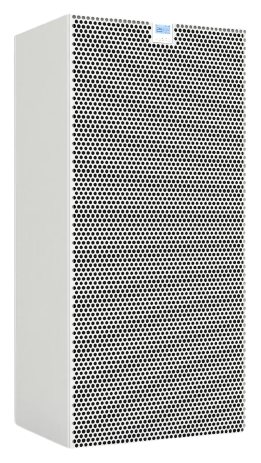
| Space 500 | 500 m³/h | 95% | M5, G4, F7 | Freestanding against a wall, CO₂ sensor, energy class A+ |
| Space 700 | 700 m³/h | 95% | M5, G4, F7 | As Space 500, for larger rooms |
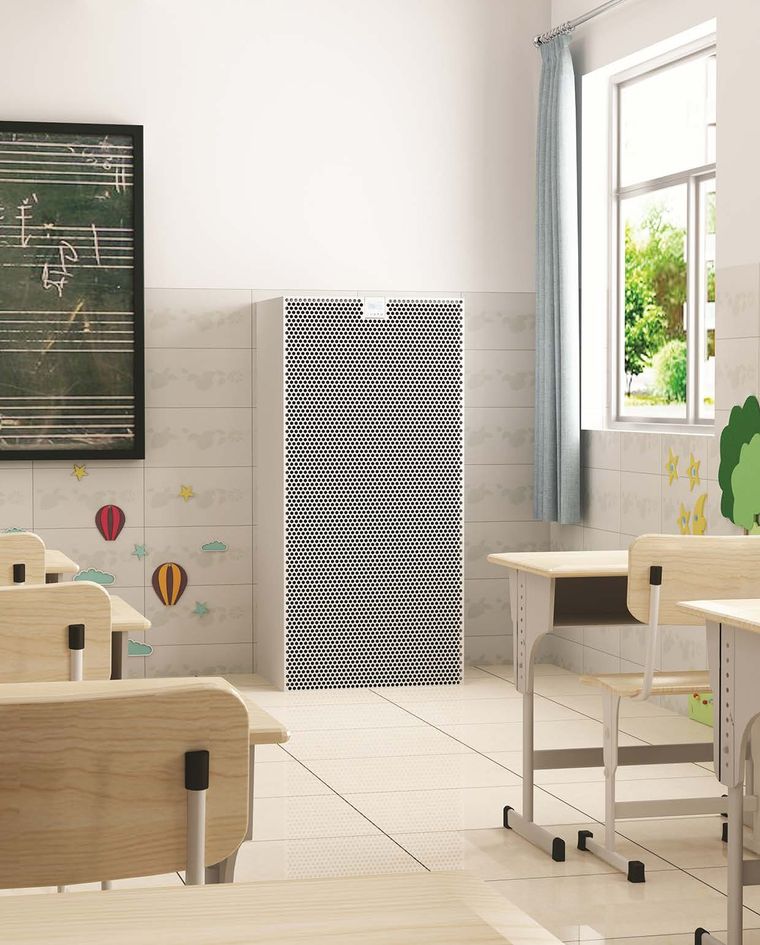
For a school, the argument is not energy
Children going flat in the third period of the morning, in a sealed classroom with thirty people in it, is a CO₂ problem before it is a teaching problem. The unit measures it, shows it, and fixes it — and it does so without opening a window onto heat and street noise.
The design objection
You will not see grilles all over the ceiling
The first thing a designer says about ventilation is that they do not want the ceiling covered in grilles. It is a fair objection and it has been solved, which almost nobody selling ventilation in this market bothers to show.
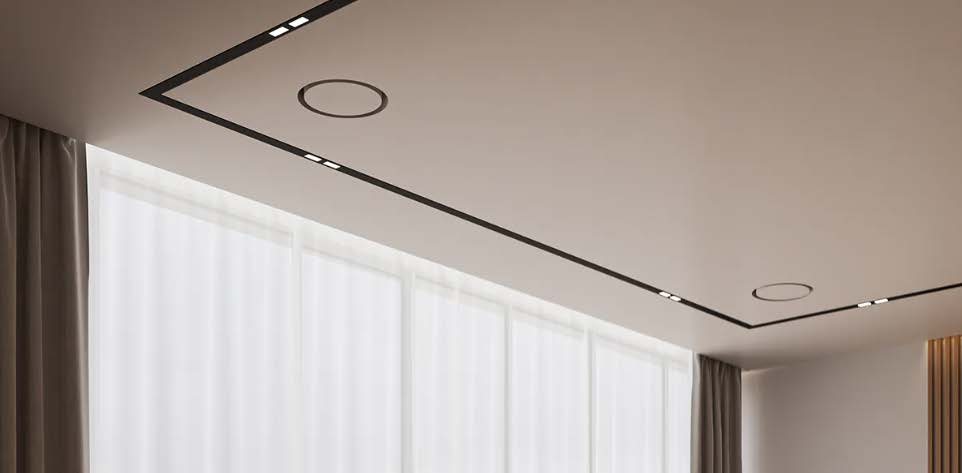
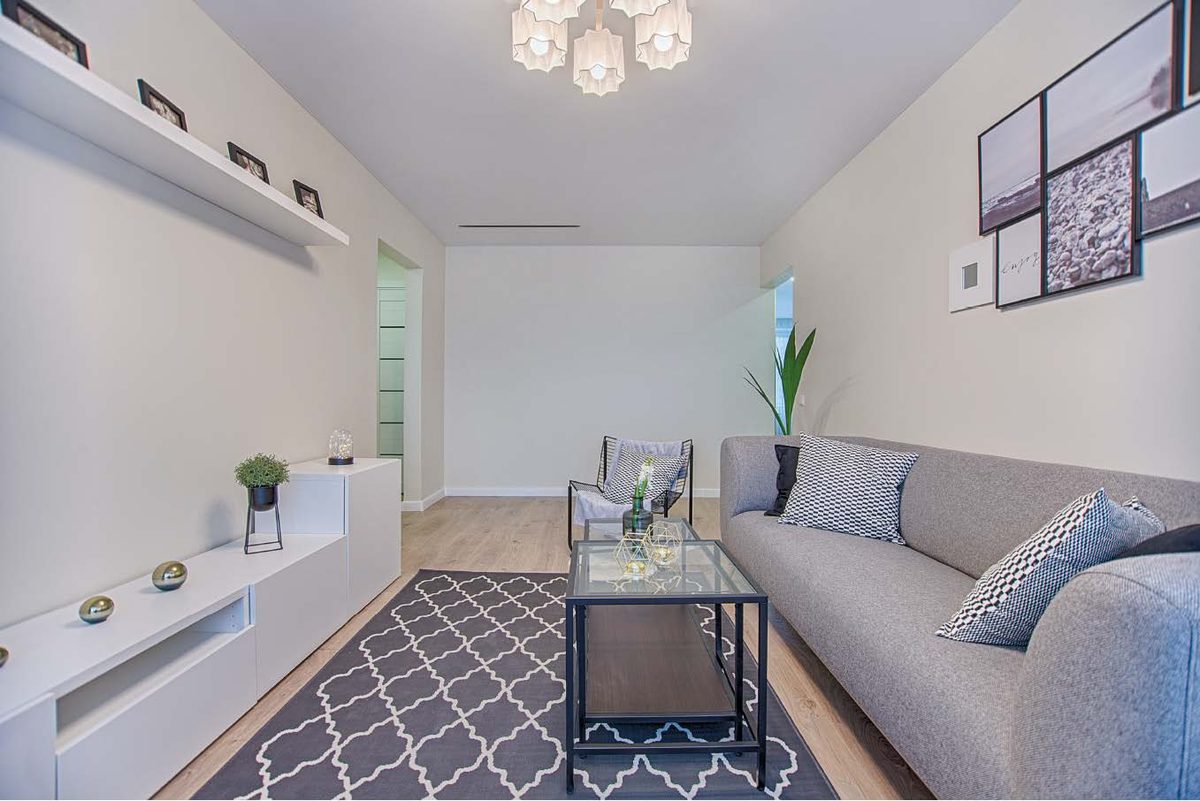
Hidden diffusers are frameless. They set into a plastered ceiling and are painted the same colour as it, leaving only a fine ring-shaped slot for the air to pass. Available round, square, and as a linear version at 1,000 × 20 mm, for single and double-layer plasterboard ceilings with 125 mm connections. From below, the ceiling looks untouched.
Design glass diffusers, where a visible fitting is wanted, are square or round, glossy or matte, adjustable for supply or extract, and fit a wall or a ceiling — in twelve colours from soft white through to anthracite.
The second objection
And there is room for the ducting
- Ø75 mm semi-rigid flexible pipe run from distribution boxes — one Ø125 mm inlet feeding six Ø75 mm runs, or one Ø160 mm feeding seven or ten. Small enough for a shallow ceiling void or a screed where rigid ducting will not go
- Rigid round ducting at 100, 120 and 150 mm; rectangular at 110 × 55, 147 × 70 and 170 × 90 mm; galvanised steel at 200 and 250 mm for larger units
- Flow regulators, backflow valves and plenums for balancing the system room by room
- Insulated flexible pipe in two grades — one against condensation, one against condensation and noise
That last item is worth a sentence of its own. Ducting fresh air across a hot ceiling void without insulation causes condensation, and condensation in a ceiling void becomes a complaint about the ventilation system a year after handover. Centra specifies insulated pipe where the route requires it, and says so on the submittal.
The equipment
Unit formats, and where each one goes
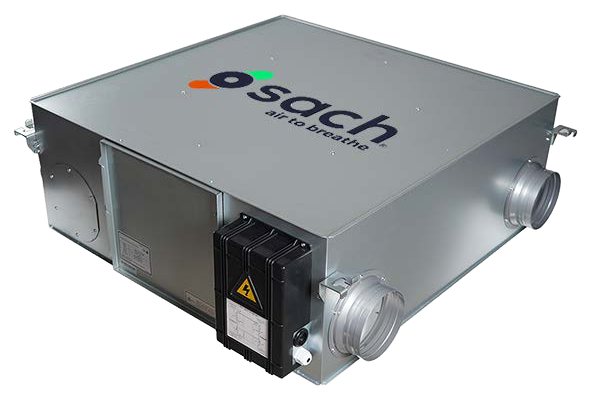
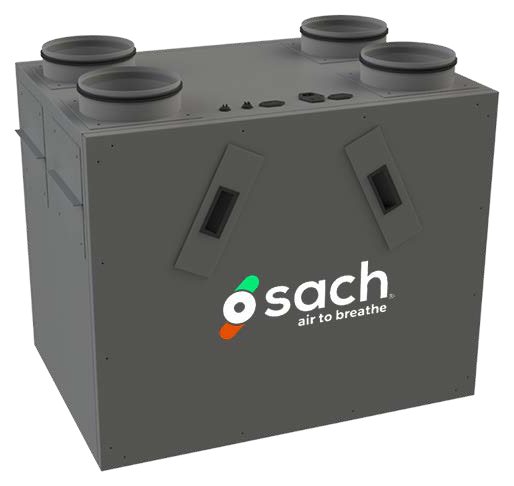
The exchanger does the same job in every case. What changes is where the unit will physically fit and how it gets serviced.
Why we keep asking about the service room
A ventilation unit is only as good as its filter changes, and filter changes only happen when the unit is reachable. If the only place a unit fits is above a fixed ceiling with no access hatch, the specification is wrong, and we would rather say so at design stage than at handover.
Questions
What buyers actually ask
Why do I need fresh air if the air conditioning is already running?
Because the air conditioning is not bringing any in. It recirculates the air already inside, cooling the same air repeatedly along with the CO₂, humidity, cooking fumes and dust in it. Cooling and ventilating are two different jobs, and only one of them is being done.
HRV or ERV — which one for this climate?
ERV, for almost every project in Saudi Arabia. An ERV transfers moisture as well as heat, so the humidity in the incoming outside air is handed back out before it reaches the room. In the Gulf, dehumidifying is a large share of what the cooling system spends its energy on, and an HRV does nothing about it. Specify an HRV only where the design specifically calls for a sensible exchanger.
What does the recovery actually save on my bill?
It depends on the house, the system it is working alongside and how it is run, so an honest answer needs the project rather than a percentage.
The mechanism is straightforward: without recovery, every cubic metre of fresh air arrives at outside temperature and humidity and the cooling system deals with all of it. With recovery, most of that load is removed before the air reaches the room. We will calculate the figure for a specific building against its drawings — and we will not put a number on a web page that was produced for a different climate.
Can it be fitted to a villa that is already finished?
Yes, in one of two ways. Breeze 60 units need no ducting at all — one per room, in the wall, fitted in an afternoon. Where a ceiling void or a riser route exists, a ducted unit can still be installed with Ø75 mm semi-rigid pipe, which fits where rigid ducting will not. A site visit decides which.
Will I see grilles all over my ceiling?
No. Hidden diffusers set into the plaster and are painted the ceiling colour, leaving only a fine ring slot. Where a visible fitting is preferred there is a range of design glass diffusers in twelve colours.
Which unit suits a villa, and which suits a school?
A standard villa is usually WINDY 350 or 500; a large villa WINDY 650, or Dominion if a sensible exchanger is specified. A classroom or an office already built is Space 500 or 700, standing against the wall. A single finished room is Breeze 60. The selection follows room-by-room airflow requirements, not floor area, and we size it from the drawings.
What filters does it use and how often are they changed?
G4 as standard, F7 on the Sense and Space ranges, M5 as pre-filtration on Space. Replacement intervals are published per unit, and we shorten them for Riyadh because of the dust load. Units with a display indicate when a change is due; units on Modbus can report it to a BMS.
How noisy is it in a bedroom at night?
The unit itself runs between 26 and 40 dB depending on model, and it is not in the bedroom — it is in a ceiling void or service room, with ducting to the diffuser. Sense 200 is 26 dB and WINDY 250 is 28 dB. The audible part in the room is air movement at the diffuser, which is controlled by sizing the diffuser correctly rather than by the choice of unit.
Does it need its own room, or can it share with the central vacuum unit?
It can share. The two are often specified together into the same service space, which is one of the reasons to plan this division as a whole at design stage. The ventilation unit needs access for filter changes and a condensate route; the central vacuum unit needs access for emptying. Both fit in a modest service room or a garage.
Send us your floor plans
We will size the system room by room, select the units, and issue a submittal package.