

Air to move
Laundry Vacuum Systems for villas and buildings in Saudi Arabia
A laundry transport system that moves clothes from any room to the laundry — upward as well as down, because it uses suction instead of gravity.
Centra supplies two laundry vacuum systems: Laundry Jet, and SACH's own Vac2Wash. Both do the same job by the same means — a door port in a wall or a cupboard, pipework inside the structure, and a unit in the laundry room that draws the laundry to itself. Because the air does the moving, the laundry room does not have to be at the bottom of the house.
It is also searched as a pneumatic laundry system or a vacuum laundry chute.
How it works
Open the nearest port and let go
Open the nearest door port, drop the laundry in, and the system starts by itself and carries it to the laundry room. There is no chute, no shaft falling through the floors, and no dependence on the laundry being below the bedrooms.
That last point is the difference that matters. A gravity chute needs height and a vertical shaft in line, which rules it out of a single-storey villa and out of most finished buildings. A vacuum system follows a pipe route — around corners, along a ceiling void, and upward.
Two brands
Vac2Wash and Laundry Jet
Centra supplies two competing lines. They are not two names for the same thing, so they are shown separately.
Vac2Wash
SACH's own line, shown in SACH's catalogue as Laundry VAC. Three units, sized by the number of door ports and the distance to the furthest one.
| Unit | Door ports | Furthest port | Max airflow | Max power | Suits |
|---|---|---|---|---|---|
| Origin | 4 | 60 m | 1,700 m³/h | 1,200 W | Apartments and standard villas |
| Ultra | 8 | 90 m | 2,500 m³/h | 1,500 W | Large villas and premium residences |
| Commerflow | 20 | 120 m | 4,500 m³/h | 2,200 W | Commercial and large-scale installations |
All three run at 68 dB(A), empty automatically so they can be used continuously, and are finished in gloss acrylic over a powder-coated steel body. Origin has a front viewing window, so the discharge is visible from the laundry room.
Door port — the Flow port is sliding and compact, and sits in a wall or inside a cupboard in any room. Pipework — Ø160 mm PVC, or Ø200 mm on Commerflow, with 90° and 45° elbows, single wyes, couplers, isophonic pipe straps to keep transit noise out of the structure, and signal cable back to the unit.
Laundry Jet
The internationally established brand in this category, with three units — Plus, Swift and Express — and a wider choice of port types: iTap (automatic, opens at the press of a button), Slide and Lift (both manual).
Return units send clean laundry back up to the bedroom, which closes the loop rather than solving half of it. In a large house where laundry is carried up as often as down, this is usually the feature that decides the brand.
Which one
It usually comes down to three things
Both are proven and both are supported by Centra. We will recommend one for a specific house rather than leave the client to choose.
| If this matters most | Then |
|---|---|
| Clean laundry travelling back upstairs | Laundry Jet, with return units |
| Commercial scale — many ports, long runs | Vac2Wash Commerflow, at 20 ports and 120 m |
| Port appearance and choice in a finished interior | Laundry Jet, for the wider port range |
| A single supplier across ventilation, central vacuum and laundry | Vac2Wash, as part of the SACH range already in the building |
Maintenance and spares
Both systems empty automatically and need no filter changes in normal residential use. The serviceable parts are the port mechanisms and the unit's motor, both held in the Kingdom. For a hotel or clinic installation we issue a service interval based on the expected daily volume.
In the building
Where the ports go and where the laundry lands
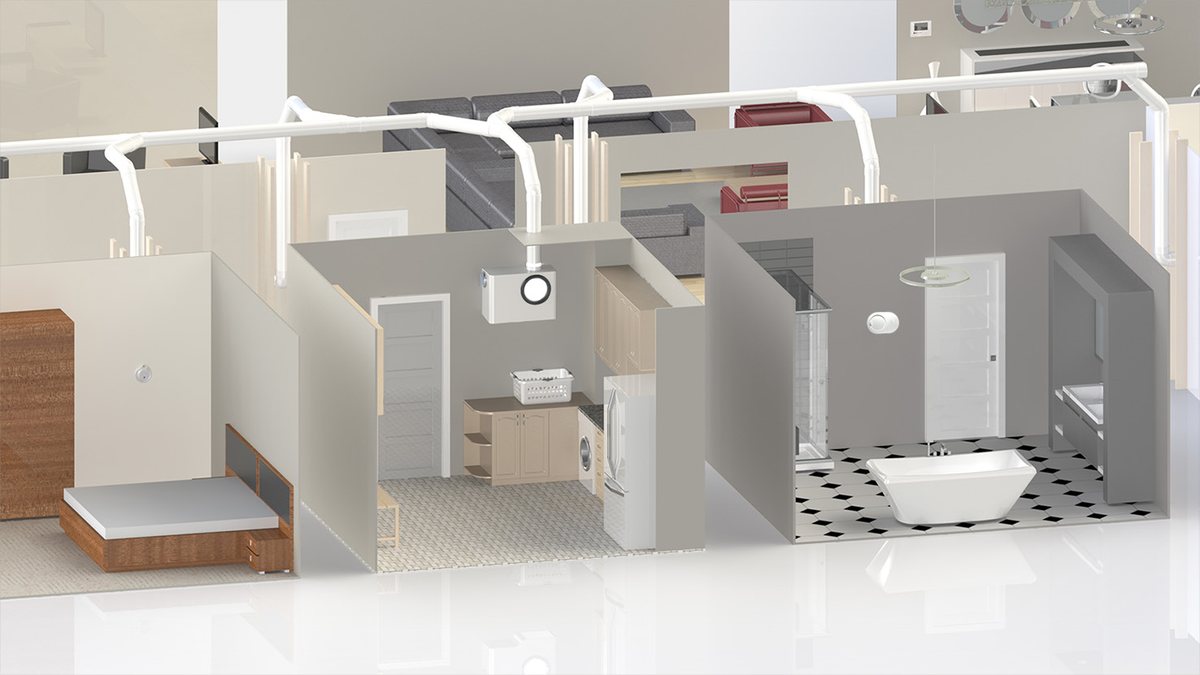
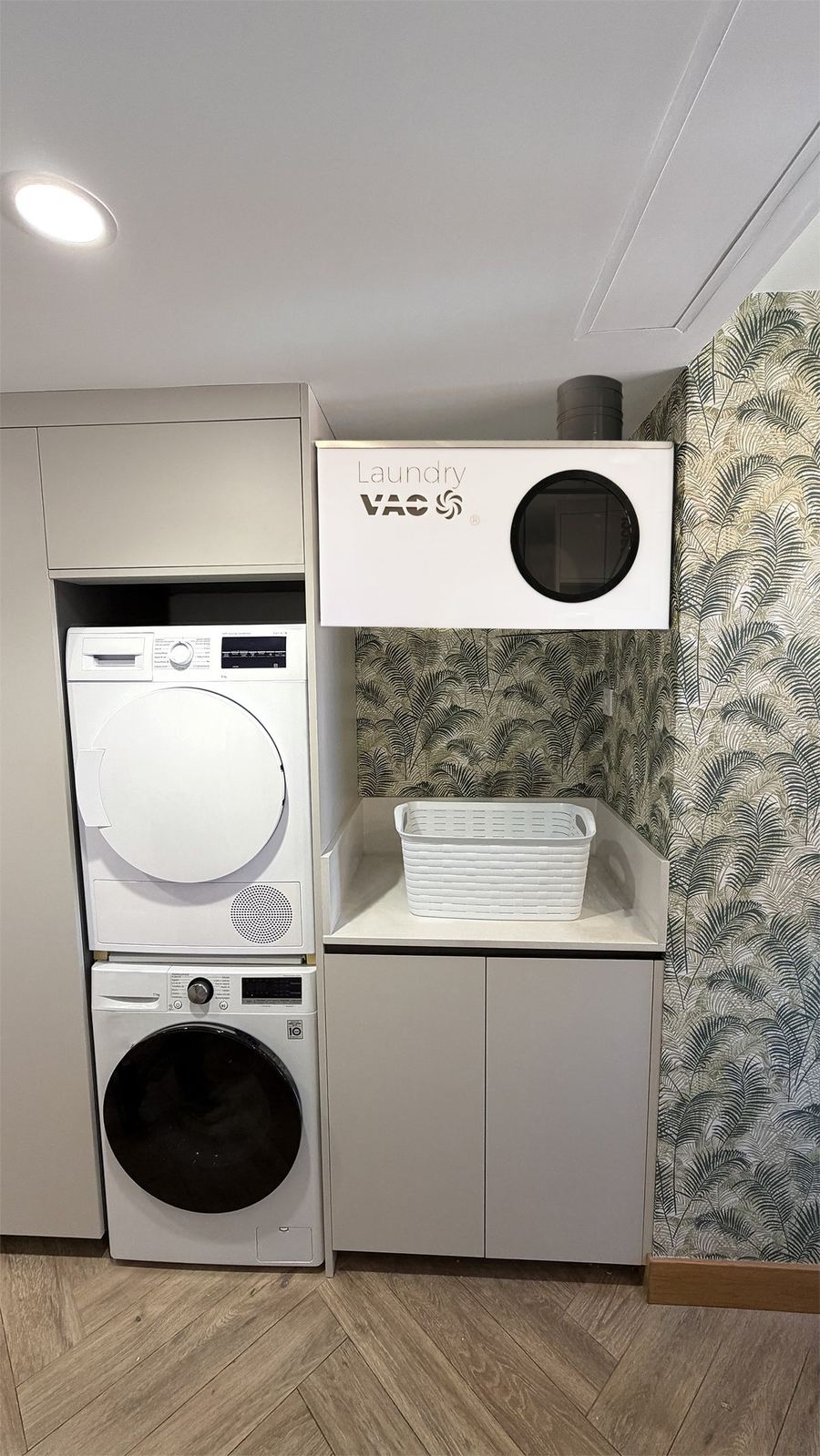
Because the system moves the laundry with airflow rather than gravity, the ports do not have to sit above the laundry room, and the laundry room does not have to sit at the bottom of a shaft. That is the whole reason this exists: it works in a single-storey villa and it works where the architecture has already been fixed.
The range
Three units, chosen by port count and distance
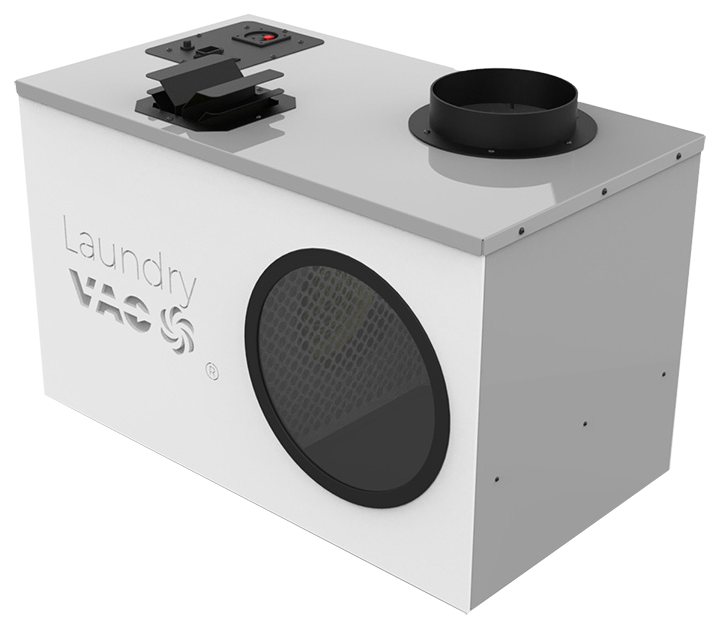
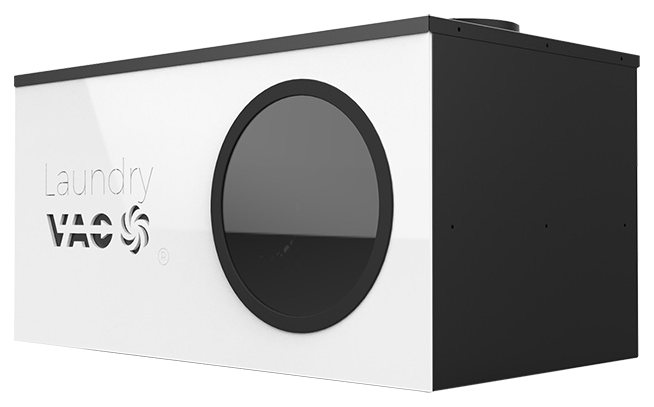
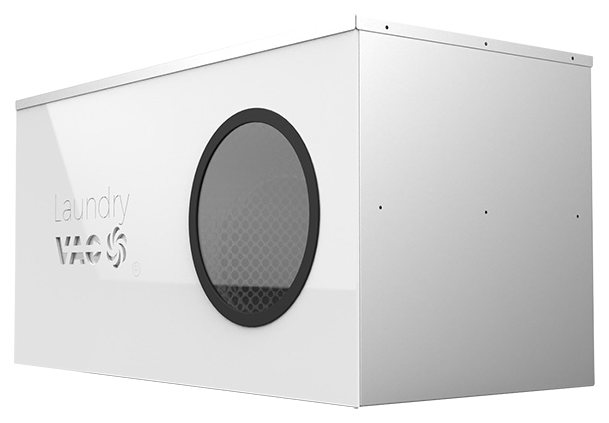
| Origin | Ultra | Commerflow | |
|---|---|---|---|
| Max. power | 1,200 W | 1,500 W | 2,200 W |
| Max. airflow | 1,700 m³/h | 2,500 m³/h | 4,500 m³/h |
| Max. door ports | 4 | 8 | 20 |
| Furthest port | 60 m | 90 m | 120 m |
| Air inlet | Ø160 mm | Ø160 mm | Ø200 mm |
| Noise level | 68 dB(A) | 68 dB(A) | 68 dB(A) |
| Weight | 32 kg | 40 kg | 48 kg |
| Dimensions (w×h×d) | 73 × 48 × 43 cm | 80 × 48 × 48 cm | 95 × 48 × 49 cm |
All three run on 220–240 V / 50 Hz with automatic emptying for continuous use. Published manufacturer figures; the selection is made against the real port count and the longest run on the drawings.
The port
What the room actually sees
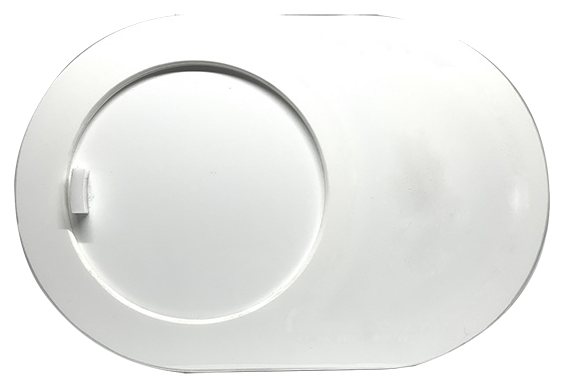
Installation material is Ø160 mm PVC tubing with swept 90° bends, 45° elbows and single wye branches, acoustically isolated pipe straps, and a low-voltage signal cable to the unit. The bends matter: a swept elbow moves a towel, a tight one catches it. This is the part of the specification that decides whether the system is reliable, and it is the part most often value-engineered out.
One thing to settle early
The tubing is 160 mm and it needs a route. In a new building that is a coordination item at design stage, alongside the ventilation ducts and the central vacuum tubing — which is one of the reasons it is worth having the air systems conversation once rather than three times.
In an existing building the honest answer is that it depends entirely on what route exists. We would rather look at it than promise it.
How it works
Four things happen
The system is the same shape as the central vacuum, and it is usually installed at the same time by the same crew.
Tubing at first fix
Ø160 mm tubing runs from each port position back to the unit in the laundry room, with swept bends throughout. It goes in with the electrical and plumbing rough-in, before the walls close.
The unit sits where the washing happens
Wall-mounted in the laundry room itself, above or beside the machines. The load arrives where it is going to be dealt with, not in a basket on a landing.
Opening the port starts it
A sliding door port at chest height. Open it, put the laundry in, and the airflow takes it. There is nothing to switch on and nothing to carry.
It empties itself
Automatic emptying at the unit, so the system is ready for the next load without anyone attending to it. This is what makes it workable in a hotel rather than only in a house.
Because the laundry travels on airflow rather than gravity, the ports do not have to sit above the laundry room and the laundry room does not have to sit at the bottom of anything. That is the whole reason to specify it over a gravity chute in a building where the architecture is already fixed.
Questions
What buyers actually ask
How is this different from a laundry chute?
A chute is a vertical shaft and the laundry falls down it, so the laundry room has to be at the bottom and the shaft has to be in line. A vacuum system moves laundry through a pipe using air, so the route can turn corners, run along a ceiling and go upward. A chute also cannot be added to a finished building; a pipe route often can.
Can it really move laundry upward?
Yes. The air does the work, not gravity, so the laundry room can be on the same floor as the bedrooms or above them. This is the reason the system works in single-storey villas, where a chute is not an option at all.
Laundry Jet or Vac2Wash — which one for this house?
If clean laundry needs to travel back up to the bedrooms, Laundry Jet with return units. If the installation is commercial, with many ports or long runs, Vac2Wash Commerflow. For a standard villa either is suitable and we will recommend based on the layout and the port positions.
How many ports can one unit serve, and how far away can they be?
On Vac2Wash: four ports at up to 60 m on Origin, eight at up to 90 m on Ultra, and twenty at up to 120 m on Commerflow. The furthest port distance matters more than the count — a house with three ports at the end of a long run can need a larger unit than one with six close together.
Does it have to be planned before the walls close?
For a new build, yes — the pipework goes in at first fix like the plumbing. In a finished building it depends on whether a route exists through a riser, a ceiling void or a cupboard line. A site visit answers it, and the answer is more often yes than for a gravity chute.
Is it quiet enough for a bedroom wall?
The unit runs at 68 dB(A), which is why it belongs in the laundry room rather than next to a bedroom. Transit noise in the pipe is brief — a few seconds as the laundry passes — and isophonic pipe straps keep it out of the structure. In practice the port itself is the quiet part; the planning question is where the unit goes, not where the ports go.
Can it be used in a hotel or a clinic?
Yes, and it is a different argument there. In a hotel it removes linen trolleys from guest corridors; in a clinic it removes handled laundry from circulation areas. Commerflow is the unit for that scale. For a hotel also look at linen chutes, which solve the same problem by gravity where the building allows it.
Send us your floor plans
We will mark the port positions, size the unit and recommend the line.