

Home › Intelligent Connectivity
Coverage
Indoor mobile coverage systems for buildings in Saudi Arabia
Full signal in the basement, the core and the car park — where the network stops and the building begins.
A mobile network is designed to cover a city, not the inside of a building. Concrete, steel, low-emissivity glass and a basement two floors down all attenuate the signal, and modern energy-efficient façades are among the worst offenders — the same coating that keeps the heat out keeps the signal out.
People search for this under many names: mobile signal booster, cell phone signal booster, cellular repeater, in-building coverage or DAS. The need is the same: a usable mobile signal inside the building, where walls, glass and basements block it.
Three tiers
Matched to the building, not to a catalogue
- Cel-Fi by Nextivity where coverage needs solving quickly and affordably: a villa, a branch, an office floor.
- ANDREW off-air repeaters, MR and CMR where a building, a basement or a shadowed area needs a managed repeater that takes the signal from the air, with no wired link to the operator.
- ANDREW Node AM/A+ where the estate is large enough to need a designed, multi-operator repeater platform driving a distributed antenna system.
Which one is right is a conclusion from a survey of the building, not a preference. We would rather tell you the smaller system is enough than sell you the larger one.
The flagship
ANDREW Node AM/A+
A universal multiband, multiservice, software-based digital repeater platform from ANDREW.
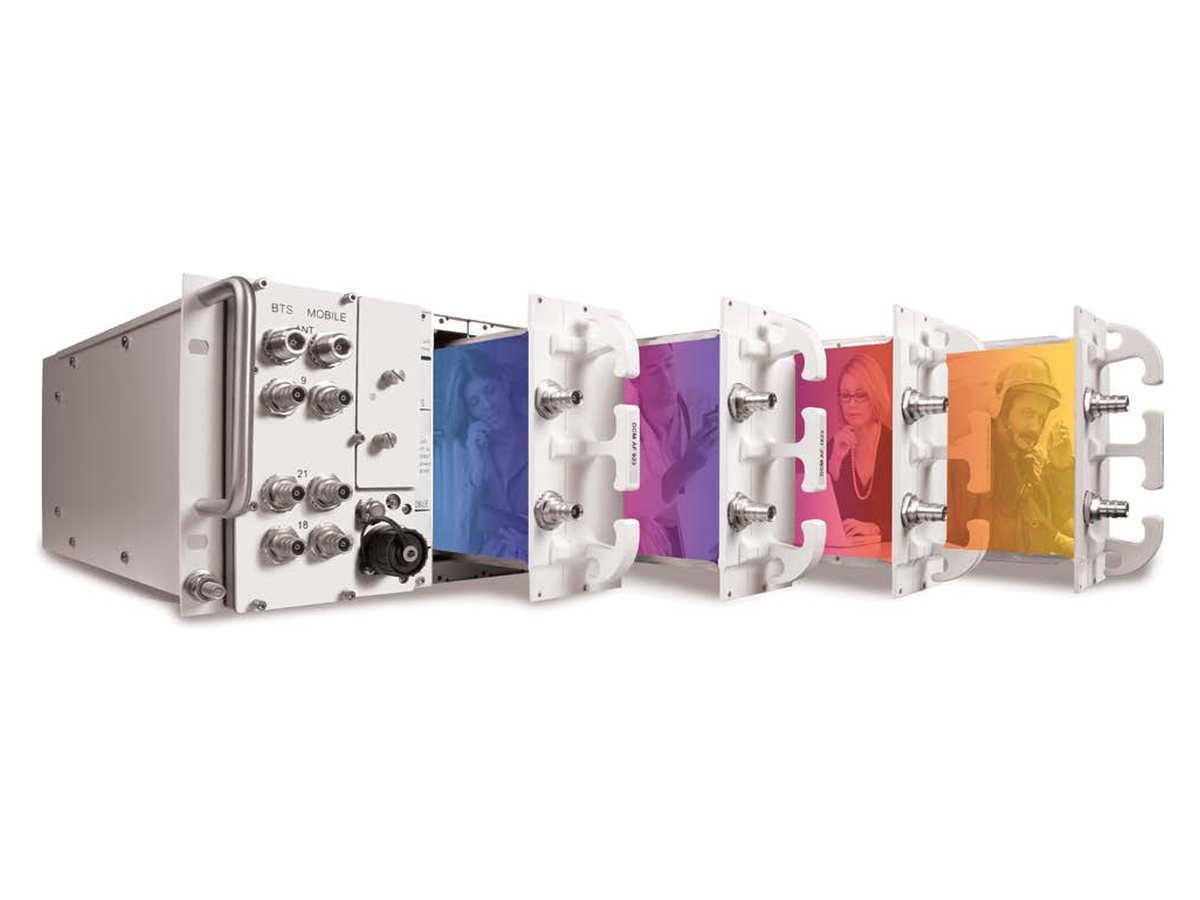
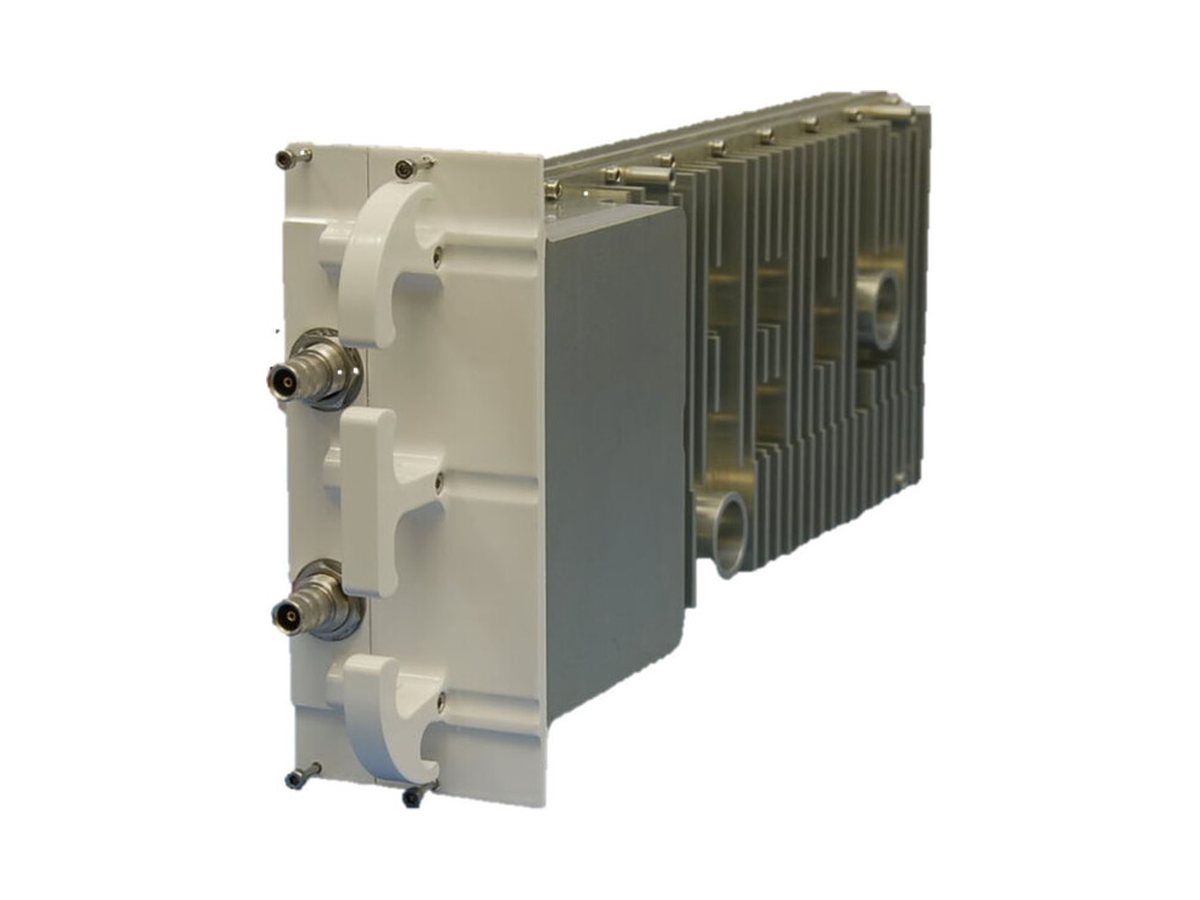
The “A” stands for agnostic, and it is worth understanding what that buys. Whatever the protocol, however spectrum is reassigned, whatever wireless technology arrives next, Node A supports it with minimal change — because the platform is defined in software rather than fixed in hardware. The building does not get re-equipped every time the operators do.
Capability
- Up to four frequency bands in a single chassis, with a fully integrated multiband combiner and modem
- Band selective, channel selective, or a combination of both
- Scales from single band, single operator to full multiband, multiple operator
- Two power classes — medium and high — so the platform matches the building footprint without over-specifying
- Drives both passive and optical distributed antenna systems for medium to large facilities
- Modular: add RF cards and software features to upgrade or expand, without replacing the platform
- Three software-optimised versions — public safety, commercial, or mixed — so one platform serves both cellular coverage and the emergency-responder obligation
Why it performs where others do not
- Very high dynamic range. It operates in the presence of strong transmitters and interferers without external filtering or attenuation — which matters in a dense urban site surrounded by other people's equipment.
- Filters are built on the fly through the user interface, adapting to changes in the outdoor RF environment, with no external files to download. When an operator re-farms spectrum nearby, the system adapts instead of requiring a visit.
- Only the wanted signals are amplified. Output power capacity is used efficiently, the coverage footprint is larger for the same equipment, and a nearby base station cannot degrade it.
- Feed-forward power amplifier technology on the high-power RF cards — lower power consumption, less heat in the equipment room, and a smaller battery backup requirement.
Setup, monitoring and integration
- Auto setup wizard with context-sensitive help — commissioning without bulky test equipment on site
- Channels or band segments configured independently in gain or power mode
- Advanced QoS reporting — inbound and outbound channel power, pilot power and RSSI
- Optional software keys add an embedded spectrum analyser and uplink muting
- Remote alarming by SNMP or SMS over wireless data
- A.I.M.O.S. management system, plus a standard SNMP MIB for a third-party operations centre
- Integrates with ANDREW ION-B and ION-M
Rated for indoor and outdoor use, with rack, wall or pole mounting. Compliant with FCC, ETSI and IC. Because it is rated for outdoor and pole mounting, Node A is not limited to in-building work — the same platform covers a campus, a compound or a logistics yard.
For this climate
In a Saudi plant room heat is the first enemy of electronics. Lower power consumption on the high-power cards means less thermal load on the equipment room and a smaller battery backup, which is why the power class is chosen against the footprint rather than oversized by default.
Off-air repeaters
ANDREW MR and CMR: coverage taken from the air
An off-air repeater picks up the operator's signal from outside with a donor antenna, then amplifies and redistributes it where the signal does not reach. No fibre or wired link back to the operator is needed.
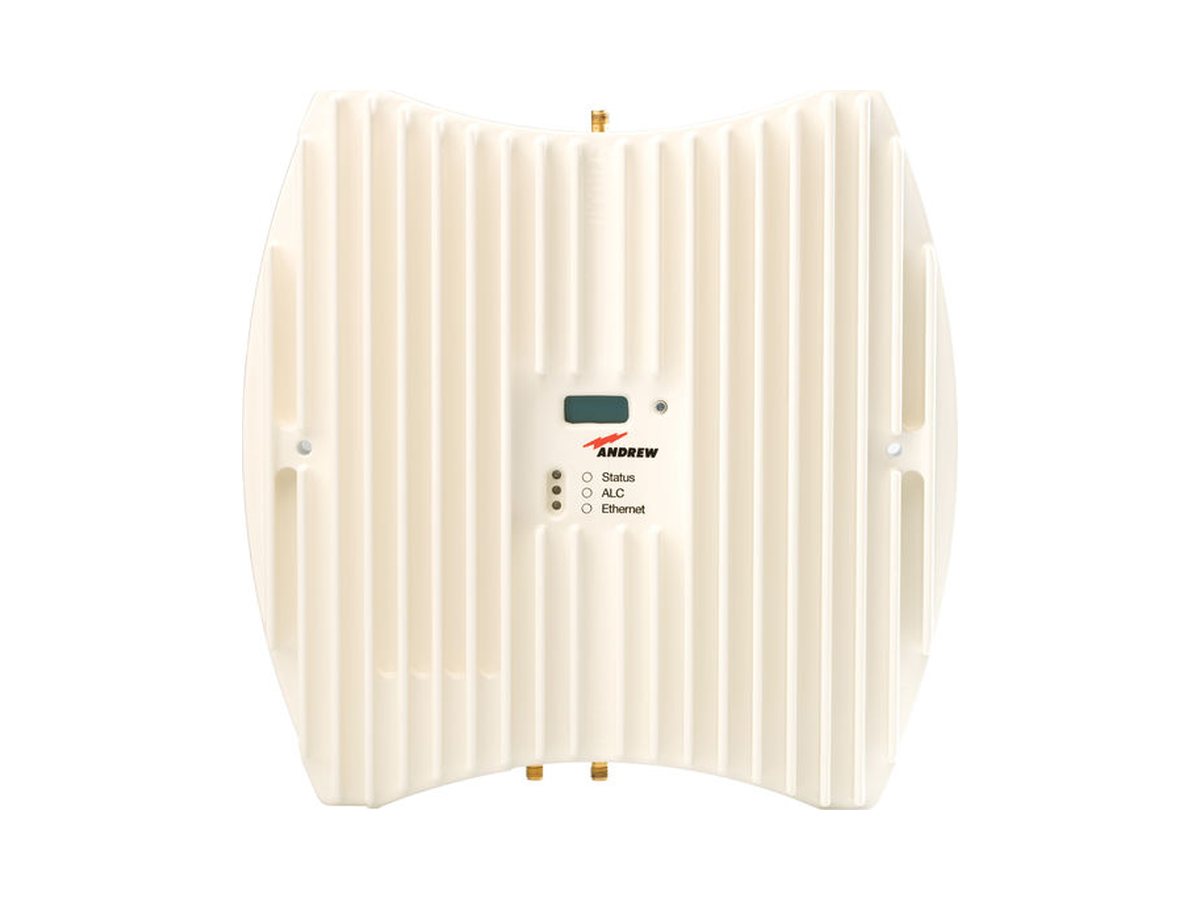
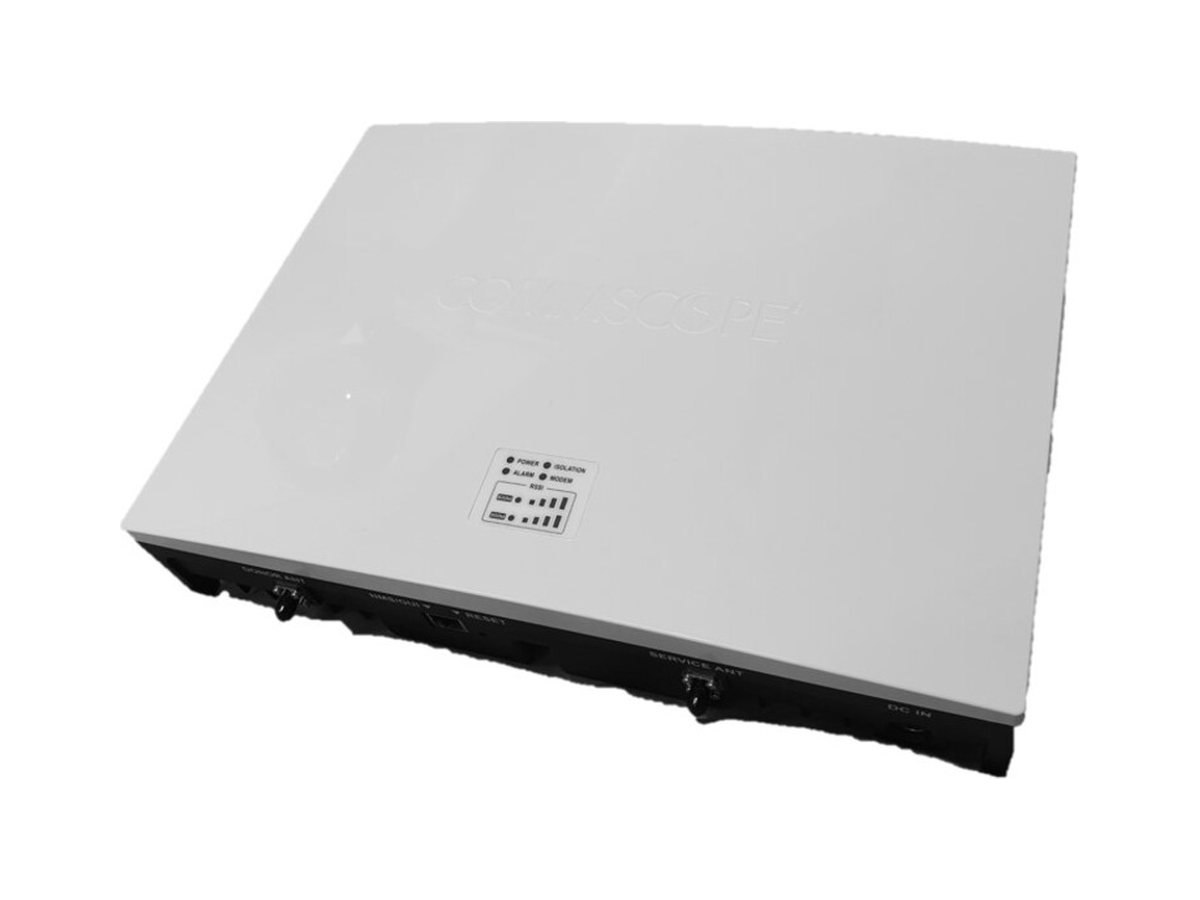
ANDREW's off-air digital repeaters are built for large areas shadowed by buildings or other structures, and work equally in tunnels, dense urban sites, office buildings and malls. Where coverage matters more than capacity and there is no wired backbone, they are a cost-efficient alternative to adding a base station. According to ANDREW, it was the first company to develop an off-air repeater with integrated interference cancellation.
What both share
- Support for multiple frequency bands
- Rated for indoor and outdoor installation
- Full remote monitoring and alarming
- Commissioning and setup through a web interface, over an Ethernet connection from any browser
- Performance optimised from statistical measurements
- Compliant with ETSI, FCC and IC regulatory standards
Which model, and how many, follows from the survey: the donor signal outside, the area to cover inside, and how many operators have to be carried.
Downloads
ANDREW product specifications
Supplied by CENTRA as an authorised ANDREW distributor in Saudi Arabia. Band plans and power classes are confirmed against your site survey.
Cel-Fi by Nextivity
How a Cel-Fi system works
Off-air: a donor antenna on the roof takes each operator’s signal from the nearest tower, the system cleans and amplifies it, and antennas inside the building give it back to every phone on every floor.
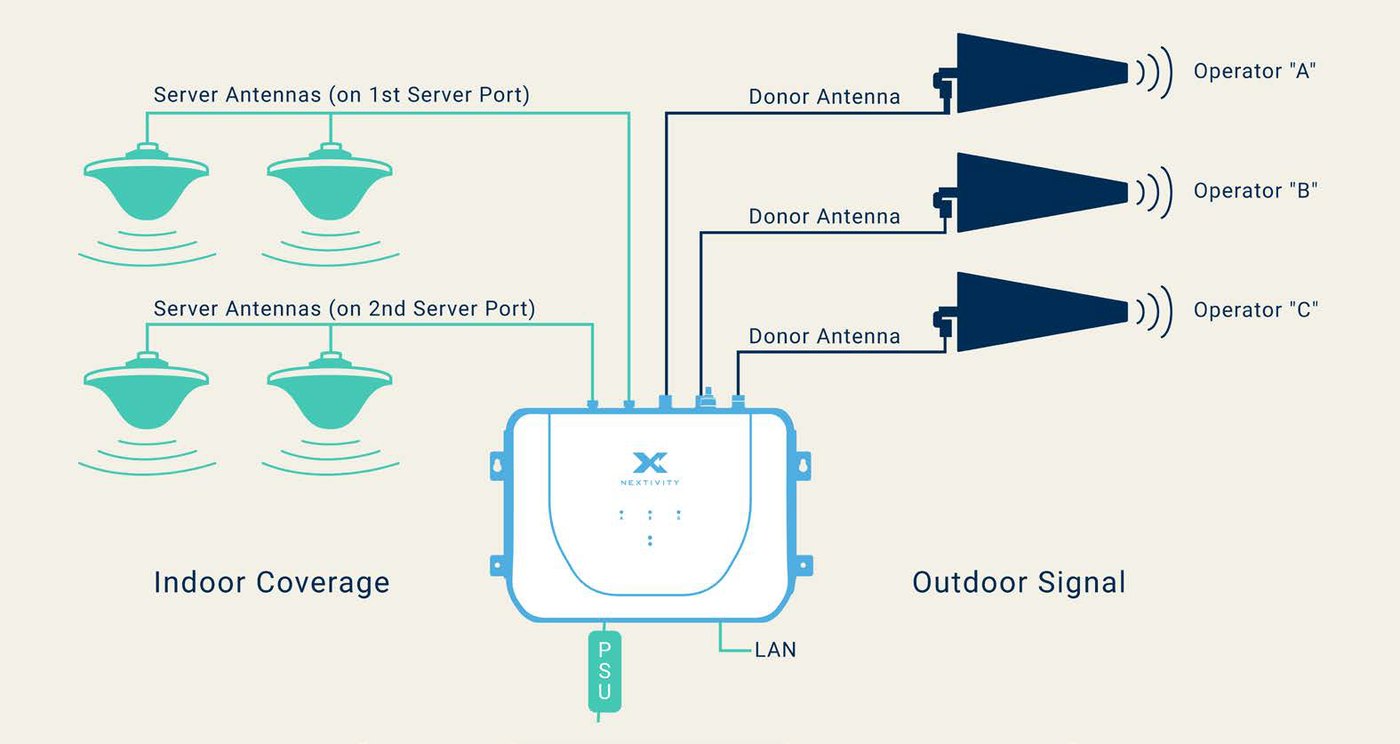
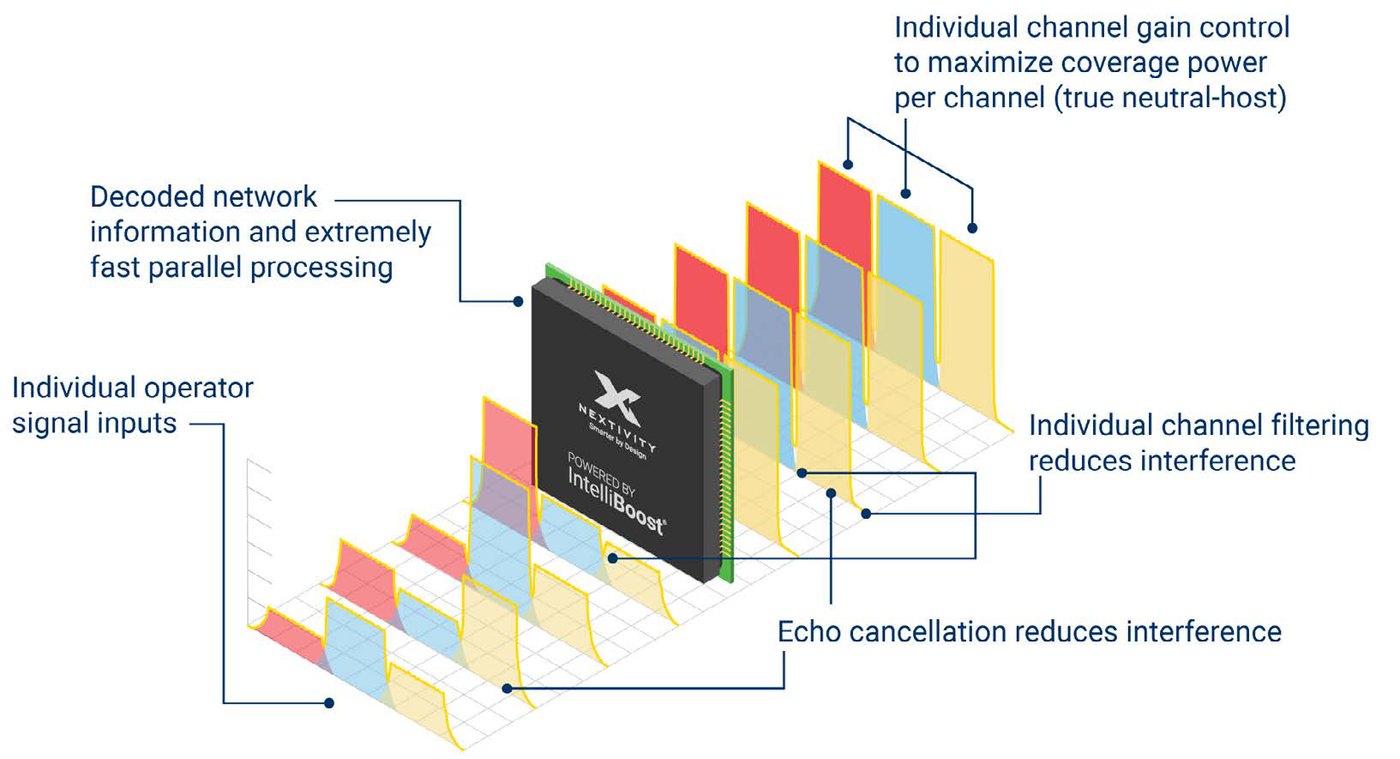
- Channelised, not wideband. A wideband repeater amplifies everything it hears, noise included, and the strongest operator drowns the others. Cel-Fi’s IntelliBoost chip separates each operator’s channel, cleans it, and boosts each one to the maximum allowed power.
- Network safe. The system constantly monitors its own output and the feedback between donor and server antennas, with active echo cancellation, so it does not interfere with the operator’s network. Nextivity states that its systems are approved by over 200 mobile operators in more than 100 countries.
- Up to 100 dB of gain. Enough to bring a weak rooftop signal to usable strength in a basement, a lift lobby or the core of a building.
- Monitored remotely. Real-time system performance through the Nextivity WAVE portal, so a fault is seen before an occupant reports it.
| Range | For |
|---|---|
| QUATRA | Multi-operator active DAS hybrid for 3G/4G/5G in large and complex buildings |
| GO | G43 for up to three operators in branches and small sites; G41 for villas and residential |
| CONNECT | Single-operator, plug-and-play, for homes and small premises |
| SHIELD | SOLO for small and mid-sized buildings; EXTEND as an integrated public-safety DAS for emergency-responder radio |
Enterprise
CEL-FI QUATRA 4000e: every operator, through the whole building
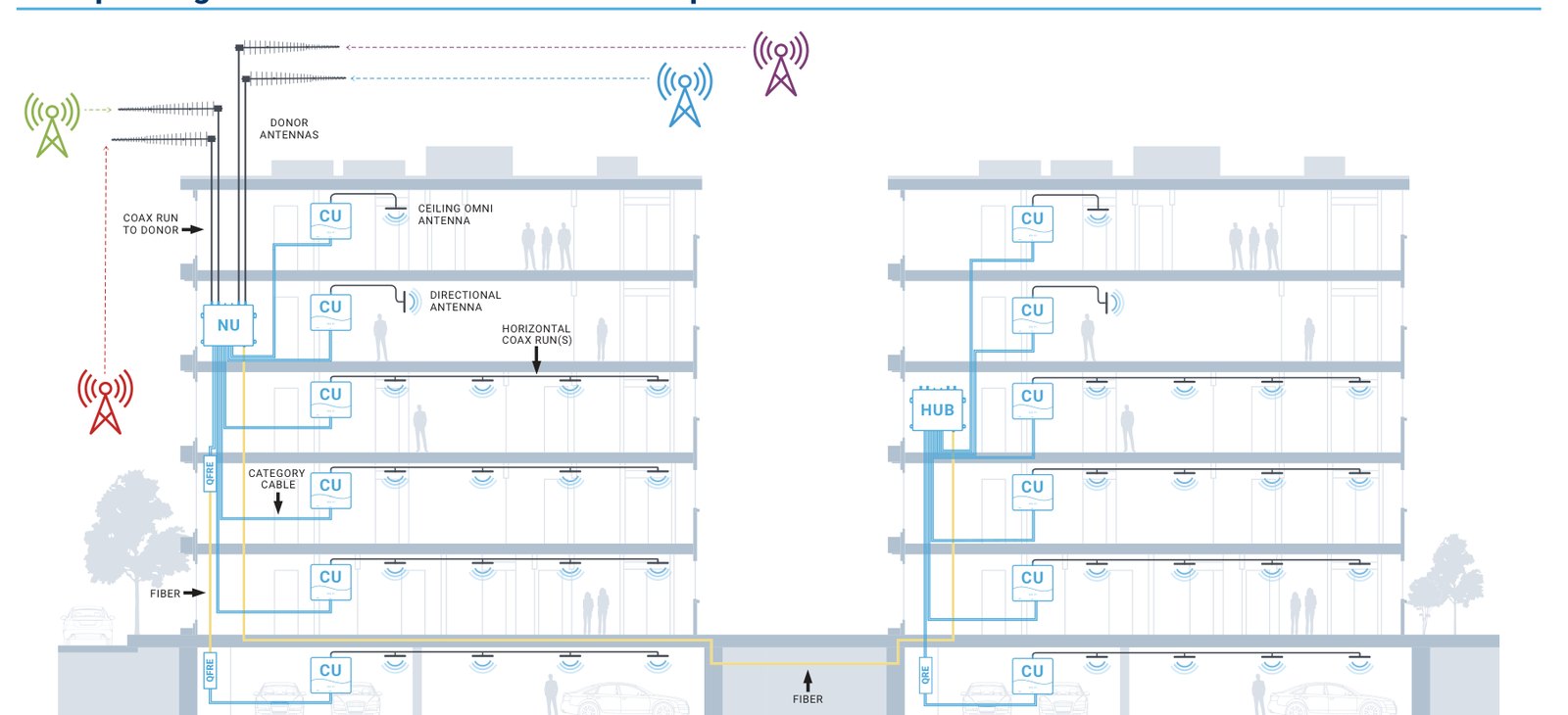
An all-digital active DAS hybrid that boosts four mobile operators at once, cabled like an IT network rather than a traditional DAS.
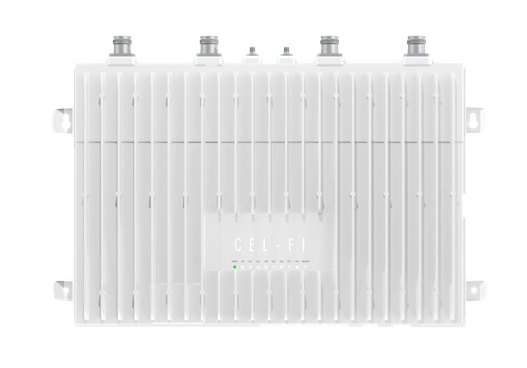
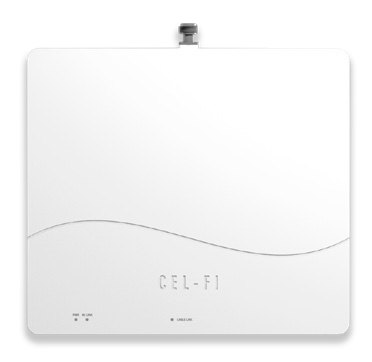
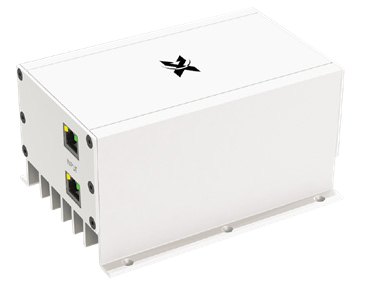
- Four operators in one system. Visitors, tenants and staff get signal whichever network they are on, from a single installation.
- IT-style cabling. Each Network Unit feeds up to six Coverage Units over standard category cable that carries both the signal and the power (PoE), with no signal loss on the way to the antennas.
- Scales by fiber. The Fiber Hub takes one Network Unit to twelve Coverage Units and can sit up to 2 km away; Fiber Range Extenders put a single Coverage Unit up to 2 km from the Network Unit. That covers towers, campuses and multi-building sites.
- Days, not months. Installed, commissioned and activated within days, against the months typical of a conventional DAS.
Branches and small sites
CEL-FI GO G43: up to three operators in one box
For petrol stations, convenience stores, quick-service restaurants, bank branches, showrooms and EV charging sites — anywhere a payment terminal, a phone call or a delivery app has to work indoors.
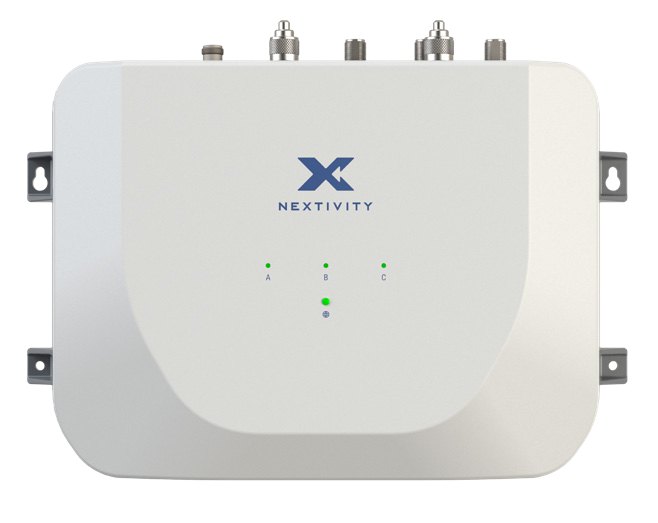

| Operators | Up to three, each boosted separately |
| Networks | 3G, 4G and 5G-ready (WCDMA, LTE, DSS, NR) |
| Frequency bands | 1, 3, 5, 7, 8, 20, 28 and 40, depending on model; up to six relay bands |
| System gain | Up to 100 dB, with enterprise-grade echo cancellation of at least 30 dB |
| Output power | Uplink up to 22 dBm; downlink up to 19 dBm per band per port |
| Connections | Three donor and three server ports (N-type); Ethernet for the WAVE portal |
| Power | 102 W maximum, 12 V DC from the supplied adapter |
| Size and weight | 441 × 312 × 97 mm, 7 kg; wall or rack mounted |
| Operating temperature | 0 to 40 °C, indoor use |
| Compliance | 3GPP TS 25.143 and TS 36.143, CE (RED 2014/53/EU), RoHS |
Nextivity published figures. The band set is confirmed at survey against the operators serving the site.
For this climate
The G43 is an indoor unit rated 0 to 40 °C with no ingress protection. It belongs in a conditioned space — a comms room, or above the ceiling of an air-conditioned area — never in a plant room, a roof enclosure or an unconditioned store. The donor antennas go outside; the box does not.
The other reason
Coverage for the people who arrive when something goes wrong

Node A ships in a public-safety software build as well as a commercial one, and a mixed build that serves both from a single chassis. That matters because the two jobs are usually treated as separate projects, separately cabled and separately paid for, when the building only needs one platform and one riser.
- Channel- and band-selective automatic gain control, which is what makes a multi-operator or public-safety installation stable rather than a constant tuning exercise.
- Embedded spectrum analyser for setup and interference logging, and uplink muting — available as software keys, so the diagnostic tools are in the chassis instead of in an engineer's flight case.
- Advanced quality-of-service reporting — inbound and outbound channel power, pilot power and RSSI — so a coverage complaint can be answered with a measurement rather than an opinion.
- Remote alarming by SNMP or SMS, and integration into a third-party management system through the standard SNMP interface, for an estate with its own monitoring.
- Rated for indoor and outdoor use with rack, wall or pole mounting, which is the difference between a tidy plant room and an improvised one.
The part everyone forgets until it stops the project
A repeater retransmits a licensed mobile operator's spectrum. That makes the operator's agreement part of the job, not paperwork to be chased afterwards, and it is the item that most often delays an in-building coverage project in the Kingdom.
We raise it in the first meeting. A system designed without it is a system that gets switched off.
Questions
What buyers actually ask
Booster, repeater or DAS — what decides it?
The size of the area, the number of carriers, and how much signal there is to work with outside. A single-carrier booster solves one villa or one small office. A repeater platform serves a whole building across several operators. A distributed antenna system is what distributes that signal once you have it — it is the plumbing, not the pump, and large buildings need both. The deciding input is a survey: how strong the donor signal is at the building and how the structure attenuates it.
Does it need permission from the mobile operator, and how long does that take?
Yes. Equipment that re-transmits an operator's licensed spectrum is installed with the operator's knowledge and approval, and multi-operator systems need it from each. Treat it as a programme item with a lead time rather than a formality, and start it early — it is routinely the long pole in an indoor coverage project, not the equipment.
Will it carry every carrier, or one at a time?
Both exist. Node A handles up to four bands in one chassis and scales to multiple operators. Cel-Fi offers single-carrier and multi-carrier products. Which you need depends on who the building's occupants are with — in a mall or a hospital that is everybody, in a private villa it may be one. Specifying single-carrier in a public building is a decision people regret.
How many units does a floor plate of this size need?
It comes from a survey, not from area. The variables are the structure, the internal layout, the lift and stair cores, and what the measured signal level is at the donor position. Two buildings of identical floor area routinely need very different systems. We survey before quoting.
Does the building have a separate obligation for emergency-responder radio coverage?
Often, and it is frequently discovered late. Emergency-responder radio is a different service from public cellular, and a system that covers one does not automatically cover the other. Node A's public-safety and mixed versions, and Cel-Fi SHIELD EXTEND, address it. Ask the fire consultant early — adding it afterwards usually means a second cable route.
Ask for a coverage survey
We measure the donor signal and the structure before quoting anything.