

Home › Intelligent Connectivity
Location
Indoor and outdoor tracking systems for Saudi Arabia
Where every asset is, where every worker is, and an alarm the moment something goes wrong.
A hospital owns more infusion pumps than it needs, and still cannot find one when it is wanted. Nurses walk the floor looking. Equipment is bought again because the existing units cannot be located. None of that is a procurement problem — it is a location problem, and it repeats in every large building and every working site.
It is also searched as RTLS, an indoor positioning system (IPS), asset tracking or people tracking.
Why GPS is not the answer
Satellites need a view of the sky
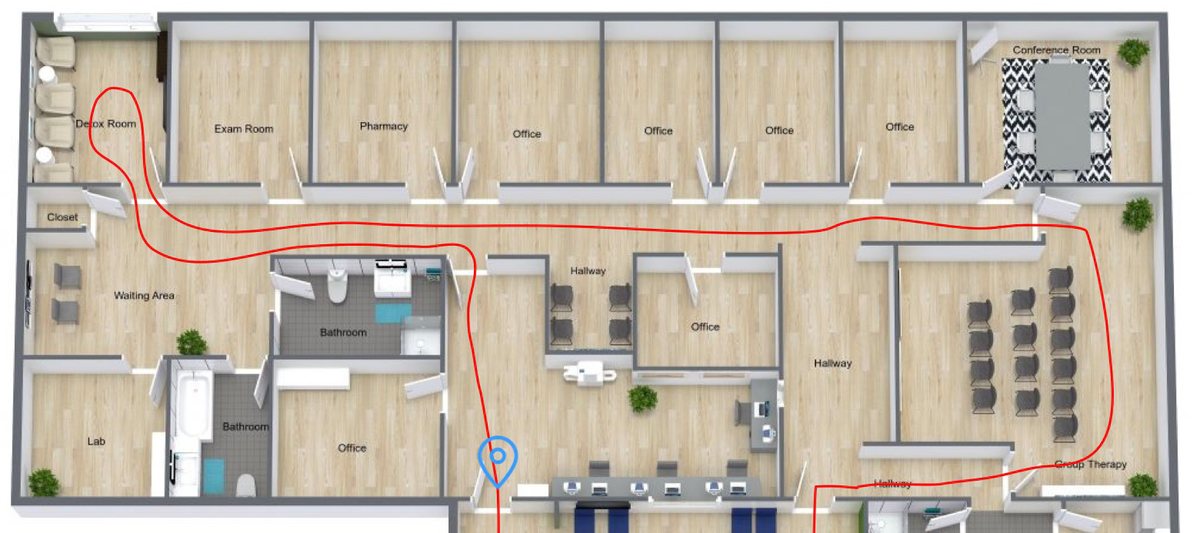
Indoors there is a roof, so there is no fix — and in a narrow lane between tall buildings there is a fix, but it can place a person in the wrong lane. For which room, and where in it, a different technology is needed: fixed reference points inside the building that measure where a tag is in relation to them. That is the whole architecture, and it is why these systems have anchors on ceilings.
Indoors
BlueIoT positioning
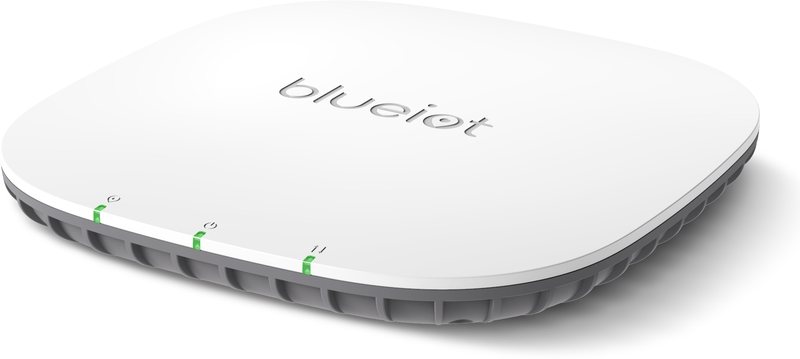
| Anchor | BA3000-t, 220 × 220 × 32 mm, 680 g |
| Mounting | Ceiling or sidewall, up to 10 m installation height |
| Coverage | Positioning diameter of 25 m or more per anchor |
| Power | PoE, standard IEEE 802.3af, 3 W, RJ45, daisy-chained one in and one out |
| Environment | IP65, −40 °C to +80 °C |
| Certification | CE, FCC, RoHS, TELEC |
| Devices | iOS, Android and HarmonyOS; BLE 4.0 and above |
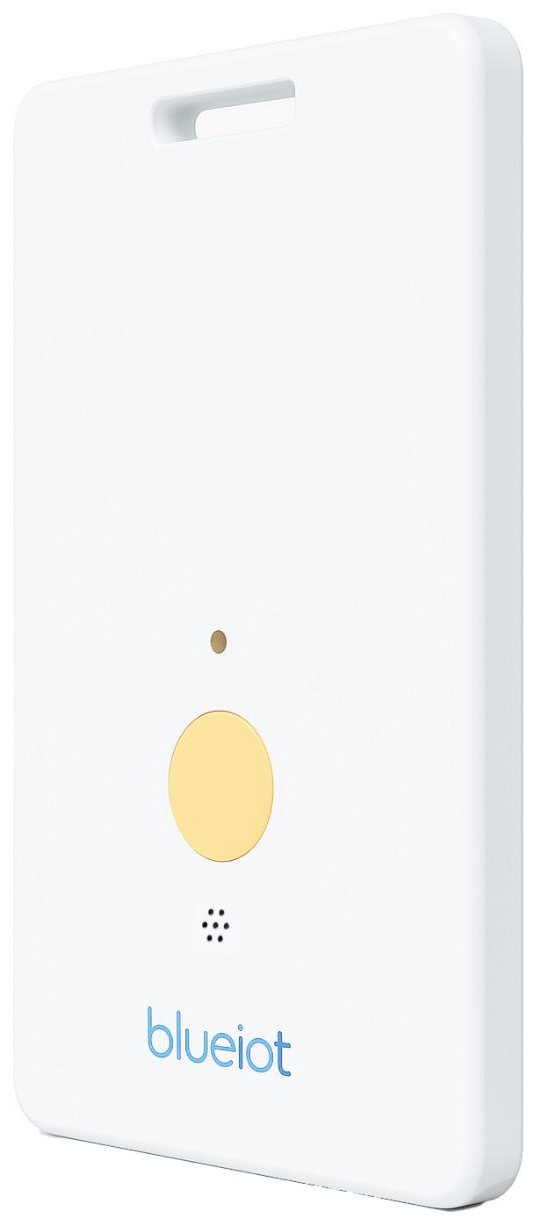
| Tags | Wristbands, ID card badges, asset beacons |
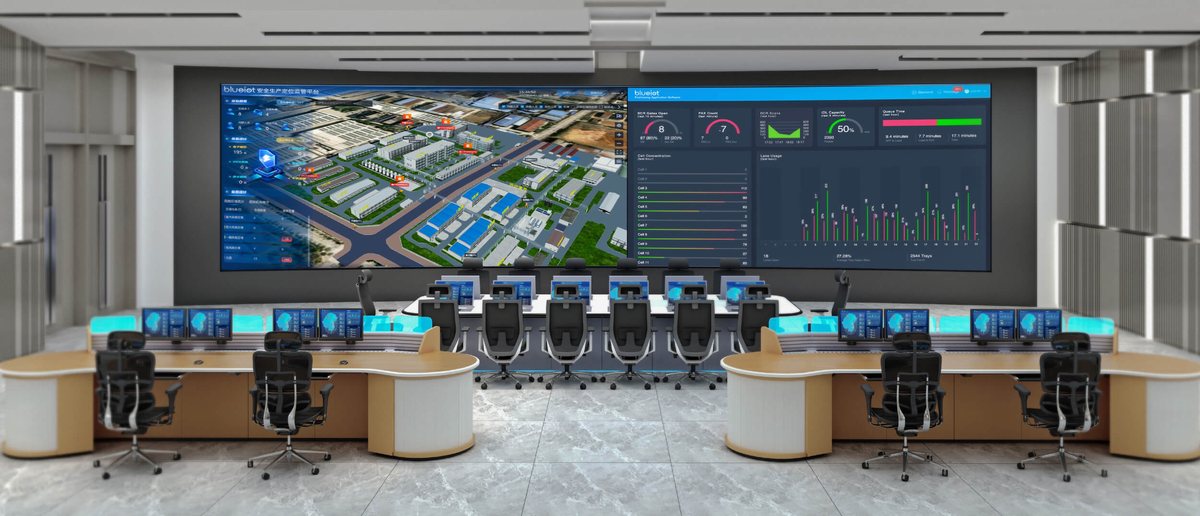
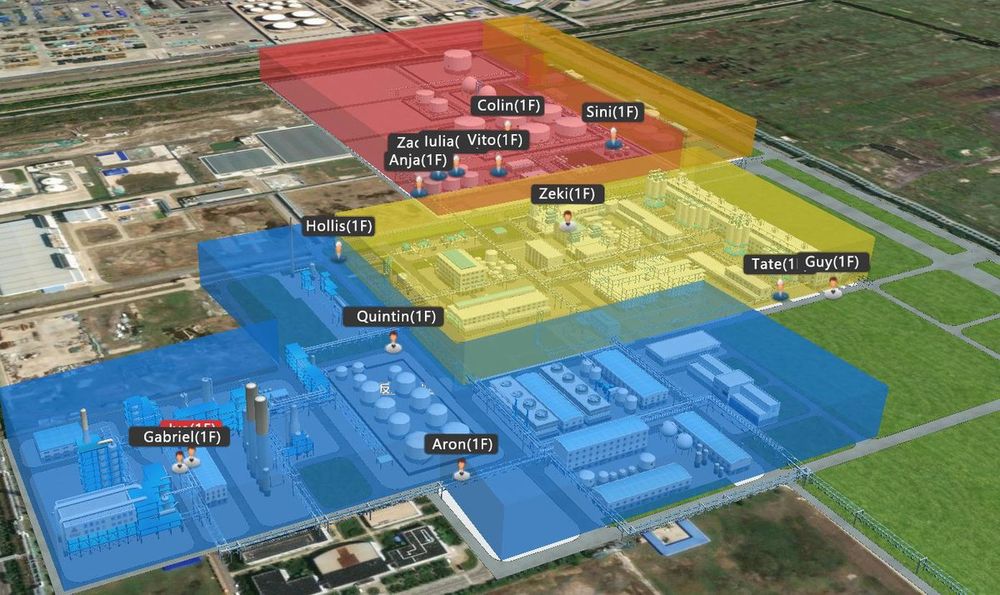
| Platform | RTLS platform with 3D digital-twin mapping, open API |
Accuracy: 10 cm under ideal conditions; sub-metre in real deployments
The manufacturer's 10 cm figure is measured in open, interference-free conditions — no obstruction, no reflection, stable signal. Real buildings have steel, racking, lift shafts and people in them, and the figure in service is sub-metre.
We publish both because the first pilot will test it, and a number that cannot be defended costs more than it wins.
The 25 m coverage figure is the one to pay attention to, because it is the only number that answers “how many do I need”, and almost nobody in this market publishes it. It is also a ceiling rather than a promise: an open interior gets close to it, a walled or racked interior does not, and the density rises accordingly.
The PoE detail matters commercially. One standard network cable per anchor, daisy-chained, on ordinary 802.3af. Your electrical contractor sees a familiar job rather than a specialist install, which changes both the price and who can do it.
Indoor and outdoor in one device
Tsingoal TBG3000-BD
The problem with running indoor and outdoor positioning as two systems is the seam between them. In an emergency, those seconds are the whole point of the system.
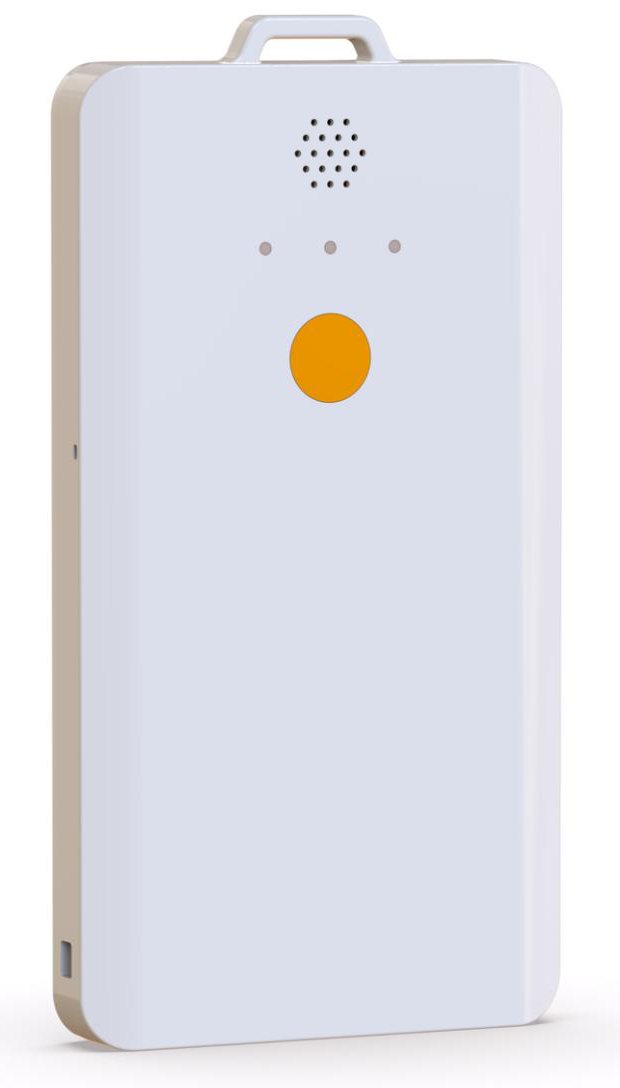
This badge carries six positioning technologies — UWB anchor, UWB beacon, Bluetooth angle-of-arrival, Bluetooth beacon, GNSS and GNSS-RTK — and hands over between them continuously. No delay switching between indoor and outdoor position.
| Indoor accuracy | 10 cm via UWB or Bluetooth AoA, under ideal conditions; sub-metre in real deployments |
| Outdoor accuracy | 10 cm with GNSS-RTK where a correction service is available; 2–5 m on satellite alone |
| Satellites | BeiDou, GPS, Galileo, GLONASS, QZSS |
| Communication | 4G Cat.1 and LoRa. LoRa reaches 150 m or more where there is no cellular at all |
| Size | 115 × 60 × 11 mm, 83 g, lanyard or pull-tab |
| Battery | 2,500 mAh — 16 hours typical, 72 hours in enhanced mode; charges in 5–6 hours |
| Alerting | Voice prompts, indicator light, vibration, one-touch alarm |
Built for chemical plants, mining, electric power and manufacturing — complex metal environments and semi-open yards, which is exactly where the indoor-outdoor seam is worst.
For one person
Personal safety wearable
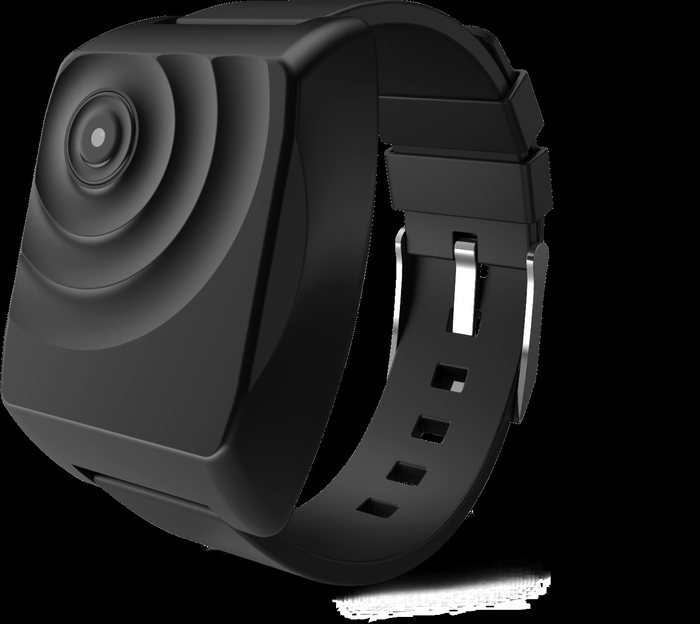
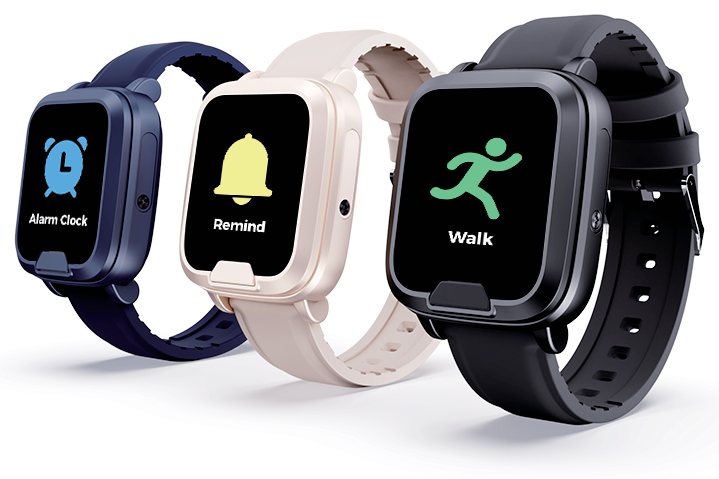
A 4G LTE smartwatch with its own nano SIM, falling back to 3G and 2G. It goes with one person, anywhere, and does not need a building.
- SOS alarm — a voice prompt and ten seconds to cancel, then an alert message and an outgoing call to the emergency contact
- Fall alert — motion, vibration and fall detection raise an alarm on a fall or a collision
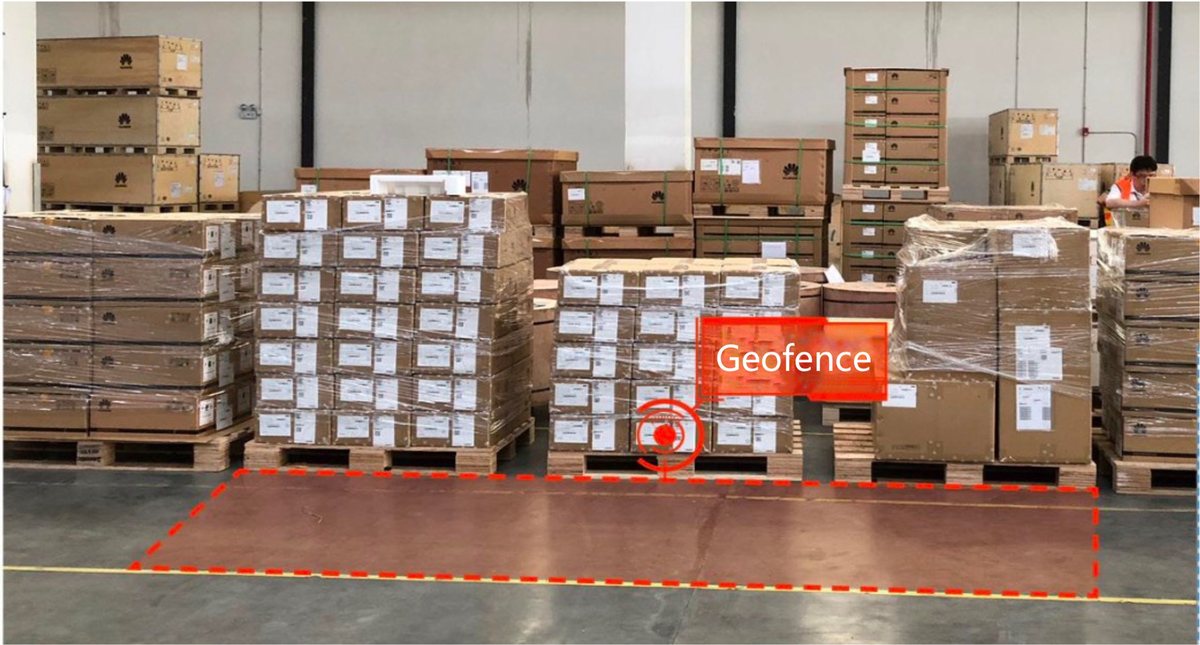
- Geo-fence — alerts when the wearer enters or leaves a defined area
- Two-way voice calling through a built-in speaker and microphone
- Positioning on GPS, GLONASS and BeiDou, with live and historical tracking in the app
- IP67, with a strap lock mechanism that prevents accidental or deliberate removal
Lone workers — the technician at a remote pump station, the man on a roof, the driver on a long route. For these, fall alert and SOS are compliance items rather than comforts. Elderly family members living independently — with two-way calling that reaches a son or daughter directly rather than routing through a call centre.
On the health features
The watch tracks heart rate, blood oxygen and steps. These are wellness indicators, not medical measurements. They are not a diagnostic tool, they do not replace a medical device, and no decision about anyone's treatment should rest on them.
The question that gets asked
Privacy, and who can see what
Under Saudi Arabia's data protection regime, employee location is personal data, and tracking people at work is a subject that needs a position rather than an assumption.
- Role-based access. Who can see live positions, and who cannot, is configured rather than open to everyone with a login
- Historical location held behind a separate permission from live view. Seeing where someone is now, and reviewing where they were last Tuesday, are different acts and should need different rights
- Defined retention. Location history is kept for an agreed period and then goes
- An audit log of who looked at what, so the system itself is accountable
- In-Kingdom hosting, where the client requires it, with the residency boundary written into the design rather than assumed
The practical advice we give every client: decide what the system is for before it is installed, write it down, and tell the staff. A tracking system introduced as a safety system, and used as one, is accepted. The same hardware introduced quietly is resented, and the resentment follows the technology rather than the decision.
The equipment
What gets installed, and what gets worn
Indoor infrastructure
Blueiot BA3000-t, in numbers
The anchor is the part that goes into the building, so it is the part the contractor and the IT team will ask about.
- Positioning method
- Bluetooth AoA (angle of arrival)
- Positioning accuracy
- 10 cm class, under the stated conditions
- Coverage per anchor
- ≥ 25 m diameter
- Maximum mounting height
- 10 m
- Mounting
- Ceiling or side wall
- Dimensions
- 220 × 220 × 32 mm
- Weight
- 680 g
- Network interface
- RJ45, daisy-chained one in / one out
- Power
- PoE, IEEE 802.3af (48 V)
- Rated power
- 3 W
- Radio band
- 2.4–2.4835 GHz
- Tag compatibility
- Bluetooth 4.0 and above
- Protection grade
- IP65
- Operating temperature
- −40 °C to +80 °C
Manufacturer's published specification. The daisy-chained dual network port is the detail that decides the cabling cost: anchors link one to the next rather than each running back to the rack. Accuracy figures are stated under the manufacturer's test conditions — in a real building the achievable figure comes from the site survey, and we will give you that number rather than this one.
Tags
What each one is for
| Tag | Form | Notable |
|---|---|---|
| Badge | Card format, worn on a lanyard or clip | Positioning to the same 10 cm class as the wristband; the format staff already accept |
| Wristband | Worn on the wrist, IP68 | One-touch SOS alarm; LED, audible and vibration feedback; three-axis motion sensing for abnormal-status alerts |
| Fusion tag | 115 × 60 × 11 mm, 83 g, lanyard or pull-tab | Six positioning technologies in one device — UWB, UWB beacon, Bluetooth AoA, Bluetooth beacon, satellite, and satellite with differential correction |
| Safety watch | Wrist-worn, IP67, 4G | For a lone worker or an elderly resident who is not inside a tagged building at all |
- Fusion tag — indoor accuracy
- 0.1 m class (UWB or Bluetooth AoA)
- Fusion tag — outdoor accuracy
- 10 cm class with satellite differential correction
- Fusion tag — battery
- 2,500 mAh rechargeable, magnetic charging
- Fusion tag — endurance
- 16 h typical, 72 h in enhanced mode
- Fusion tag — options
- UWB, satellite differential, LoRa, 4G Cat.1, explosion-protected
- Fusion tag — alerting
- One-touch alarm, voice announcement, indicator and vibration
- Safety watch — positioning
- Satellite, Wi-Fi, Bluetooth and cell-based
- Safety watch — network
- 4G LTE, falling back to 3G / 2G
- Safety watch — safety features
- SOS alarm with cancel window, two-way voice call, fall and impact alert, geofence entry and exit alerts
- Safety watch — environment
- IP67, −20 °C to +60 °C
Manufacturer's published specifications. The fusion tag switches between indoor and outdoor positioning without the operator doing anything, which is the point of it — a worker walking from a plant building to a yard stays on one trace.

What we will ask before quoting
What is being located, how accurately, how often, and what happens when it moves somewhere it should not. An accuracy figure with no answer to the fourth question is a number, not a system.
Then the building: ceiling height, construction, cable routes and whether PoE switching already exists. Anchor count comes from geometry, not from floor area.
Questions
What buyers actually ask
Why doesn't GPS work indoors?
It needs a line of sight to satellites, and a roof removes it. Outdoors in a narrow lane between tall buildings it still works but loses precision, sometimes enough to place a person in the wrong lane. Anything that needs to know which room — or which part of a room — uses fixed reference points inside the building instead.
How accurate is it in practice — room level, or shelf level?
Sub-metre in a real deployment, which is shelf level for most purposes. The manufacturer's 10 cm figure applies in open, interference-free conditions, and we publish it with that condition attached. What determines the real figure is the building: reflections off steel, racking, and how densely the anchors are placed. If an application genuinely needs 10 cm, that is a design target to be proven in a pilot, not a specification to be assumed.
How many anchors does a floor of this size need?
Each anchor covers a positioning diameter of 25 m or more in open conditions, and less where walls, racking or metal interrupt it. The count comes from a survey of the actual floor plate. Beware a quotation that calculates anchor count by dividing floor area by a coverage figure — it will be wrong in exactly the buildings where this matters.
Does it need new cabling, or does it run on the network we have?
Each anchor needs one network cable carrying standard 802.3af PoE at 3 W, and anchors daisy-chain, so the cable count is lower than the anchor count. It is ordinary structured cabling work. What it does need is containment to the anchor positions the survey selects — and on a protected or finished building, the cable route is usually the real constraint rather than the hardware.
What happens when someone moves from inside to outside?
With separate indoor and outdoor systems, the position jumps or drops while they hand over. With the Tsingoal badge, the device carries both and switches continuously, so the track stays unbroken. If your site has a meaningful indoor-outdoor boundary — a plant with a yard, a hospital with grounds, a depot — this is the specification point that matters most.
What if there is no mobile coverage on site?
LoRa carries a small message a long way for very little power, reaching 150 m or more, and suits a check-in and an SOS path where cellular is weak or absent. It is a communication path, not a positioning technology — it will get the alarm out, it will not place the worker precisely. Where a site has no coverage at all, the honest sequence is to survey the coverage first and decide the architecture after.
Who receives an alarm, and what happens next?
That is a configuration decision and it should be made before installation, not after the first incident. Alerts route to defined recipients — a control room, a supervisor, a safety team — with timed escalation if nobody acknowledges, and an incident record that runs through to closure. A system that raises alarms nobody owns produces an audit trail of ignored alerts, which is worse than no system.
How long do the batteries last?
Tags and badges vary by type and reporting rate. The Tsingoal badge runs 16 hours typically and up to 72 hours in enhanced mode, charging in 5 to 6 hours — so it is charged between shifts. Beacon-type tags report less often and last far longer. Anchors are mains powered over PoE. The operational question is not battery life but who charges what, and that belongs in the deployment plan.
Who can see where staff are, and what are the privacy rules?
Access is role-based, historical location sits behind a separate permission from live view, retention is defined and enforced, and every access is logged. Under Saudi data protection rules employee location is personal data, so the lawful basis, the retention period and the staff notification are part of the design. We will not install a staff tracking system for a client who has not decided what it is for.
Tell us the building or the site
And whether the question is which room or which shelf. We survey before quoting.