

The linen shaft
Linen chute systems for hotels and hospitals in Saudi Arabia
Housekeeping drops the linen on the floor it came from.
In a hotel without a linen chute, every sheet and towel travels by trolley — along a guest corridor, into a service lift, down to the laundry, and back again. It occupies the lift at exactly the hours it is needed for guests, and it puts a housekeeping trolley in front of a room someone is paying for. A linen chute removes the journey.
It is also called a laundry chute or a linen chute system.
The difference
Why it is not the same as a waste chute
A linen chute is built around one requirement a waste chute does not have: the contents are worth money and have to arrive undamaged.
A smooth interior surface. Fabric catches on anything a bag would survive — a joint lip, a weld, a fixing. A linen chute is detailed so that the interior is continuous, because a snag does not just tear one sheet; it tears every sheet that passes it until somebody finds it.
Sized to linen volume, not copied from the shaft beside it. Linen is bulky and light, and it moves differently from a compacted bag. A shaft sized for waste is routinely too small for the linen volume of the same building.
At the bottom
Collection
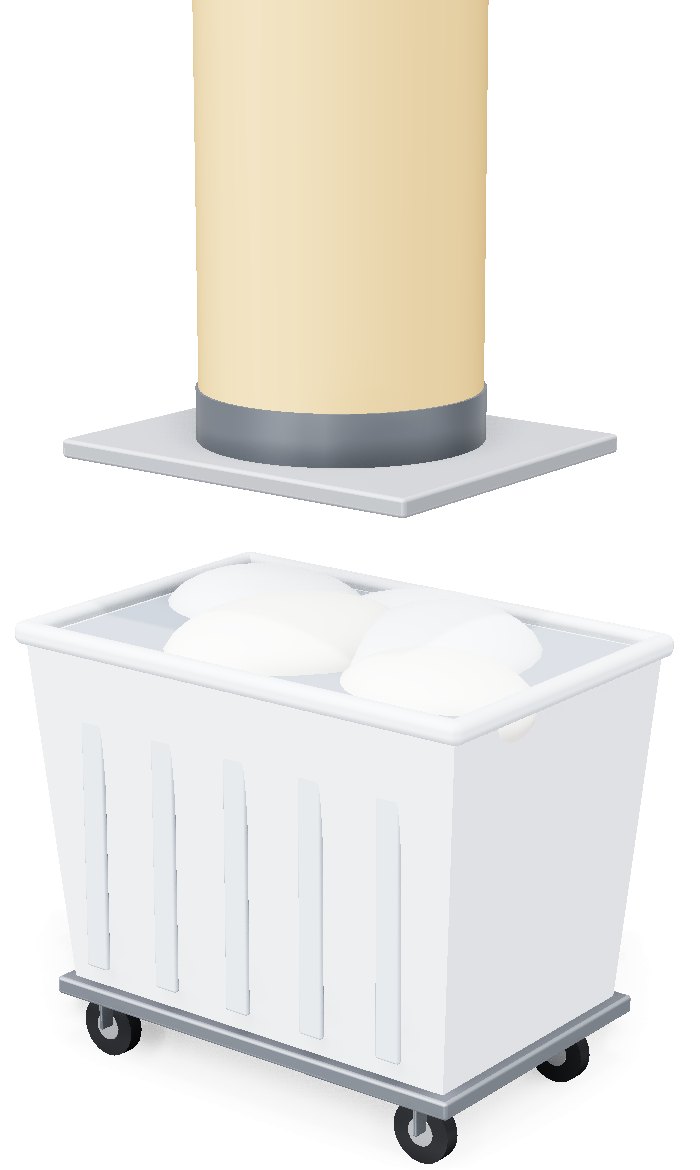
Collection into a bag, or straight into a laundry trolley positioned under the discharge. Where the laundry runs a continuous operation, the discharge is arranged so a full trolley can be exchanged without stopping the chute above.
Who installs them
Three buildings, one argument
| Building | Why |
|---|---|
| Hotels | Linen volume competes with guests for the service lift, and a housekeeping trolley in a corridor is a brand problem |
| Hospitals and clinics | Used linen is an infection control item; the goal is to take it out of circulation space entirely, as quickly as possible |
| Care and residential facilities | Same argument, smaller volume |
Specify both
Most hotels install a waste chute and a linen chute
A hotel needs both, and it needs the laundry floor served as well as the tower. A chute moves linen down the tower by gravity. A laundry vacuum system moves it horizontally and upward on a floor, which is what the lower floors, back of house and villa accommodation need, and which a chute cannot do. Large properties specify both.
Sizing
Why a linen chute is not simply a waste chute with a different label
Fabric behaves differently from a bag, and the specification follows from that rather than from the shaft next to it.
- 600 mm is the practical minimum. A 500 mm barrel handles loose linen only. Anything bundled or bagged needs 600 mm or more, and a hotel that bags its linen should be sized as though the bags are the product.
- Side-hinged doors, not bottom-hinged. Housekeeping pushes a bundle in at chest height with both hands occupied. A bottom-hinged door, which is correct for waste, is the wrong action for linen.
- The interior surface matters more than on a waste chute. Fabric catches on a weld, a seam or a fixing that a plastic bag slides straight past. A smooth, continuous interior is the difference between a chute that runs and one that is cleared by hand.
- Size to volume, not to weight. Linen is bulky and light. A shaft sized on the tonnage a floor produces will be undersized for the volume that same floor pushes into it at eleven in the morning.
- Cleaning is a different question. A disinfecting unit at the head of the shaft is normal practice on a waste chute and uncommon on a linen chute, because linen leaves very little behind. Where infection control asks for one, it is available.
The system
The linen chute as it is supplied
A laundry chute shares the shaft, the door and the fire protection with a garbage chute, and differs in what happens at the two ends.
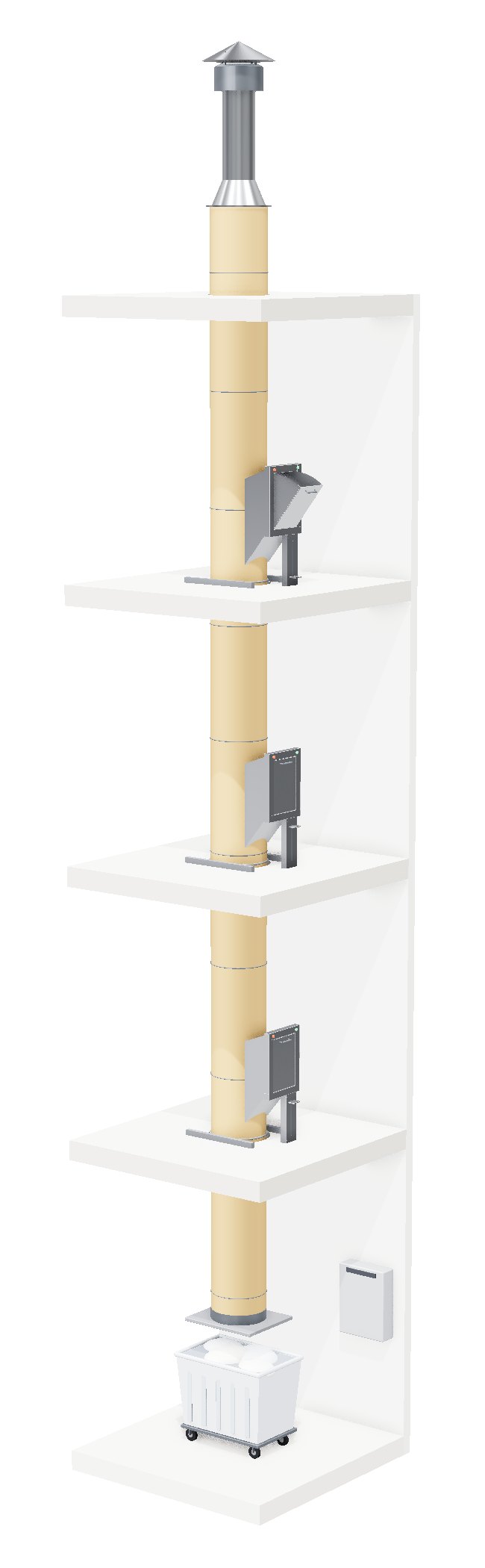
| Chute tube | Ø600 mm, stainless steel grade 304, 1.5 mm, rolled, butt jointed and MIG welded, with factory-applied sound dampening over the full outer surface of the tube and throat. Supplied to the actual building height. |
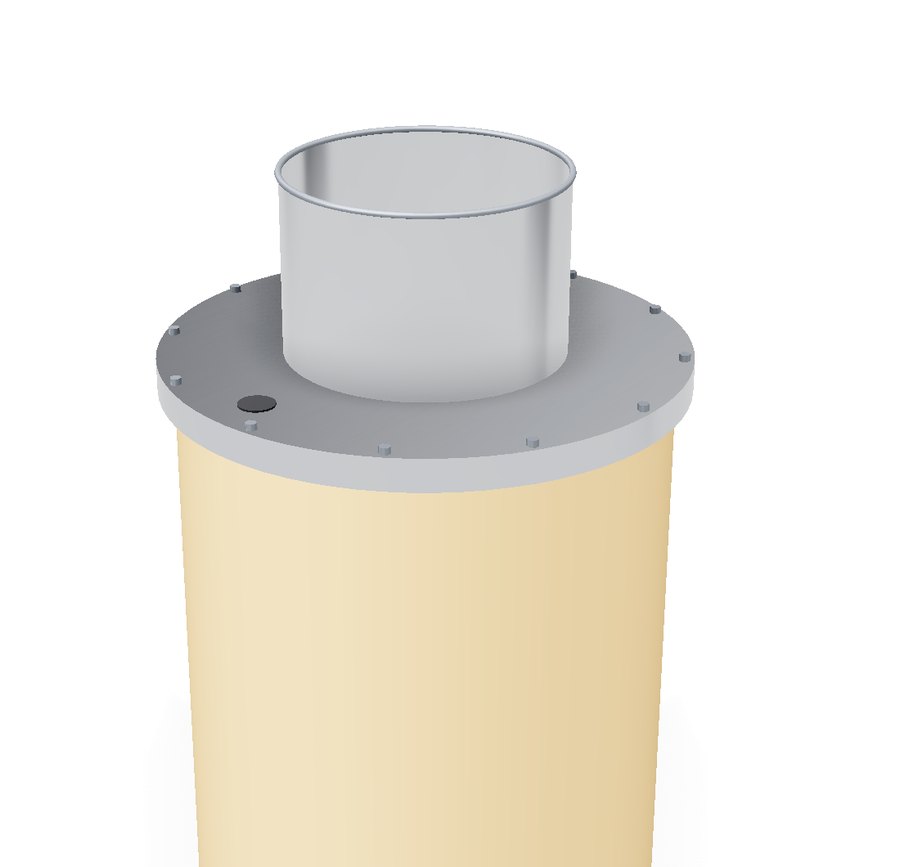
| Top of chute | Stainless AISI 304 head plate, 1.5 mm, with a Ø340 mm vent neck carried above the roof. The exhaust fan arrangement for a linen application is confirmed per project. |
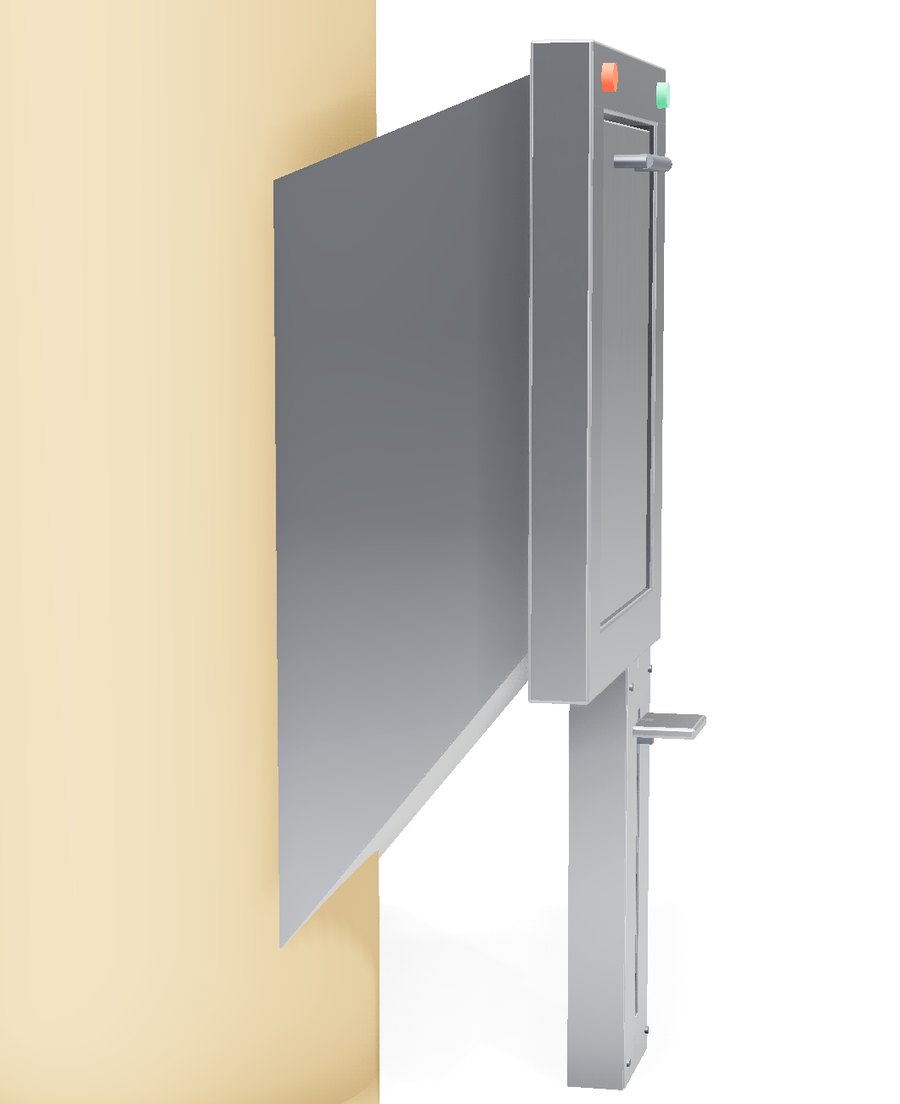
| Intake throat | Stainless steel grade 304, clear opening 405 × 635 mm, with the door set 250 mm off the chute. |
| Intake door | Bottom hinged, interlocking, stainless steel 304, 1.2 mm. Frame 540 × 730 mm, panel 390 × 580 mm. Hand or foot pedal operated, with electromagnetic interlock and pilot lamps. |
| Fire protection | Pendent glass bulb sprinkler, ½", 68 °C, inside each intake throat, fed from the fire fighting riser by others. Door fire rating confirmed per project. |
| Supports | Galvanised frame at every slab opening: 50 × 6 mm flat ring, 50 × 50 × 4 mm angles, 75 × 40 × 4 mm channels. |
| Discharge | A discharge frame over a wheeled linen cart in the linen room. Cart type and capacity are chosen with the laundry, not assumed. |
| Control panel | Door interlock, lock and unlock, fire alarm interface and exhaust fan control, in the linen room. |
Chute, intake, door, sprinkler and support data are taken from the Ostermeier chute system submittal. Items specific to the linen application — the exhaust fan, the cart and the panel layout — follow manufacturer confirmation and approved shop drawings.
Downloads
Technical specifications and material submittals
These are the submittals we issue to consultants and main contractors, with the manufacturer's drawings reproduced in the appendix. Take them into your own submittal, or send them to the consultant as they are.
Issued by CENTRA as the authorised distributor for Ostermeier FZE in Saudi Arabia. Project-specific shop drawings and a door schedule are prepared against your floor plans on request.
Questions
What buyers actually ask
Can one shaft take both waste and linen?
No, and it is worth being plain about why. The two have different interior requirements — linen needs a smooth continuous surface that waste does not — and different hygiene regimes.
More importantly, anything that goes down a shared shaft arrives mixed, which means somebody separates wet waste from clean-side linen by hand at the bottom. In a hospital that is an infection control failure; in a hotel it is a laundry cost. Two shafts, sized independently.
What stops the linen snagging or tearing on the way down?
The interior surface finish and the detailing at the joints. A linen chute is specified so there is no lip, no exposed fixing and no weld proud of the surface anywhere a sheet passes. This is the single item worth checking in any linen chute quotation, because it is invisible once installed and expensive to discover.
How is the shaft cleaned and disinfected?
By a cleaning unit at the head of the shaft that runs water and disinfection liquid down the interior on a set cycle, operated mechanically or electrically. In a hospital the cycle frequency is set by the infection control policy rather than by the equipment. The unit is specified with the chute, not added afterwards.
What does the laundry room need at the base?
Space for the discharge arrangement and for a trolley to be positioned and exchanged, plus drainage for the cleaning cycle. The usual oversight is clearance — a room with space for the trolley but not for moving it past the discharge point.
Does a hotel need a linen chute if it has laundry vacuum systems, or the other way around?
They solve different halves of the same problem. A chute moves linen down the tower by gravity. A laundry vacuum system moves it horizontally and upward on a floor, which is what the lower floors, back of house and villa accommodation need, and which a chute cannot do. Large properties specify both.
Send us your floor plans and linen volumes
We will size the shaft and lay out the discharge.