

What happens at the bottom
Waste sorting and compaction equipment for buildings in Saudi Arabia
What happens at the bottom of the shaft decides the operating cost.
A sorter sits at the bottom of the garbage chute, between the chute outlet and the bins. It diverts what comes down the shaft into one of several bins according to which stream the resident selected at the intake door, on the floor they were standing on. One shaft, several waste streams, and nobody carries anything to a different place.
The idea
Two streams or three
| What it does | |
|---|---|
| Bi-sorter | Two-way. Two bins, two streams. Usually general waste and recyclables |
| Tri-sorter | Three-way. Three bins, three streams. Usually food waste, plastic and glass, or whatever separation the building's waste contract requires |
How the resident chooses
At the intake door. The user selects the stream, the sorter at the base positions itself for that stream, and the interlock releases the door. The selection and the diversion are the same action, which is why the system works — it asks nothing of the resident beyond pressing the right button, and it does not depend on anyone sorting at the bottom.
This is also the answer to the obvious objection. Separation at source fails when it asks people to carry things to different places. It works when the different places are the same door.
Models
Sorter range
Awaiting the manufacturer's datasheet
Model names, dimensions and stream capacities for the bi-sorter and tri-sorter are being confirmed with Ostermeier. We publish the page without them rather than with an invented specification. Ask us for the current figures on a live project and we will get them directly.
Compaction
How often the truck comes
Sorting decides where the waste goes. Compaction decides how often a truck comes for it.
- Hydraulic compactors, top-loaded or bottom-loaded, on castor wheels so a full unit can be moved out and an empty one positioned. Mounted under the chute discharge or alongside it depending on the waste room layout.
- Crushers reduce the volume of bulky material before compaction, where the waste stream justifies it.
The figure that justifies the equipment is the number of collection trips saved per month, and it is specific to the building — its waste volume, its bin sizes, its collection contract and its waste room. We calculate it for the project rather than publish an average, because an average from another building is not a business case.
For the consultant
What the waste room has to provide
| Requirement | |
|---|---|
| Power | Supply to the sorter, the compactor and the control panel |
| Drainage | Floor drainage for the chute cleaning cycle and for washing down |
| Clearance | Space to withdraw a full bin or compactor without moving others first, and access for maintenance on all sides |
| Headroom | Sufficient height under the chute discharge for the sorter and the receiving container together |
| Access | A route out of the room wide enough for the largest container, to the collection point |
The room is almost always designed against the bins rather than against the operation, and it is the commonest reason a good chute specification underperforms. We mark it on the layout at design stage.
Compaction
The hydraulic compactor, chute fed
Where the shaft discharges into a compactor instead of straight into a container, the volume going out of the building drops by about four to one — and the number of collection trips drops with it.
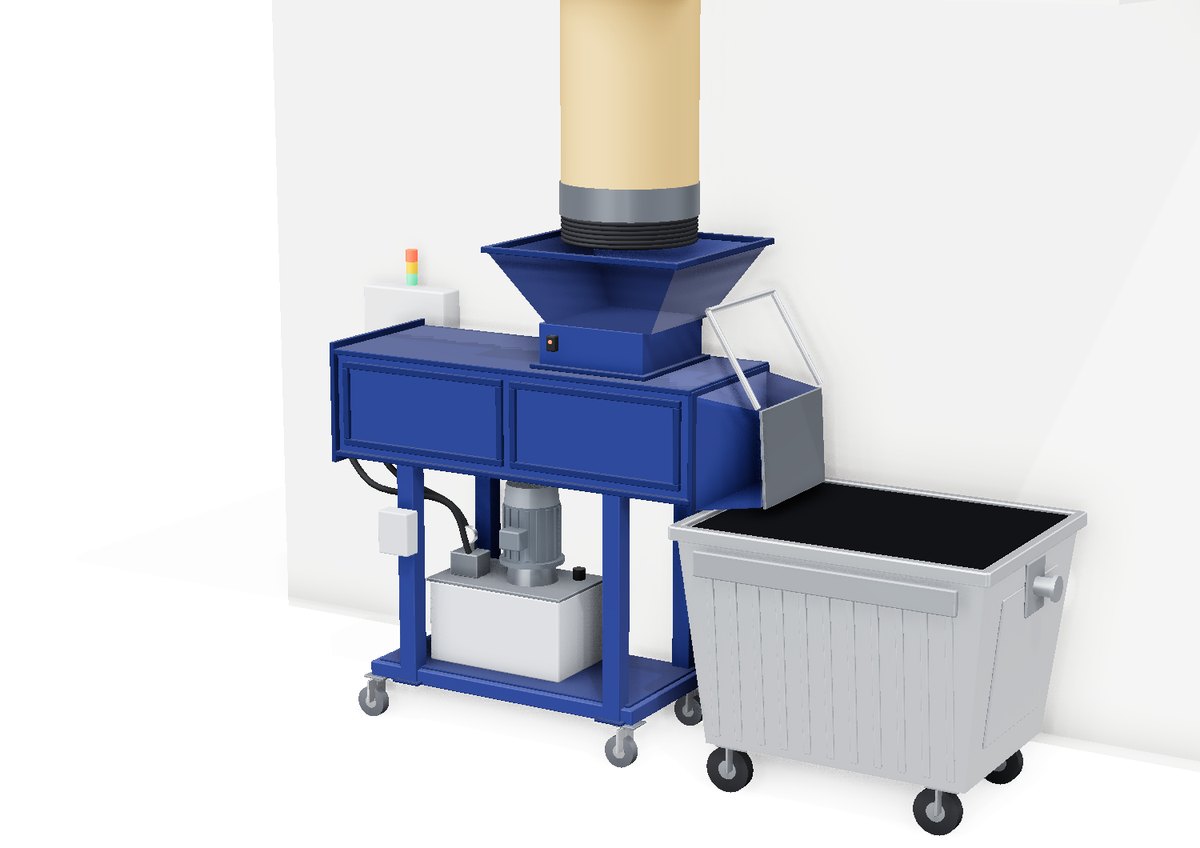
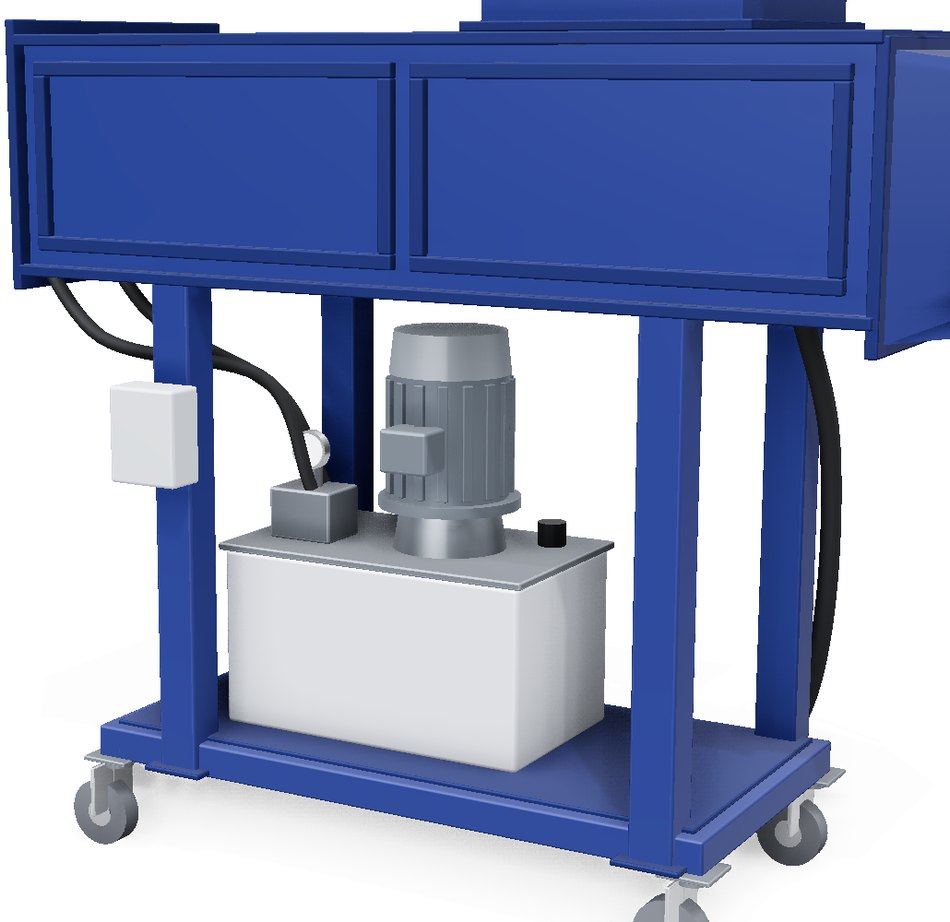
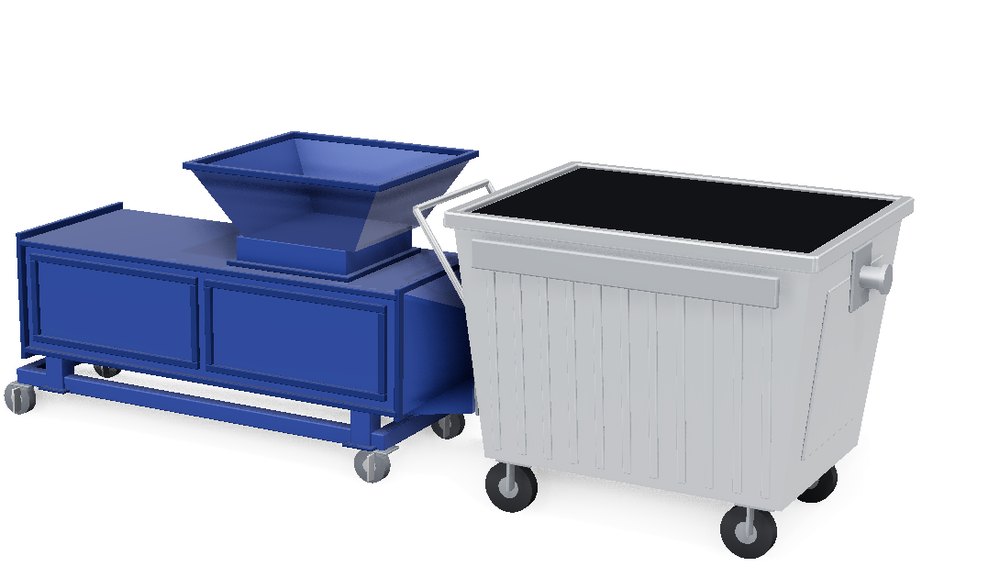
| Model | Ostermeier HVC 600, top loaded. A bottom loading version is available. |
| Principle | Extrusion — the ram pushes waste through a constricted outlet against a pressure plate. |
| Compaction force | 216 kN continuous. |
| Compaction ratio | 4:1. |
| Cycle time | 45 seconds. |
| Handling capacity | 12–16 m³ per hour. |
| Chamber and ram | Chamber 600 × 500 mm, ram height 450 mm. Floor plate and ram face 16 mm, chamber sides 6 mm, hopper 4 mm. |
| Hydraulics | Power pack mounted within the frame, 14 litres per minute, cylinder 100 mm bore × 50 mm rod × 760 mm stroke. |
| Electrical | 5.5 kW motor, 3-phase 380 V 50 Hz, 32 A, supply cable 5 × 4 mm². |
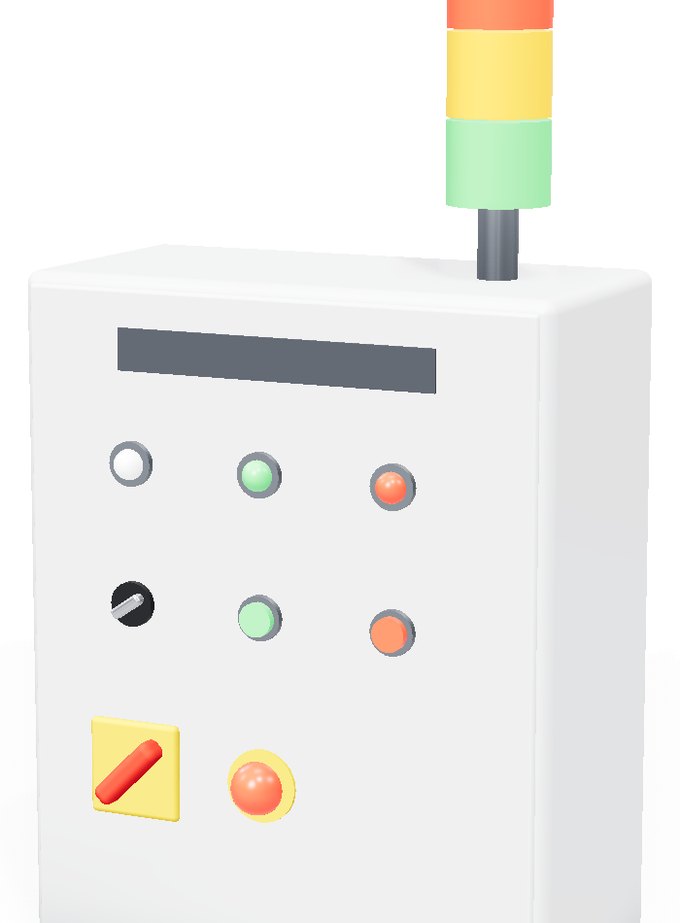
| Control | Automatic on a light barrier, running continuously, with a manual/auto selector and a three-colour status light. |
| Dimensions | Top loaded: 2,140 mm long, 1,740 mm to the top of the body, 1,240 mm to the underside. Bottom loaded: 2,150 mm long, body height 800 mm. |
| Container | 1.1 m³ steel collection container, on castors. |
The charging box size is given differently across the manufacturer's documents, so it is confirmed on the approved shop drawing rather than quoted here.
The number that justifies it
A compactor is bought with collection trips, not with volume. Take the container volume the building fills in a week, divide by four, and the difference is the number of truck movements removed from the service yard every week for the life of the building.
Tell us the number of apartments or keys, the streams you separate, and how often the contractor currently collects. We will do that arithmetic for your building before anyone orders anything.
Downloads
Technical specifications and material submittals
These are the submittals we issue to consultants and main contractors, with the manufacturer's drawings reproduced in the appendix. Take them into your own submittal, or send them to the consultant as they are.
Issued by CENTRA as the authorised distributor for Ostermeier FZE in Saudi Arabia. Project-specific shop drawings and a door schedule are prepared against your floor plans on request.
Questions
What buyers actually ask
What is the difference between a bi-sorter and a tri-sorter?
The number of streams. A bi-sorter diverts to two bins, a tri-sorter to three. Which you need is a question about the building's waste contract and what it is required to separate, not about the building's size — so settle it with the operator before the waste room is laid out, because the equipment footprint differs.
How does the resident choose which bin their waste goes into?
At the intake door on their own floor. They select the stream, the sorter positions itself at the base, and the door releases. Nothing is sorted by hand at the bottom.
Can a sorter be added to a chute that already exists?
Often yes, and it is one of the better retrofit opportunities in an existing building, because the shaft itself does not change. The constraints are the waste room — headroom under the discharge, floor space, power and drainage — and whether the existing intake doors can carry stream selection. A site visit settles both.
How much does a compactor reduce the number of collections?
Enough to change the operating budget, but the honest answer is that the figure depends on the waste volume, the bin size and the collection contract. We calculate it from the building's own numbers and show the working. Treat any supplier who quotes you a ratio without asking about your waste stream as having quoted a different building.
What power, drainage and clearance does the waste room need?
Power to the sorter, compactor and control panel; floor drainage for the cleaning cycle and wash-down; and clearance to withdraw any container without moving another. The table above is the short version, and we issue a room layout with the submittal.
What happens if someone selects the wrong stream?
The waste goes to the bin they selected. A sorter directs; it does not inspect. Which is why the separation achieved by any of these systems is a function of how clearly the intake doors are labelled and how the building communicates with residents — worth planning for, rather than being surprised by in the first month.
Who maintains it, and how often?
Sorters and compactors are mechanical equipment with a scheduled service interval, and the interval depends on cycle count rather than calendar time. Centra holds spares in the Kingdom and issues the schedule with the handover documents. In practice, the item that needs attention most often is the waste room's cleanliness, not the machinery.
Send us your waste room layout
We will specify the equipment and calculate the collection saving from your own numbers.