

Hard floors
Commercial scrubbing robots for buildings in Saudi Arabia
Hard floors, washed and dried in one pass.
A mopped floor is a wet floor, and a wet floor in a mall is a sign, a cordon and a liability. A scrubbing robot sweeps, applies water and detergent, scrubs, and lifts the dirty water back off in the same pass, so the floor behind it is streak-free and walkable straight away. With the water station and its own charging, it carries on through the night without anyone attending to it.
It is also searched as a robotic floor scrubber, an autonomous scrubber dryer or a floor cleaning robot.
The machines
DEEBOT PRO M1 and M1 3D
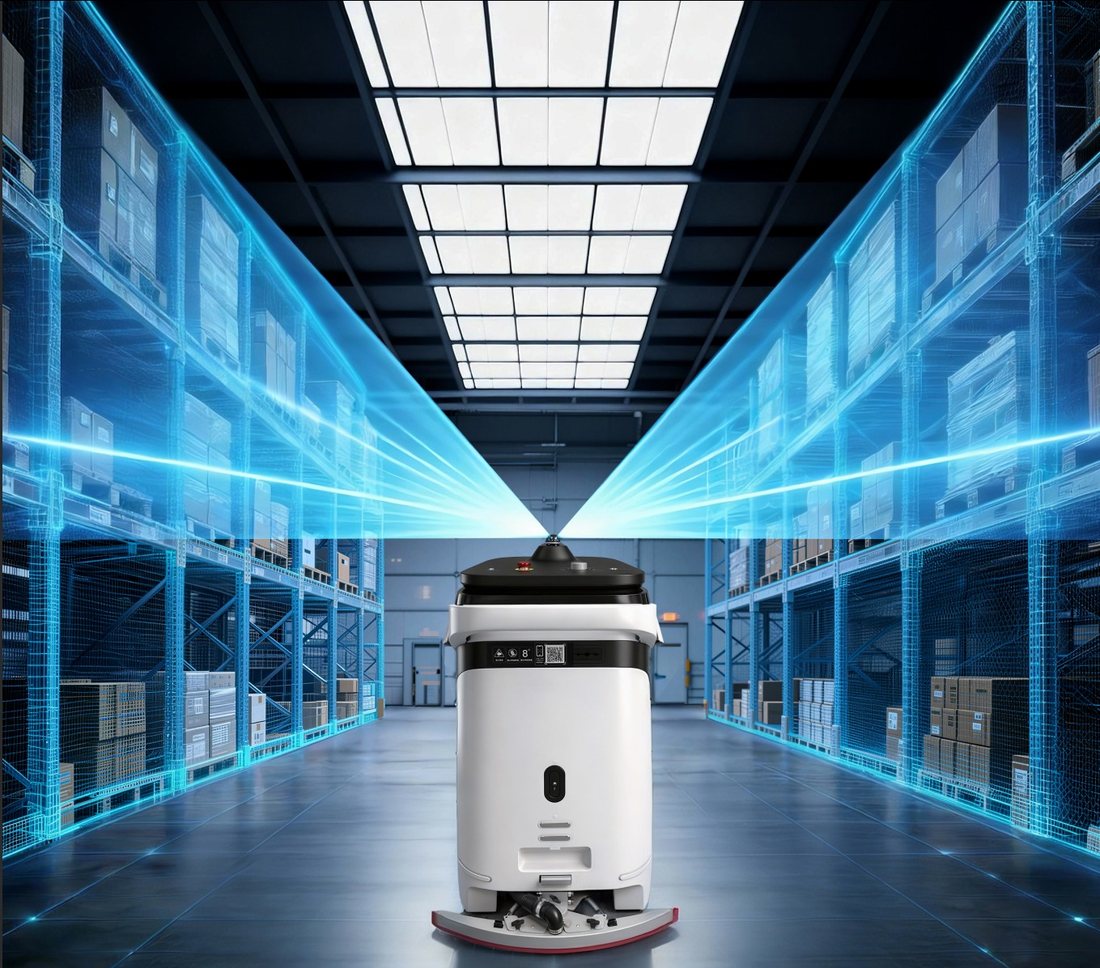
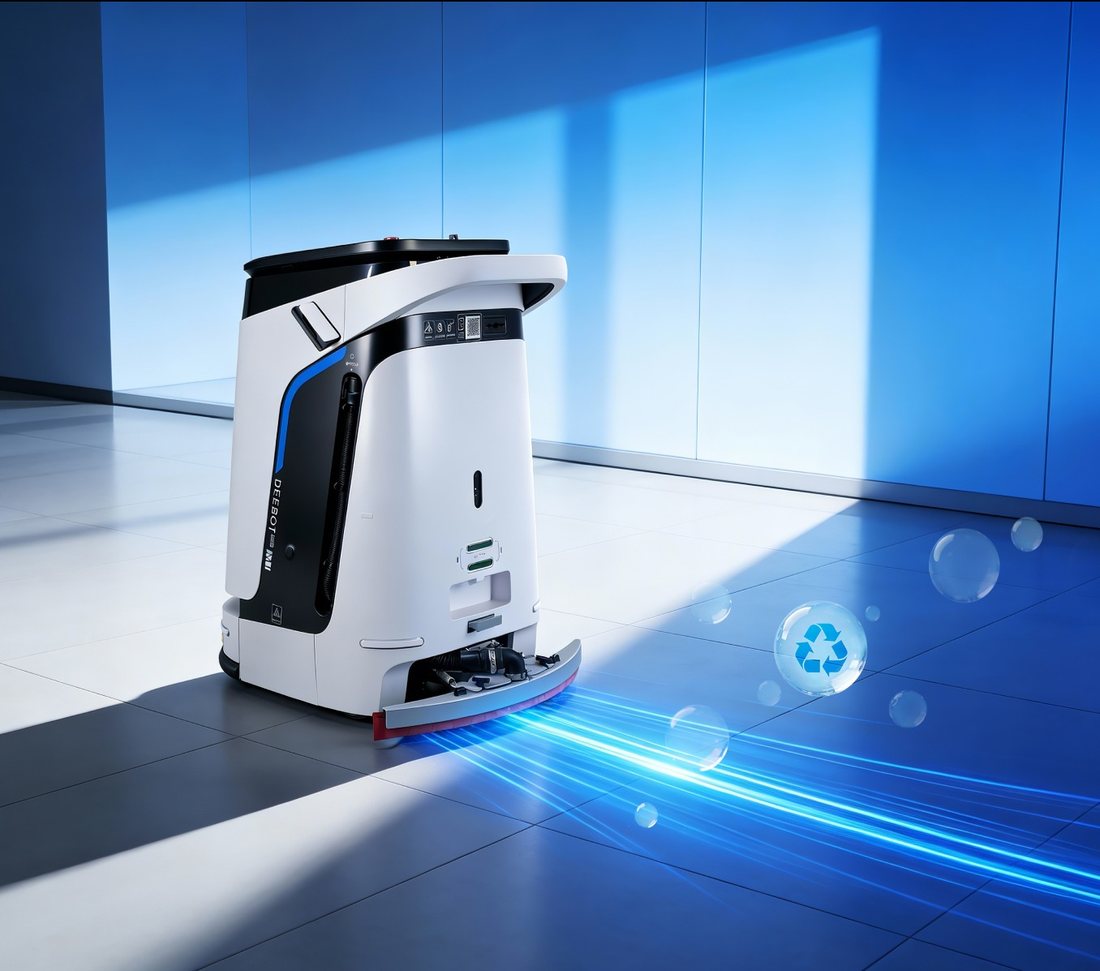
The same scrubbing system in two bodies. The M1 is for mid-to-large indoor spaces; the M1 3D adds a 3D LiDAR for large spaces that change from one night to the next.
| M1 3D | M1 | |
|---|---|---|
| Functions | Scrub, sweep, dry dust mop | Scrub, sweep, dry dust mop |
| Theoretical cleaning capacity | 2,160 m²/h | 2,160 m²/h |
| Area per charge | 7,560 m² scrubbing, 17,280 m² dust mopping | 7,560 m² scrubbing, 17,280 m² dust mopping |
| Battery life | 3.5 h scrubbing, 8 h dust mopping | 3.5 h scrubbing, 8 h dust mopping |
| Battery | 60 Ah lithium iron phosphate, 2.5 h to charge | 60 Ah lithium iron phosphate, 2.5 h to charge |
| Roller brush width | 500 mm | 500 mm |
| Clean / waste water tank | 35 L / 33 L | 35 L / 33 L |
| Sensors | 3D LiDAR, 2D LiDAR, RGB-D sensor, line laser, geomagnetic sensor, anti-collision bumper | 2D LiDAR, time-of-flight sensor, RGB-D sensor, line laser, geomagnetic sensor, anti-collision bumper |
| Obstacles | Detects obstacles as low as 2 cm; crosses up to 2 cm | Detects obstacles as low as 2 cm; crosses up to 2 cm |
| Slope / speed | 8° / up to 1.2 m/s | 8° / up to 1.2 m/s |
| Needs a passage of | 85 cm | 85 cm |
| Dimensions | 775 (L) × 681.5 (W) × 1,050 (H) mm | 775 (L) × 681.5 (W) × 1,012 (H) mm |
| Weight | 126.5 kg | 125 kg |
| Floors | Marble, ceramic tile, terrazzo, wood-grain tile, artificial stone, plastic flooring, epoxy resin, patterned and plain concrete | Marble, ceramic tile, terrazzo, wood-grain tile, artificial stone, plastic flooring, epoxy resin, patterned and plain concrete |
| Typical buildings | Factories, warehouses, supermarkets, malls, metro and railway stations, airports | Offices, universities, libraries, exhibition halls, hospitals, malls, stations, airports, warehouses |
ECOVACS lab figures; real-world results depend on the floor, the obstacles and the route.
Read the battery figure the right way. Three and a half hours of scrubbing covers about 7,560 m² on one charge; dust mopping runs for eight hours. The machine returns to its charging station on its own and resumes the route afterwards, so a night shift is a schedule, not a person waiting for a battery.
Water is handled without a person. With the optional water station the robot drains its dirty water and refills with clean by itself, and the waste tank cleans itself, which is what keeps it from smelling and growing bacteria between shifts.
Detergent goes further. It mixes automatically, works with ECOVACS detergent or a regular neutral detergent, and two litres of detergent last more than five tanks of water.
Two scrubbing modes — standard and deep — so a lobby is not scrubbed as hard as a loading area, and the robot re-cleans spots it detects it has missed.
Option
The water refill & drain station
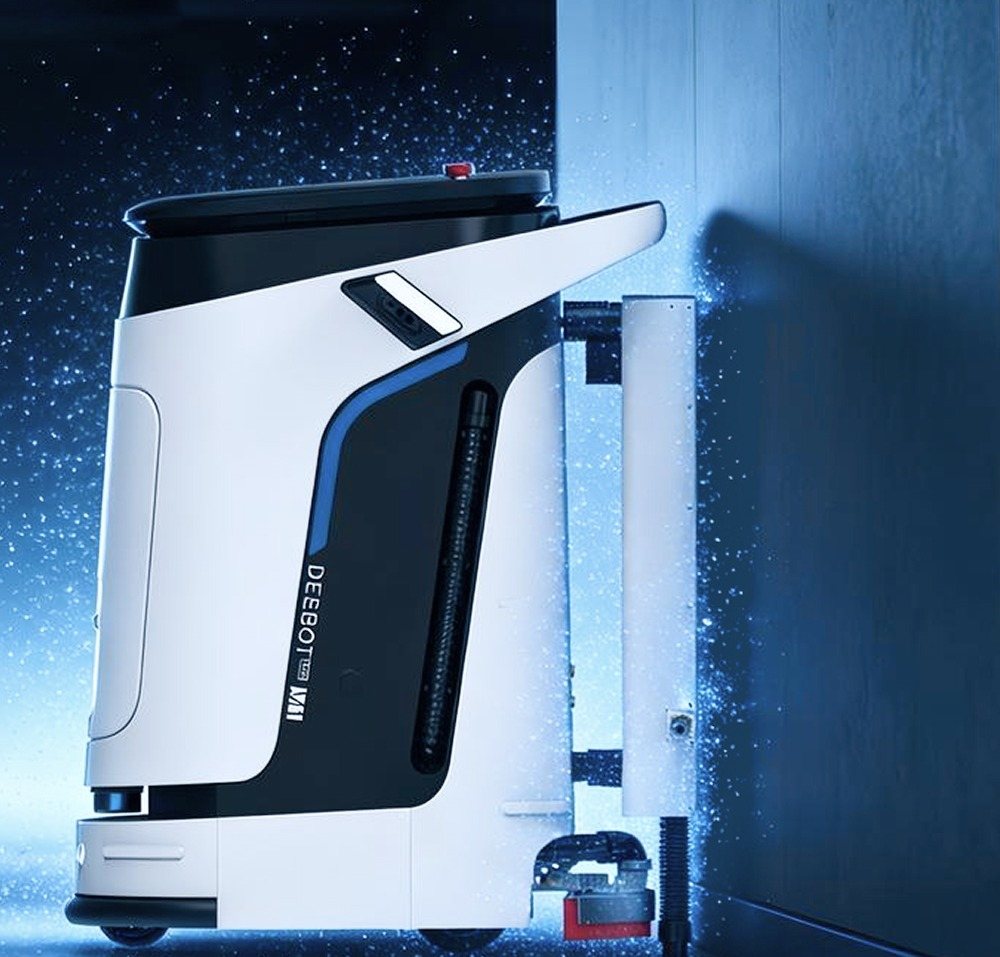
For the M1 and M1 3D. It is what turns a scrubber that someone has to refill into one that refills itself.
| For | DEEBOT PRO M1 and M1 3D |
| Dimensions | 670.4 (H) × 297 (W) × 256 (D) mm |
| Weight | 8.31 kg net, 10.82 kg packed |
| Installation | Wall-mounted or floor-standing |
| Site needs | A water supply and a drain at the station position, and a power point for the charger nearby |
Questions
What buyers actually ask
Scrubbing or vacuuming — which does this floor need?
Hard floor scrubs; carpet vacuums. A building with both runs both, and the split is decided at the site assessment by floor area rather than by preference. Where a building is mostly hard floor with carpeted meeting rooms or guest floors, the usual answer is a scrubber for the main floor plate and a vacuuming machine for the carpeted areas, not one machine compromising on both.
How much water does it use per hour, and where does it refill?
The tanks hold 35 litres of clean water and 33 litres of dirty water, and consumption depends on the surface, the soiling and the scrubbing mode. The arrangement that matters is the refill point: with the optional water station the robot drains and refills by itself, which needs a water supply and a drain at the station, on its route rather than wherever there happens to be a tap. That is settled at the site assessment together with the power point.
Can it run while the building is occupied?
Yes, and this is the main reason buildings choose a scrubber over a mop. The floor behind the machine is dry, so there is no wet-floor exclusion zone following the cleaner around. In practice most operators still run the bulk of the route overnight and use daytime passes for high-traffic areas.
What is the realistic payback against a cleaning contract?
It depends on your floor area, your current contract and how many hours of it are spent on open floor rather than detail work — so an honest answer needs your numbers, not an average.
The calculation we run is straightforward: the hours currently spent scrubbing open floor, against the machine's cost over its service life plus consumables and the service agreement. We show the working. Treat any supplier who quotes you a payback period before seeing your cleaning contract as having calculated somebody else's building.
Who services it in Saudi Arabia?
Centra, with spares held in the Kingdom and response times set in the service agreement.
Ask for a site assessment
A trial on your own floor, and a payback calculated from your own cleaning contract.