

Which buildings are cleaning robots for?
Large, busy floors that get cleaned the same way every day: offices, malls, hospitals, factories, and transport hubs such as airports and metro stations.
The more open floor area a building has, and the more often it is cleaned, the more work a robot takes over.
Do cleaning robots replace cleaning staff?
No. The model is co-botic: robots take the repetitive open-floor hours, and the cleaning team focuses on detail work, edges and the places a robot cannot reach. Every robot run is recorded digitally, so each shift's cleaning can be checked.
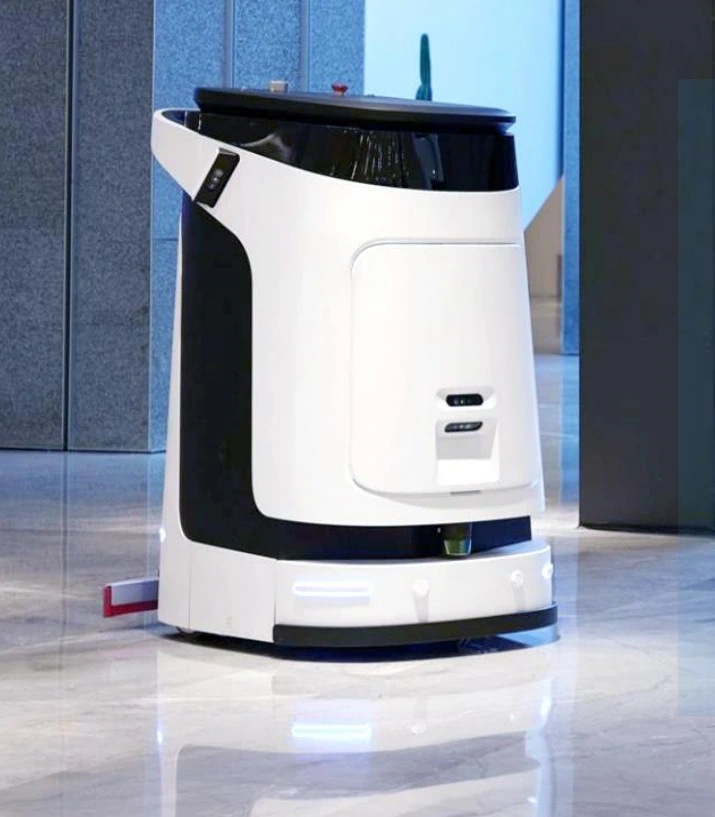
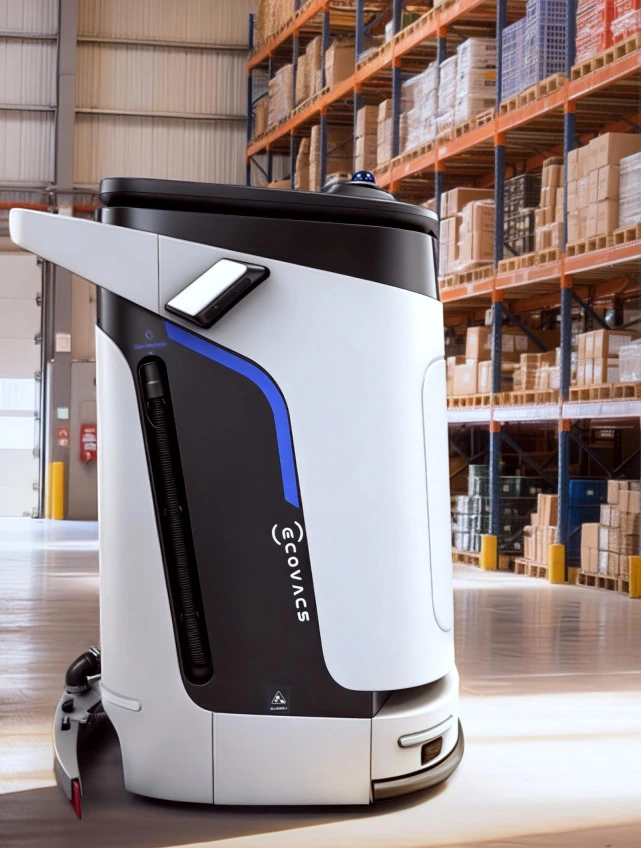
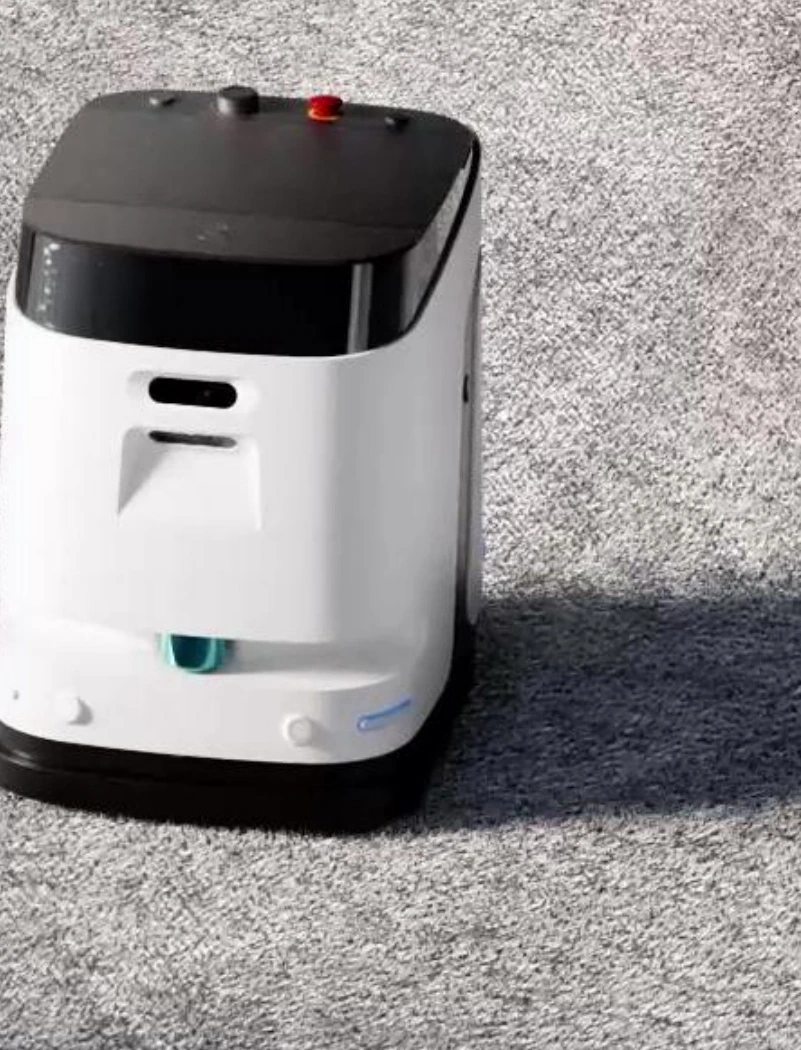
Which DEEBOT PRO robot does which job?
The range has three models.
DEEBOT PRO M1: floor scrubber. Scrubs, sweeps and dust-mops in a single pass, with automatic water refill and drainage and a self-cleaning waste water tank. For hard floors in large spaces.
DEEBOT PRO M1 3D: floor scrubber for changing spaces. The same cleaning as the M1, with 3D and 2D LiDAR navigation that keeps its position even when 60% of the layout changes, without remapping, and avoids obstacles as low as 2 cm. Built for large spaces where the layout keeps changing.
DEEBOT PRO K1 VAC: vacuum robot. Vacuums, sweeps and dust-mops, with 20 KPa suction and a 10 L dust bin. At 42 cm wide it fits through gaps down to 52 cm and cleans right up to the edge, so it suits carpet and tighter layouts such as hotel corridors.
How much area can one robot clean?
Using ECOVACS lab figures: the M1 and M1 3D clean up to 1,200 m² an hour, and the K1 VAC up to 700 m² an hour.
On one charge the M1 runs for 3.5 hours scrubbing or 8 hours dust-mopping, which ECOVACS puts at up to 4,200 m² scrubbing or 9,600 m² dust-mopping. The K1 VAC runs for 4 hours vacuuming or 8 hours dust-mopping.
Real output depends on the site: floor type, obstacles, traffic and how the routes are set. That is why a deployment starts from the floor plan, not the spec sheet.
| Specification | DEEBOT PRO M1 | DEEBOT PRO M1 3D | DEEBOT PRO K1 VAC |
|---|---|---|---|
| Cleaning modes | Scrub, dust-mop, sweep | Scrub, dust-mop, sweep | Vacuum, dust-mop, sweep |
| Cleaning efficiency | 1,200 m²/h | 1,200 m²/h | 700 m²/h |
| Battery life | 3.5h scrub / 8h dust-mop | 3.5h scrub / 8h dust-mop | 4h vacuum / 8h dust-mop |
| Charging time | 2.5h | 2.5h | 2h |
| Clean / waste water | 35 / 33 L | 35 / 33 L | - |
| Dust bin | - | - | 10 L |
| Roller brush width | 500 mm | 500 mm | 300 mm |
| Minimum passable width | 85 cm | 85 cm | 52 cm |
| Dimensions (mm) | 775 × 681 × 1012 | 775 × 681 × 1050 | 558 × 420 × 592 |
| Navigation | 2D LiDAR + sensors | 3D + 2D LiDAR fusion | 2D LiDAR + sensors |
Figures from ECOVACS Lab. Actual results depend on the site.
Can a cleaning robot use the lift?
Yes. DEEBOT PRO robots move between floors through integration with the building's lift system, and pass through access-controlled doors and gates on their own, so one route can cover several floors and zones without anyone riding along.
What happens when the battery runs low?
The robot returns to its dock, recharges, and picks the route back up where it stopped. The M1 and M1 3D also refill clean water, drain waste water and clean their own tank between runs.
How is a fleet of robots managed?
Through the ECOVACS app and cloud platform: schedule tasks, edit maps, set no-go zones, get real-time alerts and cleaning reports, and manage several robots from one place. The robots also share map and location data with each other, so one knows which areas another has already cleaned.
What does a deployment involve?
It starts with three things about the site: floor area and number of levels, surface types (hard floor, carpet, delicate, rough), and daily traffic with the cleaning windows available.
From that, Centra comes back with how many robots, which models and the routes they will run, usually within 48 hours and always before any contract. The same team then handles delivery, floor mapping, commissioning, operator training and a multi-year service contract with spare parts.
Are the robots built to a standard?
ECOVACS, founded in 1998 and listed on the Shanghai Stock Exchange, was one of the leading units in drafting China's first national standard for commercial cleaning robots, GB/T 46495-2025.